e99 Online Shopping Mall

Geometry.Net - the online learning center Help  
Home  - Philosophers - Ricoeur Paul (Books)

  1-20 of 100 | Next 20
A  B  C  D  E  F  G  H  I  J  K  L  M  N  O  P  Q  R  S  T  U  V  W  X  Y  Z  

click price to see details     click image to enlarge     click link to go to the store

$24.90
1. Memory, History, Forgetting
$13.15
2. Time and Narrative, Volume 1 (Time
$26.52
3. From Text to Action: Essays in
$18.00
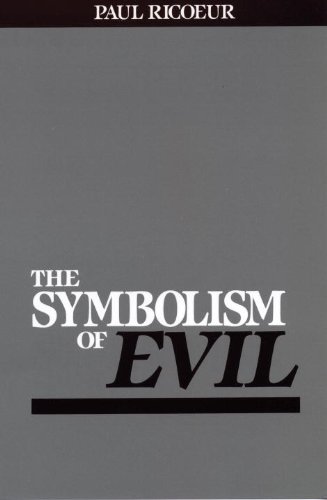
4. The Symbolism of Evil
$16.83
5. Figuring the Sacred: Religion,
$18.34
6. Thinking Biblically: Exegetical
$13.00
7. Interpretation Theory: Discourse
8. Lectures on Ideology and Utopia
 
$45.40
9. Paul Ricoeur: The Hermeneutics
$29.93
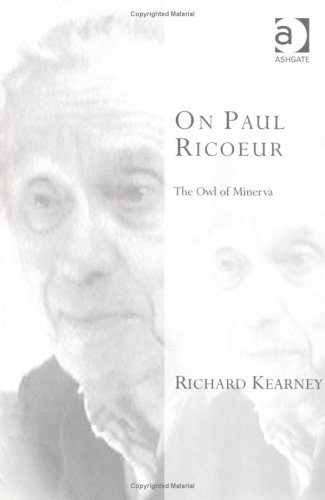
10. On Paul Ricoeur: The Owl of Minerva
$24.97
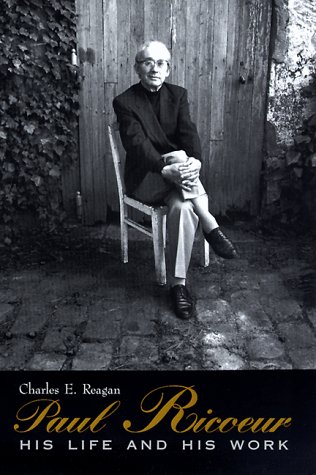
11. Paul Ricoeur: His Life and His
$31.40
12. Hermeneutics and the Human Sciences:
 
13. Tragic Wisdon and Beyond: Including
$28.95
14. Memory, Narrativity, Self and
 
15. Oneself as Another
 
16. Paul Ricoeur Husserl: An Analysis
$23.95
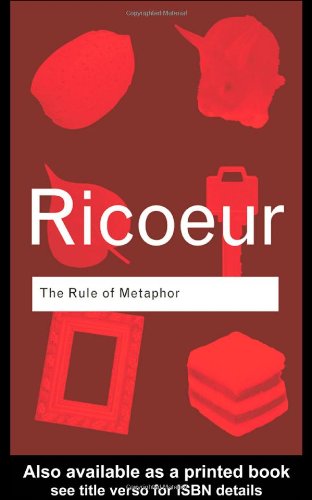
17. The Rule of Metaphor: The Creation
$20.95
18. Hermeneutic Phenomenology: The
$23.96
19. The Conflict of Interpretations:
$18.25
20. Paul Ricoeur (Routledge Critical

1. Memory, History, Forgetting
by Paul Ricoeur
Paperback: 624 Pages (2006-08-15)
list price: US$25.00 -- used & new: US$24.90
(price subject to change: see help)
Asin: 0226713423
Average Customer Review: 5.0 out of 5 stars
Canada | United Kingdom | Germany | France | Japan
Editorial Review

Book Description

Why do major historical events such as the Holocaust occupy the forefront of the collective consciousness, while profound moments such as the Armenian genocide, the McCarthy era, and France's role in North Africa stand distantly behind? Is it possible that history "overly remembers" some events at the expense of others? A landmark work in philosophy, Paul Ricoeur's Memory, History, Forgetting examines this reciprocal relationship between remembering and forgetting, showing how it affects both the perception of historical experience and the production of historical narrative.

Memory, History, Forgetting, like its title, is divided into three major sections. Ricoeur first takes a phenomenological approach to memory and mnemonical devices. The underlying question here is how a memory of present can be of something absent, the past. The second section addresses recent work by historians by reopening the question of the nature and truth of historical knowledge. Ricoeur explores whether historians, who can write a history of memory, can truly break with all dependence on memory, including memories that resist representation. The third and final section is a profound meditation on the necessity of forgetting as a condition for the possibility of remembering, and whether there can be something like happy forgetting in parallel to happy memory. Throughout the book there are careful and close readings of the texts of Aristotle and Plato, of Descartes and Kant, and of Halbwachs and Pierre Nora.

A momentous achievement in the career of one of the most significant philosophers of our age, Memory, History, Forgetting provides the crucial link between Ricoeur's Time and Narrative and Oneself as Another and his recent reflections on ethics and the problems of responsibility and representation.

“His success in revealing the internal relations between recalling and forgetting, and how this dynamic becomes problematic in light of events once present but now past, will inspire academic dialogue and response but also holds great appeal to educated general readers in search of both method for and insight from considering the ethical ramifications of modern events. . . . It is indeed a master work, not only in Ricoeur’s own vita but also in contemporary European philosophy.”—Library Journal

“Ricoeur writes the best kind of philosophy—critical, economical, and clear.”— New York Times Book Review

... Read more

Customer Reviews (2)

5-0 out of 5 stars Best book on history so far this century
This, the last book written by the great French philosopher Paul Ricoeur, is an amazing achievement. Readers be warned: this is no easy romp through historiography or memory studies. It is a deeply philosophical meditation on the meaning of history and historicism as an act of remembering, an act of inscribing time, a way of participating in Being, and a way of negotiating competing claims for justice and acts of witnessing. Typical of Ricoeur's argumentation, the book sets out competing definitions (representation vs. recollection, explanation vs. understanding, phantasm and eikon, mnemevs. anamnesis, habit vs. memory, evocation vs. search, retention or primary memory vs. reproduction or secondary memory, reflexivity vs. worldliness, etc.). It does not resolve these oppositions, but painstakingly shows the aporias centralized in the opposition of terms and posits a tentative ethical response. Ricoeur is too smart to posit easy solutions to some of the most profound questions of human existence--mainly, what is history and how can it provide any foundations for knowledge and ethical action in the world? The erudition of this text is massive; Ricoeur references hundreds of theorists and philosophers from Plato to Foucault, from ontology to cognitive science. Predictably for those of us who have grown to respect the humanity of Ricoeur's position, the writing is never arrogant, never one-sided, always on the side of humane negotiation, life, human flourishing. In contrast to politicized polemics of academic historicist theory, this book recognizes, articulates, and teaches one about the almost overwhelming complexity of history as an idea, as a form of memory, and as evidence for witnessing and justice. In contrast to easy but hip pronouncements about the end of history, history as just another form of fiction, and history as "always political"--all implying that history is a tainted vehicle of ideological coercion that we can somehow do without--Ricoeur asks what else we *have* to connect our recollections of meaningful events to any kind of social action and collective sense of being.

If you want an education in some of the major positions in historiography, this book will give it to you, but it is no survey. It is a philosophical work, one that attempts to convey both the difficulty of the question and the necessary tenuousness of any real, ethical solution. Graduate students should be made to read this book if only to teach them what intellectual thought should look like--thought that works its way slowly and carefully through ideas instead of zooming through sources in order to construct a macrocosmic but sexy "new idea."

The incredible care with which analysis is conducted in each of this book's sections makes it impossible to summarize it meaningfully. Ricoeur wants to connect memory, history, and social remembrance in such a way that they avoid the easy, and often dangerous, sidetracks of commemoration or historicism as mere explanation. He wants a humanized history based in lived memory that can be used to create common ground between people as well as viable evidence in the negotiation of justice claims. Whether he gets this is debatable, but the attempt is honorable.

5-0 out of 5 stars Narrative and Inner Experience (In Spanish)
La preocupación de Ricoeur por la metáfora como aspecto significante del lenguaje se traslada, en la ultima etapa de su pensamiento a la narración del tiempo y, en especial, del tiempo histórico. Ricoeur estudia la realidad/ memoria del pasado histórico en la historiografía bajo tres signos: Lo Mismo, Lo Otro y Lo Análogo. Al primer signo: el de lo Mismo, le podemos corresponder el símbolo totalizante. Totalizante porque invade todas las esferas del discurso, mientras que la metáfora es un símbolo revisado críticamente porque es autoconsciente del poder puramente poético de su naturaleza, manteniendo y manteniéndose así autónomo de otras esferas del discurso. En el signo de lo Mismo, el pasado es idéntico con el presente; el presente es una reefectuación de la tradición, idea defendida tanto por Collingwood (citado por Ricoeur) como por Gadamer. Así, como el símbolo es la unión trascendente de lo material con lo ideal (su índice de identidad); así el pasado se une con el presente en el reenactment producida por la imaginación del historiador. Esta imaginación simbólica del historiador supuestamente resucita los contenidos del pasado en el presente. Esta idea, presente en Collingwood, pero que proviene de la filosofía hegeliana de la historia subordina el pasado al presente, pero al mismo tiempo el presente es el sitio de actualidad del pasado: "Se podría decir, en forma de paradoja, que una huella se hace huella del pasado solo en el momento en que su carácter de pasado es abolido por el acto intemporal de repensar el acontecimiento en su interior pensado." (Ricoeur, 1990, III, 845)

Lo opuesto a esto es la separación absoluta del pasado respecto al presente y que la construcción de la historia ocurre en el presente de acuerdo a intereses históricos específicos. Es lo que llama Ricoeur "una ontología negativa de la historia" presente en autores como Veyne, Le Goff o Furet, pero también en Foucault, Adorno y Benjamin. Este es el espacio característico de la alegoría: el pasado es otro del presente. La presencia del presente no es plena, sino que es siempre otra, debido a que su pasado es incognoscible, solo manifestable por la tradición que es una tradición del presente. El pasado es una alegoría del presente, construida en el presente, y nunca sabremos como realmente fue: "Es en este sentido como la diferencia-desviación concurre hacia una ontología negativa del pasado. Para una filosofía de la historia fiel a la idea de diferencia-desviación, el pasado es lo que falta, una ausencia pertinente." (Ricoeur, 1990, III, 853).

Contra una homogeneidad radical propia del historicismo que culmina en el presente como actualización y superación simbólica del pasado, y contra la heterogeneidad de una historia fragmentada; Ricoeur propone una aproximación al pasado mediante la metáfora capaz de reconocer la diferencia y especifidad fundamental que éste posee respecto al presente, pero también capaz de extraer contenidos significativos de dicho pasado para efectuarlos en el presente. La cuestión es conjugar el símbolo (lo mismo) y la alegoría (lo otro) mediante el signo de la semejanza. Esto es reconocer la diferencia fundamental del pasado, pero encontrar semejanzas de éste en el presente: "En la caza del haber-sido, la analogía no actúa aisladamente, sino en unión con la identidad y la alteridad: pero es tal realmente por el hecho de que es el ausente de todas nuestras construcciones. Lo análogo, precisamente, lleva en sí la fuerza de la reefectuación y de la distanciación, en la medida en que ser-como es ser y no ser." (loc. cit.). De esta manera, lo simbólico del tiempo histórico se renueva en las semejanzas por la cual el pasado se manifiesta en el presente de una manera no igual, pero semejante a como fue para restablecer la continuidad histórica y, por tanto, la memoria.
... Read more


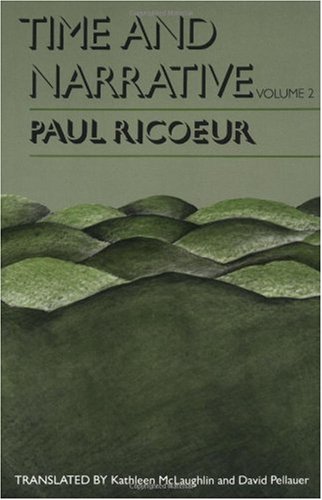
2. Time and Narrative, Volume 1 (Time & Narrative)
by Paul Ricoeur
Paperback: 281 Pages (1990-09-15)
list price: US$21.00 -- used & new: US$13.15
(price subject to change: see help)
Asin: 0226713326
Average Customer Review: 5.0 out of 5 stars
Canada | United Kingdom | Germany | France | Japan
Editorial Review

Book Description

Time and Narrative builds on Paul Ricoeur's earlier analysis, in The Rule of Metaphor, of semantic innovation at the level of the sentence. Ricoeur here examines the creation of meaning at the textual level, with narrative rather than metaphor as the ruling concern.

Ricoeur finds a "healthy circle" between time and narrative: time is humanized to the extent that it portrays temporal experience. Ricoeur proposes a theoretical model of this circle using Augustine's theory of time and Aristotle's theory of plot and, further, develops an original thesis of the mimetic function of narrative. He concludes with a comprehensive survey and critique of modern discussions of historical knowledge, understanding, and writing from Aron and Mandelbaum in the late 1930s to the work of the Annales school and that of Anglophone philosophers of history of the 1960s and 1970s.

"This work, in my view, puts the whole problem of narrative, not to mention philosophy of history, on a new and higher plane of discussion."—Hayden White, History and Theory

"Superb. . . . A fine point of entrance into the work of one of the eminent thinkers of the present intellectual age."—Joseph R. Gusfield, Contemporary Sociology

... Read more

Customer Reviews (1)

5-0 out of 5 stars Brilliant
Ricoeur, who died in 2005, had an obscure type of fame, but one that will grow exponentially as his ideas are understood more and more. This mind-blowing volume takes Augustine's and Aristotle's views on time and synthesizes them into a position on how narrative works. Great stuff. ... Read more


3. From Text to Action: Essays in Hermeneutics, II (SPEP)
by Paul Ricoeur
Paperback: 360 Pages (2007-09-13)
list price: US$29.95 -- used & new: US$26.52
(price subject to change: see help)
Asin: 0810123991
Canada | United Kingdom | Germany | France | Japan

4. The Symbolism of Evil
by Paul Ricoeur
Paperback: Pages (1986-11-12)
list price: US$25.00 -- used & new: US$18.00
(price subject to change: see help)
Asin: 0807015679
Average Customer Review: 5.0 out of 5 stars
Canada | United Kingdom | Germany | France | Japan

Customer Reviews (1)

5-0 out of 5 stars A Great Book trapped in Romanticism (In Spanish)
La estructura del símbolo es la condición de posibilidad del círculo hermenéutico: para comprender un símbolo, por tanto interpretarlo, se necesita creer en él. Pero no es una fe, que Ricoeur llama "precrítica", sino que la creencia viene fundamentada en la comprensión racional: "Si bien es cierto que no podemos revivir las grandes simbólicas de lo sagrado en su auténtica fe original, en cambio, podemos, como hombres modernos, aspirar a una nueva ingenuidad en la crítica y por la crítica. En una palabra, la interpretación es la que nos puede abrir de nuevo las puertas de la comprensión; de esta manera vuelve a soldarse por medio de la hermenéutica la donación del sentido, característica del símbolo, con la iniciativa inteligible y racional, propia de la labor crítica-interpretativa." Contra el triángulo epistemológico, el círculo hermenéutico. A diferencia del concepto definitivo de la epistemología, de su dead-end conceptual; el símbolo inagotable de la hermenéutica está en movimiento perpetuo. La comprensión racional de la hermenéutica filosófica desmitologiza; sin embargo, lo simbólico es el sello de autenticidad de cualquier filosofía de tal manera que ésta se ve atrapada en el círculo mágico del símbolo, porque como expondré después en las conclusiones, la hermenéutica vendría a ser una racionalización crítica de lo mágico, pero lo mágico y mítico es algo que estará estructurado anteriormente al discurso, de manera tal que éste se constituirá en un destino inevitable para la hermenéutica. La hermenéutica, precisamente por su ansia de significación, pagará por ese deseo el verse atrapada en la armazón mágica de lo simbólico. Sin embargo, ante esto Ricoeur nos dice: "En efecto, el mundo de los símbolos no es un reino tranquilo, pacífico y bien avenido; todo símbolo tiende a destruir a los demás, lo mismo que todo símbolo abandonado a sí mismo tiende a condensarse, consolidarse, hasta cuajar en idolatría." Pero ¿qué significa pensar a partir de los símbolos y no ya dentro de ellos, tal como la plantea Ricoeur después? Pensar dentro de los símbolos significaría transformar la filosofía en un pensamiento mágico, prerracional. Por eso el discurso filosófico es autónomo tanto frente al discurso mágico como el discurso poético, como planteará respecto en La Metáfora Viva. Sin embargo, pensar a partir de los símbolos significa `traducirlos' al discurso filosófico, desvelar los contenidos filosóficos inherentes a las narraciones míticas, pero nunca plantear una crítica a la estructura de ellos: "Todos los símbolos de la culpabilidad y todos los mitos cuentan la situación del ser del hombre en el ser del mundo. Entonces la tarea del pensador consiste en elaborar, partiendo de los símbolos, conceptos existenciales, es decir, no solo ya estructuras de la reflexión sino estructuras de la existencia en cuanto que la existencia es el ser del hombre." De esta manera, tanto la filosofía de la existencia como la hermenéutica tendría en el símbolo un punto de partida absoluto ... Read more


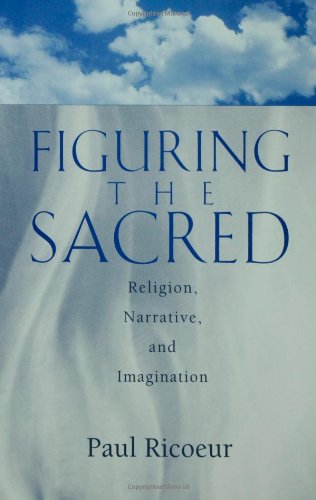
5. Figuring the Sacred: Religion, Narrative, and Imagination
by Paul Ricoeur
Paperback: 340 Pages (1995-11)
list price: US$27.00 -- used & new: US$16.83
(price subject to change: see help)
Asin: 0800628942
Average Customer Review: 3.0 out of 5 stars
Canada | United Kingdom | Germany | France | Japan

Customer Reviews (1)

3-0 out of 5 stars Pretty dense reading for the layman
I have read a lot of Ricoeur, mostly in the area of religion. I am not a professional philosopher, just an educated layman. This one contained a lot of material that was technical and I found myself glossing over whole paragraphs and pages to find the meat.The meat was there, as always, but not as much as in the Conflict of Interpretations, for instance. ... Read more


6. Thinking Biblically: Exegetical and Hermeneutical Studies
by Andre LaCocque, Paul Ricoeur
Paperback: 462 Pages (2003-12-01)
list price: US$20.00 -- used & new: US$18.34
(price subject to change: see help)
Asin: 0226713431
Average Customer Review: 4.0 out of 5 stars
Canada | United Kingdom | Germany | France | Japan
Editorial Review

Book Description

The Bible has been the site and center of countless commentaries, but perhaps none are as original as Thinking Biblically. This extraordinary venture sets the words of a distinguished biblical scholar, André LaCocque, and those of a leading philosopher, Paul Ricoeur, in dialogue around six crucial passages from the Old Testament, revealing the familiar texts as vibrant, philosophically consequential, and unceasingly absorbing.
... Read more

Customer Reviews (1)

4-0 out of 5 stars Finally
Those who have appreciated Ricouer's hermeneutics over the last fewdecades, whether they tend to agree or disagree with him, will rejoice thata sampling of biblical exegesis from Ricouer has finally appeared in thisvolume.Further, Ricouer has found a powerful dialogue partner in thewell-know biblical scholar Adnre Lacocque.Ricouer's correlationalapproach comes through nicely in his discussion of selected biblical texts. The opening discussion of Genesis 2-3 is particlarly poignant.The booksstrengths also produce its weaknesses.There is only a sampling of textshere.How would Ricouer apprach the understanding of an entire biblicalbook?We still do not know.The inclusion of Lacocque's work is quitewelcome, but it means that only half the book is Ricouer.One of thehermeneutical giants of the last half of the twentieth century appears tobe nearing the end of his career.One can only hope that more applicationof his method to the Bible is forthcoming, but at least we have this onevolume. ... Read more


7. Interpretation Theory: Discourse and the Surplus of Meaning
by Paul Ricoeur
Paperback: 118 Pages (1976-07)
list price: US$14.00 -- used & new: US$13.00
(price subject to change: see help)
Asin: 0912646594
Average Customer Review: 4.0 out of 5 stars
Canada | United Kingdom | Germany | France | Japan

Customer Reviews (1)

4-0 out of 5 stars Important work on interpretation of texts
Paul Ricoeur's focus is interpretation--how to decipher texts.Language is ". . .itself the process by which private experience is made public."When we try to understand the author of a written text, we no longer have the immediate dialogue that we have with a person to whom we are speaking.As a result, we have a ". . .detachment of meaning from the event."In essence, we now must interpret the words in a piece of writing without being able to clarify them through dialogue with the author.

But how can we make sense of this alien written discourse, now separated from the mind of its author by the simple act of putting words to paper? First, the reader must take a guess!Ricoeur says:

"With writing, the verbal meaning of the text no longer coincides with the mental meaning of intention of the text.This intention is both fulfilled and abolished by the text, which is no longer the voice of someone present . The text is mute.An asymmetric relation obtains between text and reader, in which only one of the partners speaks for the two.The text is like a musical score and the reader like the orchestra conductor who obeys the instructions of the notation.Consequently, to understand is not merely to repeat the speech event in a similar event, it is to generate a new event beginning from the text in which the initial event has been objectified."

In other words, we have to guess the meaning of the text because the author's intention is beyond our reach.A musical metaphor:Listen to Wilhelm Furtwangler's World War II recording of Beethoven's Ninth Symphony.Compare it with Arturo Toscanini's NBC Symphony Orchestra version a decade later.The tempos are slow to the breaking point in Furtwangler's reading--except for the latter portions of the fourth movement.Toscanini's interpretation maintains a tension in pace throughout (simply put, his is a "fast" version and Furtwangler's a "slow" one--until the latter's manic reading of the last segments of the fourth movement).The same notes on paper, but two very different guesses about Beethoven's meaning.Who is right in their reading of the text?How do we establish that?Since we cannot converse with Beethoven, can we ever know the "real" text, can we apprehend "reality," in a word?

Ricoeur does not believe that it is a hopeless situation.He believes that there are ways of validating our guesses.He claims that:

"An interpretation must not only be probable, but more probable than another interpretation.There are criteria of relative superiority for resolving this conflict, which can easily be derived from the logic of subjective probability."

In a sense, different interpretations that are advanced to describe the meaning of a text (and a text can be a work of art or the written word, for instance) must be compared and examined separately and against each other to see which seems to make the most sense.A kind of discourse takes place, perhaps analogous to two persons speaking, where they can concretely ground their speech.Some interpretations of Beethoven, like the Furtwangler performance, do violence to the structure of the symphony as a whole and are less compelling than others, such as Toscanini's version.

What about the relationship of the author to his or her reader(s)?Ricoeur points out that it becomes irrelevant what the author's original audience was and what the historical circumstances of the author were in creating a text.The meaning of a text is open to anyone who can read.The context in which the original words were composed has no special weight in our interpretation of that text.He notes that ". . .since the text has escaped its author and his situation, it has also escaped its original addresses."In a sense, the text belongs to anyone who can read it and interpret it in convincing ways.

To conclude, Ricoeur presents one argument about how we might read and interpret texts.Those who believe in "original intent," in trying to understand exactly what the authors of texts meant will be critical of this work.The value of works like this (and also note Gadamer's work, e.g., "Truth and Method") is that they challenge our efforts to understand the meaning of texts.By doing that, such works make us more self-reflective and critical in our own efforts to understand texts.

... Read more


8. Lectures on Ideology and Utopia
by Paul Ricoeur
Hardcover: 353 Pages (1986-12)
list price: US$98.50
Isbn: 0231060483
Canada | United Kingdom | Germany | France | Japan
Editorial Review

Book Description
The only available collection of Ricoeur's lectures on ideology and utopia, this seminal collection discusses the work of Althusser, Marx, Habermas, Geertz, Mannheim, and Weber. ... Read more


9. Paul Ricoeur: The Hermeneutics of Action (Philosophy and Social Criticism series)
 Paperback: 224 Pages (1996-04-25)
list price: US$49.95 -- used & new: US$45.40
(price subject to change: see help)
Asin: 0761951393
Canada | United Kingdom | Germany | France | Japan
Editorial Review

Book Description
This major volume assembles leading scholars to address and explain the significance of Paul Ricoeur's extraordinary body of work. Ricoeur's work is of seminal importance to the development of hermeneutics, phenomenology, and ideology critique in the human sciences. Opening with three key essays from Ricoeur himself--on Europe, fragility and responsibility, and love and justice--this fascinating volume offers a tour of his work ranging across topics such as the hermeneutics of action, narrative force, and the other and deconstruction, while discussing his work in the context of such contemporary thinkers as Heidegger, Levinas, Arendt, and Gadamer.Offering a very useful overview of Paul Ricoeur's enormous contribution to modern thought, Paul Ricoeur will be invaluable for students and academics across the social and human sciences and philosophy. ... Read more


10. On Paul Ricoeur: The Owl of Minerva (Transcending Boundaries in Philosophy and Theology) (Transcending Boundaries in Philosophy and Theology) (Transcending Boundaries in Philosophy and Theology)
by Richard Kearney
Paperback: 186 Pages (2004-09-30)
list price: US$29.95 -- used & new: US$29.93
(price subject to change: see help)
Asin: 0754650189
Average Customer Review: 5.0 out of 5 stars
Canada | United Kingdom | Germany | France | Japan

Customer Reviews (1)

5-0 out of 5 stars An Amazing Study of and Engagement with Ricoeur
Paul Ricoeur is a philosophical and theological thinker whose scope and economy of writing is unmatched in this age.Still more, it is difficult to find philosophers and theologians who can adequately engage with him.That the author, Richard Kearney, was a former student of Ricoeur's still makes no guarantee that he can do so.But Kearney does, indeed.

Kearney's book is first class in this field of thinking on Ricoeur.I would consider it as important as any of Ricoeur's own books.Though it is not "critical", this books lays out a wonderful exposition of many of Ricoeur's points.In this sense, it is better than a critical approach which often puts the progect of critiquing before understanding what is being read or thought. ... Read more


11. Paul Ricoeur: His Life and His Work
by Charles E. Reagan
Hardcover: 162 Pages (1996-10-01)
list price: US$35.00 -- used & new: US$24.97
(price subject to change: see help)
Asin: 0226706028
Average Customer Review: 5.0 out of 5 stars
Canada | United Kingdom | Germany | France | Japan
Editorial Review

Book Description

One of the major intellectual figures of the twentieth century, Paul Ricoeur has influenced a generation of thinkers. In this, the first philosophically informed biography of Ricoeur, student, colleague, and confidant Charles E. Reagan provides an unusually accessible look at both the philosophy of this extraordinary thinker and the pivotal experiences that influenced his development.

"A valuable introduction to Ricoeur; highly recommended."—Library Journal

"[A] lively introduction to the life and thought of one of this century's most notable philosophers."—Norman Wirzba, Christian Century

"Reagan lucidly explains Ricoeur's difficult philosophy while shining overdue light on the personality behind it."—Carlin Romano, Philadelphia Inquirer

"Combines biographical and philosophical essays with a more personal memoir that makes Ricoeur's humane and magnanimous nature abundantly evident. Four revealing interviews, coupled with photographs, and an extensive bibliography of primary and secondary sources, complete this illuminating study."—Choice
... Read more

Customer Reviews (1)

5-0 out of 5 stars Ricoeur's Life and Work
The work of Paul Ricoeur, while brilliant, is often difficult to penetrate. Reagan's book helps the newcomer to Ricoeur's writing get through those difficulties to an understanding of the importance of his philosophy. Reagan is uniquely qualified to do this. He was Ricoeur's student and has remained his lifelong friend. Reagan's book offers highly readable summaries of some of Ricoeur's major works complemented with biographical details that put those works into the context of Ricoeur's life. If you are only going to buy one book about Ricoeur, this should be it ... Read more


12. Hermeneutics and the Human Sciences: Essays on Language, Action and Interpretation
by Paul Ricoeur
Paperback: 324 Pages (1981-08-31)
list price: US$37.99 -- used & new: US$31.40
(price subject to change: see help)
Asin: 0521280028
Canada | United Kingdom | Germany | France | Japan
Editorial Review

Book Description
This is a collection in translation of essays by Paul Ricoeur which presents a comprehensive view of his philosophical hermeneutics, its relation to the views of his predecessors in the tradition and its consequences for the social sciences. The volume has three parts. The studies in the first part examine the history of hermeneutics, its central themes and the outstanding issues it has to confront. In Part II, Ricoeur's own current, constructive position is developed. A concept of the text is formulated as the implications of the theory are pursued into the domains of sociology, psychoanalysis and history. Many of the essays appear here in English for the first time; the editor's introduction brings out their background in Ricoeur's thought and the continuity of his concerns. The volume will be of great importance for those interested in hermeneutics and Ricoeur's contribution to it, and will demonstrate how much his approach offers to a number of disciplines. ... Read more


13. Tragic Wisdon and Beyond: Including Conversations Between Paul Ricoeur and Gabriel Marcel
by Gabriel Marcel
 Paperback: Pages (1973-07)
list price: US$17.95
Isbn: 0810104148
Canada | United Kingdom | Germany | France | Japan

14. Memory, Narrativity, Self and the Challenge to Think God: RECEOION WITHIN THEOLOGY OF THE RECENT WORK OF PAUL RICOEUR, THE (Religion-Geschichte-Gesellschaft)
by Maureen Junker-Kenny
Paperback: 200 Pages (2003-01-01)
list price: US$28.95 -- used & new: US$28.95
(price subject to change: see help)
Asin: 3825849309
Canada | United Kingdom | Germany | France | Japan

15. Oneself as Another
by Paul Ricoeur
 Hardcover: 374 Pages (1992-11-01)
list price: US$32.95
Isbn: 0226713288
Average Customer Review: 4.0 out of 5 stars
Canada | United Kingdom | Germany | France | Japan
Editorial Review

Book Description

Paul Ricoeur has been hailed as one of the most important thinkers of the century. Oneself as Another, the clearest account of his "philosophical ethics," substantiates this position and lays the groundwork for a metaphysics of morals.

Focusing on the concept of personal identity, Ricoeur develops a hermeneutics of the self that charts its epistemological path and ontological status.
... Read more

Customer Reviews (2)

5-0 out of 5 stars Great book
I am not in a position to evaluate this book. However, I think this book shows a nice attempt to theorize (?) the philosophy of the self or the first person beyond Cartesian cogito and metaphysical semantics, inviting readers to pay attention to pragmatics of the self. This book is a solid synthesis of many accomplishments in pragmatics, action theories, discursive psychology, and Russian dialogism. For that reason, it is hard to find author's original points. I would recommend to read/compare with Rom Harre's Singular Self.

3-0 out of 5 stars Subjecthood?? Subject positions?? Self-subjection??
As I understand it, the goal of Ricoeur's studies is to formulate a notion of the subject that is not susceptible to the same objections and aporia as Descartes's cogito.To accomplish this, he analyzes discursive situations and comes to the conclusion that the subject is first and foremost a being, i.e., a body in space, and that the subject understands herself first and foremost as such.Grammar reveals this self-objectivation (to borrow a term from Habermas) in that the reflexive "I" is a grammatical substitution for a corresponding third-person deictic term: "I" is the "she" of the speaking subject to the "he/him" is the "you" of the interlocutor as told from the perspective of the speaking subject, who occupies the same spatiotemporal point as the subject's particular body.
Ricoeur's findings appear rather plausible, but I cannot help but think that his findings imply sort of transcendental, or perhaps I should say, para- or transsubjective, awareness on the part of the subject that is inarticulable (neologism?) yet essential to her awareness as a body within a discursive situation.In other words, by virtue of the fact that the subject grammatically isolates herself differentially vis-à-vis her interlocutor in a discursive situation seems to me to imply that the subject's self-awareness is not as spatiotemporally limited as the body that it inhabits, or, more accurately with which it is coextensive (consubstantial?).I therefore remain uncertain on how prioritizing the corporeal subject before the thinking subject avoids the aporia of Cartesian subjectivity. ... Read more


16. Paul Ricoeur Husserl: An Analysis of His Phenomenology
by Edward G. And Embree, Lester E. (translated by) Ballard
 Hardcover: Pages (1967)

Asin: B000J2QB9I
Canada | United Kingdom | Germany | France | Japan

17. The Rule of Metaphor: The Creation of Meaning in Language (Routledge Classics)
by Paul Ricoeur
Paperback: 454 Pages (2003-08-21)
list price: US$25.23 -- used & new: US$23.95
(price subject to change: see help)
Asin: 0415312809
Average Customer Review: 5.0 out of 5 stars
Canada | United Kingdom | Germany | France | Japan

Customer Reviews (3)

5-0 out of 5 stars From symbol to metaphor -Ricoeur's idealism revisited (In Spanish)
El proyecto crítico de Ricoeur en el último estudio de La metáfora viva va como sigue: el discurso filosófico posee autonomía respecto al discurso poético. La metáfora, por tanto, pertenece exclusivamente a ésta última. La confusión que existe entre metáfora y filosofía, o que la filosofía para poner en marcha su discurso metafísico debe usar metáforas, se debe a que, por un lado, se supone un paso directo entre el funcionamiento semántico de la metáfora y los conceptos metafísicos de la filosofía; y por otro, que cierta comprensión (Heidegger, Derrida) del discurso mixto entre ontología y teología (ontoteología) es el que posibilita dicha confusión. Esta es la parte crítica de su proyecto. Sin embargo, es la restitución crítica de lo metafórico o simbólico en el seno del discurso filosófico lo importante: "Debemos considerar una modalidad totalmente diferente de implicación de la filosofía en la teoría de la metáfora... Apoyándome en los estudios precedentes, espero mostrar que la problemática de la metáfora muerta es derivada, y que la única salida es remontar la pendiente de esta especie de entropía del lenguaje mediante un acto nuevo de discurso. Sólo esta reviviscencia del enfoque semántico de la enunciación metafórica puede recrear las condiciones de una confrontación vivificante entre modos de discurso plenamente reconocidos en su diferencia. A esta vivificación mutua del discurso filosófico y del poético (el de la metáfora simbólica) queremos contribuir en las dos últimas etapas de nuestra investigación." (Ricoeur, 1985, 346s). Esta vivificación del discurso filosófico es que se vuelva él mismo con una fuerza simbólica de innovar conceptualmente. De esta manera, la filosofía trata de reanimar las metáforas muertas o conceptos para descubrir nuevas significaciones de los grandes problemas filosóficos. Podemos pensar que el desarrollo de la historia del pensamiento pertenece a esta resignificación metafórica de los conceptos y por lo tanto el campo del saber filosófico sería simbólico: "La articulación conceptual propia de la modalidad especulativa (i.e. filosófica) del discurso encuentra en el funcionamiento semántico de la enunciación metafórica su posibilidad." (Ricoeur, 1985, 400). La confusión, sin embargo, de que la filosofía sea solamente metáfora y más aún, el logos filosófico como la metáfora de metáforas hace que un estudio sobre aquello que llamamos metáfora sea también metafórico. Así llegamos a lo que Ricoeur llama "paradoja de la autoimplicación", es decir, para hablar de la metáfora sólo podemos hablar metafóricamente. Ricoeur apunta que el discurso filosófico mantiene frente al discurso propiamente metafórico de lo poético una autonomía: "La imaginatio es un nivel y un régimen de discurso. La intellectio, otro nivel y otro régimen. Aquí encuentra su límite el discurso metafórico... la intención significante del concepto sólo se separa de las interpretaciones, de las esquematizaciones, de las ilustraciones cargadas de imágenes (la metáfora), si antes se dispone de un horizonte de constitución, el del logos especulativo." (1985, 407)

5-0 out of 5 stars For the Student of Geneologies
Ricoeur's Rule of Metaphor is the missing link for anyone truly interested in getting at the roots of semiotics, semantics and hermeneutics. For the student of Western Civilization's grammar and logical structure, it provides a genesis of postmodern critique.

5-0 out of 5 stars Metaphor is the message
The problem is not that fiction shows itself to be a necessity for speculation (Ricoeur admits that it does) but that the distinctiveness between the fictions of art and the fictions of discourse/philosophy has been muddied by the exhaustion of both sets of metaphors. In other words, had we a language full of vital and living metaphors, we would then more easily recognize the distinctiveness of poetic and philosophic metaphor. He shows how Heidegger both acknowledges the distinction and then, in his attempts to step forward, slides down into the muddy waters where the distinction is lost. As a consequence, the later Heidegger shows the way only by his effort, not by his accomplishment.

Ricoeur published this in 1971. He uses Anglo-American philosophy of language extensively. I particularly enjoyed his ability to blend work in aesthetics beginning with Aristotle's Poetics down to some living philosophers who I did not know had published in that area. For instance, he locates in Nelson Goodman's reliance on "expression" in art (what we'd usually call 'style') a transcendent dimension (a 'more' than the sum of the elements in a work of art) as parallel with what in discourse might be called intention (I forget the exact word he used). But again, discourse then has its version of a transcendent dimension that communicates as the sense of the whole -- if a thinker manages to pull that off.

What was new to me (in addition to the recent scholarship on classical sources he used) was his thought. My impulse is to compare him unfavorably with Heidegger, by belittling Ricoeur's academic philosophy to Heidegger's existential declaration of the human condition. But he's just as good, in his own way. And while I could complain about his predisposition to work from within the respectable tradition of our western Judeo-Christian civilization (hence he remains 'God's' spokesman), he does not denigrate but uses the outstanding accomplishments of those for whom that tradition has become alien. ... Read more


18. Hermeneutic Phenomenology: The Philosopher of Paul Ricoeur (SPEP)
by Don Ihde
Paperback: 199 Pages (1980-01-01)
list price: US$21.00 -- used & new: US$20.95
(price subject to change: see help)
Asin: 0810106116
Canada | United Kingdom | Germany | France | Japan

19. The Conflict of Interpretations: Essays in Hermeneutics (SPEP)
by Paul Ricoeur
Paperback: 544 Pages (2007-10-16)
list price: US$29.95 -- used & new: US$23.96
(price subject to change: see help)
Asin: 0810123975
Average Customer Review: 5.0 out of 5 stars
Canada | United Kingdom | Germany | France | Japan

Customer Reviews (1)

5-0 out of 5 stars A light in the darkness
Paul Ricoeur's conflict of interpretation represents the (I think successful) attempt to provide a way to get out of the deconstruction of the self operated by Freud and the Psychanalysis.

It also gives a great theory about the simbolic use of the language.

The text might results sometimes difficult to an unprepared reader. ... Read more


20. Paul Ricoeur (Routledge Critical Thinkers)
by Karl Simms
Paperback: 200 Pages (2002-12-30)
list price: US$21.95 -- used & new: US$18.25
(price subject to change: see help)
Asin: 0415236371
Average Customer Review: 5.0 out of 5 stars
Canada | United Kingdom | Germany | France | Japan
Editorial Review

Book Description
Paul Ricoeur is one of the most wide-ranging of thinkers alive today. Although nominally a philosopher, his work also cuts across the subjects of literary criticism, psychoanalysis, history, religion legal studies and politics.Its implications are even broader. Ricoeur works out a 'theory of reading' or hermeneutics, which extends far beyond the reading of literary works to build into a theory for the reading of 'life'. This volume looks at the contexts for Ricoeur's thought,his key ideas and their impact.These key ideas include: good and evil' hermeneutics, psychoanalysis, metaphor, narrative, ethics, politics and justice
... Read more

Customer Reviews (1)

5-0 out of 5 stars Central ideas for critical engagement
Karl Simms' text on Paul Ricoeur is part of a recent series put out by the Routledge Press, designed under the general editorial direction of Robert Eaglestone (Royal Holloway, University of London), to explore the most recent and exciting ideas in intellectual development during the past century or so.To this end, figures such as Martin Heidegger, Sigmund Freud, Friedrich Nietzsche, Jacques Derrida, and other influential thinkers in critical thought are highlighted in the series, planned to include 21 volumes in all.

Simms' text, following the pattern of the others, includes background information on Ricoeur and its significance, the key ideas and sources, and Ricoeur's continuing impact on other thinkers.As the series preface indicates, no critical thinker arises in a vacuum, so the context, influences and broader cultural environment are all important as a part of the study, something with which Ricoeur would agree.

Why is Ricoeur included in this series?Ricoeur is a very wide-ranging thinker, whose influence has extended into psychology, history, politics, linguistics, literary analysis, philosophy, science, and theology (and even further afield).Ricoeur's intention behind the work is that of their being 'good', not in the sense of academic rigour or intellectual soundness (although these qualities are not overlooked), but rather, that they should be ethically good.Simms writes that Ricoeur is a philosopher of faith rather than a philosopher of suspicion, and this places him apart from many of his contemporaries.

Ricoeur is also an 'epigenetic' thinker - his thought is cumulative; he builds upon his previous works and influences.This is seen in the construction of this text.The key ideas identified by Simms are Good and Evil, Hermeneutics, Psychoanalysis, Metaphor, Narrative, Ethics, and finally Politics and Justice.As a reader who has studied theology, religion, philosophy and political science, the breadth of Ricoeur is particularly appealing.

One of the useful features of the text is the side-bar boxes inserted at various points.For example, during the discussion on Ricoeur's development of Good and Evil, there are brief discussions, set apart from the primary strand of the text, on Phenomenology, the Cartesian Cogito, Existentialism, and Orpheus, developing further these ideas should the reader not be familiar with them, or at least not in the way with which Ricoeur would be working with ideas derived from them.Each section on a key idea spans twenty to thirty pages, with a two-page summary concluding each, which gives a recap of the ideas (and provides a handy reference).

My first interest in Ricoeur developed out of an interest in narrative theology, and when tackling his massive 'Time and Narrative', I found it complex and exacting reading.Simms does a brilliant job at putting together the key points of Ricoeur's ideas on narrative, the importance and relationship of history and fiction, the ideas of prefiguration, configuration, and refiguration, and the hermeneutical circle between narratives and life into very accessible language.

The concluding chapter, After Ricoeur, highlights some key areas of development in relation to other thinkers, as well as points of possible exploration for the reader.Ricoeur's thought vis-à-vis Derrida (particularly with regard to metaphor), his thought with regard to Heidegger (especially his response to the idea of 'language being the master of man'), and his ideas as they apply to the reading of the Bible appropriately continue to challenge thinkers, and insure Ricoeur remaining a relevant figure in intellectual development.

As do the other volumes in this series, Simms concludes with an annotated bibliography of works by Ricoeur, works on Ricoeur, and even a video and website reference. ... Read more


  1-20 of 100 | Next 20
A  B  C  D  E  F  G  H  I  J  K  L  M  N  O  P  Q  R  S  T  U  V  W  X  Y  Z  

Prices listed on this site are subject to change without notice.
Questions on ordering or shipping? click here for help.

site stats