
|
Help |
| Home - Philosophers - Russell Bertrand (Books) | |
e99 Online Shopping Mall
|
|
Help |
| Home - Philosophers - Russell Bertrand (Books) | |
| Back | 21-40 of 99 | Next 20 |
click price to see details click image to enlarge click link to go to the store
| 21. Introduction To Mathematical Philosophy (1920) by Bertrand Russell | |
| Hardcover: 218
Pages
(2010-09-10)
list price: US$31.96 -- used & new: US$30.45 (price subject to change: see help) Asin: 116664605X Average Customer Review: 
Canada | United Kingdom | Germany | France | Japan | |
|
Editorial Review Product Description Customer Reviews (10)
| |
| 22. Russell: A Very Short Introduction (Very Short Introductions) by A. C. Grayling | |
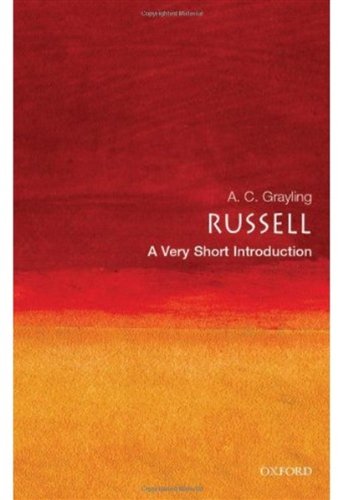 | Paperback: 168
Pages
(2002-05-16)
list price: US$11.95 -- used & new: US$3.99 (price subject to change: see help) Asin: 0192802585 Average Customer Review: 
Canada | United Kingdom | Germany | France | Japan |
|
Editorial Review Product Description Customer Reviews (3)
Highly recommended for people who'd like a quick introduction to Russel.
| |
| 23. Inquiry into Meaning & Truth by Bertrand Russell | |
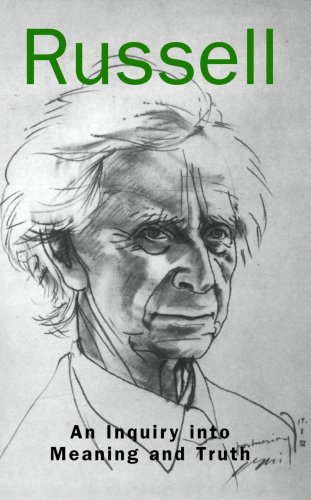 | Paperback: 445
Pages
(2007-11-30)
list price: US$55.00 -- used & new: US$21.16 (price subject to change: see help) Asin: 0851247377 Average Customer Review:
Canada | United Kingdom | Germany | France | Japan |
|
Editorial Review Product Description Customer Reviews (1)
| |
| 24. Marriage and Morals by Bertrand Russell | |
 | Paperback: 320
Pages
(1970-03-17)
list price: US$16.95 -- used & new: US$8.00 (price subject to change: see help) Asin: 0871402114 Average Customer Review:
Canada | United Kingdom | Germany | France | Japan |
|
Editorial Review Product Description "Fundamental and clear, unbiased and persuasive. Russell writes as a humanist, defending the happiness of man against many moral prejudices, advocates his changes lucidly and wittily." —Time Customer Reviews (11)
| |
| 25. The Scientific Outlook (Routledge Classics) by Bertrand Russell | |
 | Paperback: 240
Pages
(2009-04-06)
list price: US$23.95 -- used & new: US$17.96 (price subject to change: see help) Asin: 0415474620 Average Customer Review:
Canada | United Kingdom | Germany | France | Japan |
|
Editorial Review Product Description According to Bertrand Russell, science is knowledge; that which seeks general laws connecting a number of particular facts. It is, he argues, far superior to art, where much of the knowledge is intangible and assumed. In The Scientific Outlook, Russell delivers one of his most important works, exploring the nature and scope of scientific knowledge, the increased power over nature that science affords and the changes in the lives of human beings that result from new forms of science. Insightful and accessible, this impressive work sees Russell at his very best. Customer Reviews (3)
As its name suggests, The Scientific Outlook, is an attempt to predict the next developments in science as seen from the perspective of the early 1930's. The contents of this book were so outrageous and shocking in their time that they were best appreciated by those people who saw it as their business to show our destiny taking an unexpected turn, painting a picture of a time to come when things contrast radically with our current circumstances. There are instances where such predictive storytelling is intended as a warning, attempting to offer an insight into how seemingly innocuous trends and apparently insignificant contemporary changes portend unforeseen (but not unforeseeable) catastrophic longer term outcomes. Science fiction writing has a major category called 'technological extrapolation' in which the above occurs, and within that genre there is a subcategory called 'dystopia' which uses such crystal gazing to present a kind of 'negative utopia' where 'it all ends in tears'. The two most famous twentieth century dystopias, two 'worlds turned upside down', are Brave New World, by Aldous Huxley, and '1984' by George Orwell. Both of these great works have very strong connections to this book, the former being substantially derived from it. Aldous Huxley was Russell's student and published Brave New World a year after The Scientific Outlook. Orwell was strongly influenced in '1984' by Burnham's 1940 classic 'The Managerial Revolution' which has strong parallels with 'The Scientific Outlook' (although Russell claims no direct influence on Burnham, he points out the similarity of Burnham's material, which was published nearly a decade after Russell's book). Even if the similarity to the predictions in `The Managerial Revolution' was a freakish coincidence, the connection to Brave New world is unquestionable and the shared dystopian derivations are `of a piece' with 1984 to the extent where, if you want to `go back to the source' in an easily readable form (Russell's writing is razor sharp and witty, with all the historical context you could wish for in a popular science book) you could not ask for a better starting point in terms of understanding the technological roots of those two great novels. An enjoyable and insightful read, essential for anyone trying to get to grips with the recent history and philosophy of science, especially in the highly controversial field of medical ethics, where it is possible to see eugenics from a standpoint which preceded its post-war ethical and political denunciation. ... Read more | |
| 26. Power: A New Social Analysis (Routledge Classics) by Bertrand Russell | |
 | Paperback: 288
Pages
(2004-03-02)
list price: US$19.95 -- used & new: US$13.85 (price subject to change: see help) Asin: 0415325072 Average Customer Review:
Canada | United Kingdom | Germany | France | Japan |
|
Editorial Review Product Description Customer Reviews (3)
Russell's descriptions of the motivations behind power seeking individuals and organizations, the appeal of leaders, types of power and the basis for authority are compelling.The means for acquiring and exercising power are described by Russell in a systematic, conspiratorial manner.By understanding its appeal and the methods by which it is attained, Russell argues, mankind can hope to tame power. I felt that in this book Russell sought to deliver a "world-view" a la Karl Marx, whose communist ideas were based on the belief that the source of conflict in the world was man's alienation.With a twist, Russell might say that man's (and man's organizations, which he grants develop an organic life of their own) grasping for power is the chief cause of pain, stifled freedom, and stunted progress. It's important to keep in mind that this book was first published in 1938 - though it's not hard to do while reading since Russell continuously warns of an impending great war.He refers to WWI as the "War" and an imminent WWII as the "Great War."I think, perhaps, the great motivation for writing it may have been to explain the rise of despotic and totalitarian governments during the era preceding its publication.A defining quote is: "No other organization rouses anything like the loyalty aroused by the national State.And the chief activity of the State is preparation for large-scale homicide.It is loyalty to this organization for death that causes men to endure the totalitarian State, and to risk the destruction of home and children and our whole civilization rather than submit to alien rule." Russell is my favorite philosopher and I'm planning to read many more of his books.I strongly recommend his History of Western Philosophy and The Conquest of Happiness.Russell wrote so many books on such a wide variety of subjects.My qualms with Power are its over ambitious reach, the frenetic pace of the writing and Russell's disdain for business and economics.Enjoy! ... Read more | |
| 27. Proposed Roads to Freedom: Socialism, Anarchism and Syndicalism by Bertrand Russell | |
 | Hardcover: 240
Pages
(2009-03-10)
list price: US$28.99 -- used & new: US$25.94 (price subject to change: see help) Asin: 1103554093 Average Customer Review: 
Canada | United Kingdom | Germany | France | Japan |
|
Editorial Review Product Description "My own opinion - which I may as well indicate at the outset - is that pure Anarchism, though it should be the ultimate ideal, to which society should continually approximate, is for the present impossible, and would not survive more than a year or two at most if it were adopted.On the other hand, both Marxian Socialism and Syndicalism, in spite of many drawbacks, seem to me calculated to give rise to a happier and better world than that in which we live.I do not, however, regard either of them as the best practicable system.Marxian Socialism, I fear, would give far too much power to the State, while Syndicalism, which aims at abolishing the State, would, I believe, find itself forced to reconstruct a central authority in order to put an end to the rivalries of different groups of producers.The best practicable system, to my mind, is that of Guild Socialism, which concedes what is valid both in the claims of the State Socialists and in the Syndicalist fear of the State, by adopting a system of federalism among trades for reasons similar to those which are recommending federalism among nations." This fine eBook is colorfully published in portrait orientation, footnoted on the pages where they are referenced, fully searchable and fully printable. Enjoy! (113pp) Customer Reviews (1)
| |
| 28. Russell (The Routledge Philosophers) by Gregory Landini | |
 | Paperback: 488
Pages
(2010-09-20)
list price: US$29.95 -- used & new: US$21.56 (price subject to change: see help) Asin: 0415396271 Canada | United Kingdom | Germany | France | Japan |
|
Editorial Review Product Description Bertrand Russell (1872–1970) was renowned as one of the founding figures of "analytic" philosophy, and for his lasting contributions to the study of logic, philosophy of language, philosophy of mathematics and epistemology. He was also famous for his popular works, where his humanism, ethics and antipathy towards religion came through in books such as The Problems of Philosophy, Why I am Not A Christian, and The Conquest of Happiness. Beginning with an overview of Russell’s life and work, Gregory Landini carefully explains Russell’s philosophy, to show why he ranks as one of the giants of British and Twentieth century philosophy. He discusses Russell’s major early works in philosophy of mathematics, including The Principles of Mathematics, wherein Russell illuminated and developed the ideas of Gottlob Frege; and the monumental three volume work written with Alfred North Whitehead, Principia Mathematica, where the authors attempted to show that all mathematical theory is part of logic, understood as a science of structure. Landini discusses the second edition of Principia Mathematica, to show Russell’s intellectual relationship with Wittgenstein and Ramsey. He discusses Russell’s epistemology and neutral monism before concluding with a discussion on Russell’s ethics, and the relationship between science and religion. Featuring a chronology and a glossary of terms, as well as suggestions for further reading at the end of each chapter, Russell is essential reading for anyone studying philosophy, and is an ideal guidebook for those coming to Russell for the first time. | |
| 29. Principia Mathematica - Volume Three by Alfred North Whitehead, Bertrand Russell | |
 | Paperback: 500
Pages
(2009-02-27)
list price: US$19.95 -- used & new: US$16.85 (price subject to change: see help) Asin: 160386184X Average Customer Review: 
Canada | United Kingdom | Germany | France | Japan |
|
Editorial Review Product Description Customer Reviews (1)
| |
| 30. Principia Mathematica - Volume Two by Alfred North Whitehead, Bertrand Russell | |
 | Paperback: 808
Pages
(2009-02-21)
list price: US$19.95 -- used & new: US$11.75 (price subject to change: see help) Asin: 1603861831 Canada | United Kingdom | Germany | France | Japan |
|
Editorial Review Product Description | |
| 31. The principles of mathematics by Bertrand Russell | |
| Paperback: 582
Pages
(2010-09-06)
list price: US$44.75 -- used & new: US$29.74 (price subject to change: see help) Asin: 1171536054 Average Customer Review:
Canada | United Kingdom | Germany | France | Japan | |
|
Editorial Review Product Description Customer Reviews (9)
| |
| 32. The practice and theory of bolshevism [1921] by Bertrand Russell | |
 | Paperback: 202
Pages
(2009-07-08)
list price: US$18.99 -- used & new: US$18.99 (price subject to change: see help) Asin: 1112111913 Canada | United Kingdom | Germany | France | Japan |
|
Editorial Review Product Description | |
| 33. Bertrand Russell: The Psychobiography of a Moralist by Andrew Brink | |
| Paperback: 184
Pages
(1989-08)
list price: US$15.00 -- used & new: US$15.00 (price subject to change: see help) Asin: 039103605X Canada | United Kingdom | Germany | France | Japan | |
| 34. Introducing Bertrand Russell by Dave Robinson | |
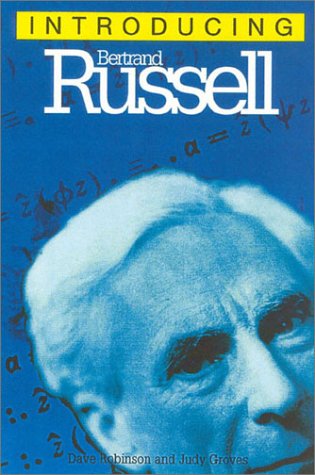 | Paperback: 176
Pages
(1998-08-27)
list price: US$11.95 -- used & new: US$5.97 (price subject to change: see help) Asin: 1840463821 Canada | United Kingdom | Germany | France | Japan |
|
Editorial Review Product Description | |
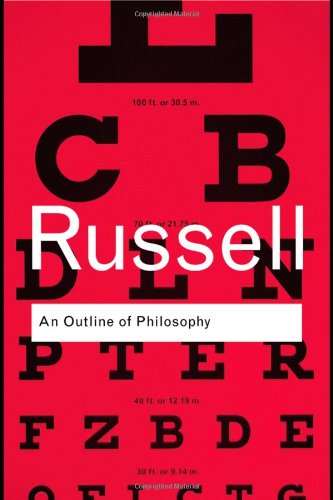
| 35. An Outline of Philosophy (Routledge Classics) by Bertrand Russell | |
 | Paperback: 352
Pages
(2009-04-06)
list price: US$23.95 -- used & new: US$14.92 (price subject to change: see help) Asin: 0415473454 Average Customer Review:
Canada | United Kingdom | Germany | France | Japan |
|
Editorial Review Product Description In his controversial book An Outline of Philosophy, first published in 1927, Bertrand Russell argues that humanity demands consideration solely as the instrument by which we acquire knowledge of the universe. From our inner-world to the outer-world, from our physical world to the universe, his argument separates modern scientific knowledge and our ‘seeming’ consciousness. These innovative perspectives on philosophy made a significant contribution to the discourse on the meaning, relevance and function of philosophy which continues to this day. Customer Reviews (1)
| |
| 36. Sceptical Essays (Routledge Classics) by Bertrand Russell | |
 | Paperback: 240
Pages
(2004-03-02)
list price: US$17.95 -- used & new: US$11.28 (price subject to change: see help) Asin: 0415325080 Average Customer Review:
Canada | United Kingdom | Germany | France | Japan |
|
Editorial Review Product Description Customer Reviews (3)
| |
| 37. War Crimes in Vietnam by Bertrand Russell | |
 | Paperback: 180
Pages
(2009-01-15)
list price: US$15.00 -- used & new: US$13.49 (price subject to change: see help) Asin: 0853450587 Average Customer Review:
Canada | United Kingdom | Germany | France | Japan |
|
Editorial Review Product Description Customer Reviews (2)
| |
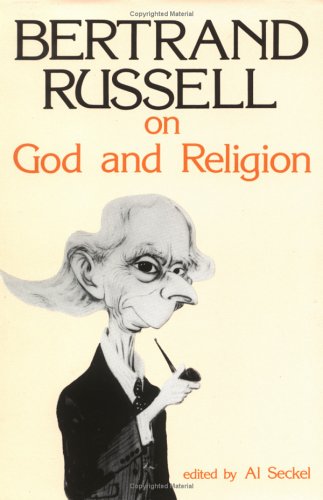
| 38. Bertrand Russell on God and Religion (Great Books in Philosophy) by Bertrand Russell | |
 | Paperback: 350
Pages
(1986-02)
list price: US$25.98 -- used & new: US$9.99 (price subject to change: see help) Asin: 0879753234 Average Customer Review: 
Canada | United Kingdom | Germany | France | Japan |
|
Editorial Review Product Description Customer Reviews (6)
| |
| 39. Bertrand Russell's America : 1896 - 1945 by Bertrand Russell | |
| Hardcover:
Pages
(1974-02-06)
list price: US$12.50 -- used & new: US$107.65 (price subject to change: see help) Asin: 0670159034 Canada | United Kingdom | Germany | France | Japan | |
| 40. All about Bertrand Russell by Students' Academy | |
 | Kindle Edition:
Pages
(2010-10-03)
list price: US$1.50 Asin: B0045OUJOE Canada | United Kingdom | Germany | France | Japan |
|
Editorial Review Product Description "Men are born ignorant, not stupid. They are made stupid by education." ----Bertrand Russell Introduction 4 Print ISBN: 978-0-557-71473-5 | |
| Back | 21-40 of 99 | Next 20 |
 200 pages missing on the book. The policy makes me pay for shipping and receive only 1/2 of the value of the book