e99 Online Shopping Mall

Geometry.Net - the online learning center Help  
Home  - Philosophers - Sartre Jean-paul (Books)

  Back | 21-40 of 100 | Next 20
A  B  C  D  E  F  G  H  I  J  K  L  M  N  O  P  Q  R  S  T  U  V  W  X  Y  Z  

click price to see details     click image to enlarge     click link to go to the store

 
$37.99
21. Quiet Moments in a War: The Letters
$12.91
22. Jean-Paul Sartre (Reaktion Books
$11.70
23. A Puerta Cerrada / La Puta Respetuosa
$17.65
24. Iron in the Soul (Penguin Modern
 
25. The Family Idiot: Gustave Flaubert
 
26. Critique of Dialectical Reason,
$10.00
27. Search for a Method
$20.02
28. Witness to My Life
$7.36
29. Between Existentialism and Marxism
 
30. Jean-Paul Sartre, Literary Essays.
$15.56
31. Les Mots
 
$22.80
32. The Writings of Jean-Paul Sartre
$14.00
33. The Imaginary: A Phenomenological
 
34. The Philosophy of Jean-Paul Sartre
$24.69
35. Jean Paul Sartre
 
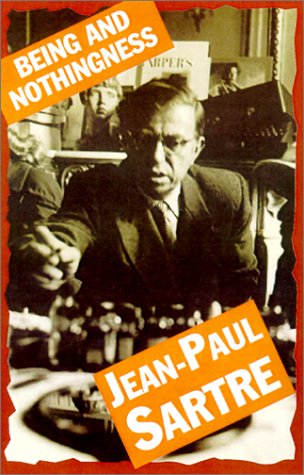
36. Being and nothingness;: An essay
 
37. What Is Literature
$73.50
38. Notebooks for an Ethics
$26.46
39. Nothingness and Emptiness: A Buddhist
40. Intimacy and Other Stories

21. Quiet Moments in a War: The Letters of Jean-Paul Sartre to Simone De Beauvoir 1940-1963
by Jean-Paul Sartre
 Hardcover: 320 Pages (1993-11)
list price: US$27.50 -- used & new: US$37.99
(price subject to change: see help)
Asin: 0684195666
Canada | United Kingdom | Germany | France | Japan

22. Jean-Paul Sartre (Reaktion Books - Critical Lives)
by Andrew Leak
Paperback: 168 Pages (2006-05-01)
list price: US$16.95 -- used & new: US$12.91
(price subject to change: see help)
Asin: 1861892705
Canada | United Kingdom | Germany | France | Japan
Editorial Review

Book Description

“What I have just written is false. True. Neither true nor false, like everything one writes about madmen, about men.” With these sentences, Jean-Paul Sartre undermines the truthfulness of his own autobiography, Les Mots. Undeterred by such circumlocutions, Andrew Leak here cuts through Sartre’s own disavowals to unearth the man behind the literary and philosophical giant.

This biographical study integrates Sartre’s works into his personal life, revealing the intimate contexts in which his philosophy developed. From Sartre’s beginnings as a bright and precocious student, Leak explores how he struggled against the repressive strictures of bourgeois expectations, endured cruelty at the hands of schoolmates, and forged his conflicted personality within a fragmented family life. The book probes his particularly influential relationships with a range of people—from Simone de Beauvoir to Gaston Gallimard—and how Sartre was transformed by historical events, in particular his service in World War II.

Telling anecdotes, personal correspondence, and archival photographs expose how Sartre’s own challenges emerged as predominant themes in his works—such as theoften blurred delineation between the real and imaginary, and his preoccupation with definitions of “madness” in the individual. Leak’s astute and provocative examination of Sartre himself challenges the philosopher’s assertion about the limits of knowledge of the other.
... Read more

23. A Puerta Cerrada / La Puta Respetuosa (Nueva Edicion) (Biblioteca Clasica Y Contemporanea)
by Jean-Paul Sartre
Paperback: 144 Pages (2005-09-02)
list price: US$9.25 -- used & new: US$11.70
(price subject to change: see help)
Asin: 9500306336
Canada | United Kingdom | Germany | France | Japan

24. Iron in the Soul (Penguin Modern Classics)
by Jean-Paul Sartre
Paperback: 368 Pages (2002-09-26)
list price: US$22.70 -- used & new: US$17.65
(price subject to change: see help)
Asin: 0141186577
Canada | United Kingdom | Germany | France | Japan

25. The Family Idiot: Gustave Flaubert 1821-1857
by Gustave] Sartre, Jean-Paul [Flaubert
 Hardcover: Pages (1971)

Asin: B000KTH8HY
Canada | United Kingdom | Germany | France | Japan

26. Critique of Dialectical Reason, Volume 1.
by Jean-Paul Sartre
 Paperback: Pages (1991)

Asin: B000UFWX96
Canada | United Kingdom | Germany | France | Japan

27. Search for a Method
by Jean-Paul Sartre
Mass Market Paperback: 224 Pages (1968-08-12)
list price: US$13.60 -- used & new: US$10.00
(price subject to change: see help)
Asin: 0394704649
Average Customer Review: 5.0 out of 5 stars
Canada | United Kingdom | Germany | France | Japan

Customer Reviews (3)

5-0 out of 5 stars The Dawn of Marxist Existentialism
As the quote on the cover suggests, this may very well be "the most important work of Sartre's to be translated since Being and Nothingness."To be sure, The Critique of Dialectical Reason may be also, or even The Family Idiot.But it must also be recalled that Search for a Method, while first published as an occasional piece for a Czech journal, was latter published as the introduction to The Critique, and, moreover, Sartre states that The Family Idiot is in fact the sequel to Search in the preface of the former tome.Indeed, both of these works are much more comprehensible after having read Search.The reason being is that Search outlines the method and general strategy utilized in both of those books (and in Saint Genet to some extent even though it came out prior).The method is of course the progressive regressive method and the strategy is a quasi anthropology mixed occasionally with a new hybrid of existential psychoanalysis.As the two major works that came out of Search can attest - those being The Critique and FI - his method is equally accessible to both large scale cultural descriptions (the Critique) and in depth profiles of a single individual.The former case asks 'what are the conditions that have created modern western man as we know him,' the latter asks what are the conditions that have created this particular individual.'

For those who are aquainted with Sartre's earlier existential writings, this kind of thinking may seem altogether foreign.The old Sartre would have been loathe to suggest any form of conditioning or that one has been made in some way or other.But, this is part of the reason why many feel he abandoned his existentialism.I, on the other hand, do not feel that he did at all.In fact I suggest his existentialism is richer and his arguments more tenable in his later phase.As Sartre himself suggested in an interview late in his life, "life taught me the force of circumstances."It will be circumstances, both grand and minute, that all go into forming the people we are, both collectively and individually.Circumstances are, in other words, the factical moments out of which our contingent choices are made.Thus, Search sets out to examine a methodology that can account for both the factical and contingent, the necessary and the random, in the making of a people, person, or culture.

By Sartre standards this is a relatively easy read with a big payoff.As I mentioned, it is crucial to understanding the major works that would follow, as well as the occasional and literary works that would follow, e.g. his many writings on politics and even plays such as Condemned of Altona.But I also feel it stands well by itself and I do not feel that the reader necessarily have a background in Being and Nothingness or earlier Sartre to get something out of it.Indeed, it is also an excellent source for those seeking alternatives to the various more popular forms of psychoanalysis as well as cultural studies.Sartre was a maverick, no doubt, and often he failed in his attempts to construct a solid theory.But here, in Search, I believe that Sartre is at his best and most profound.

5-0 out of 5 stars wonderfully evinced
Professor Barnes easily makes clear Satre's works even through his haze of Extentialism.As Sartre gave us his posture of dialectical materialism, Professor Barnes clearly explains Sartre. Thank you Professor Barnes, and, do it again and again, please.

5-0 out of 5 stars This is the best and most concise intro to Sartre.
"Search for a Method" was originally intended as a postcript tothe 1960 "Critique of Dialectical Reason," but it became theintro & then was published separately. Its thesis, "Cultural orderis irreducible to natural order," forms the basis for an examinationof contemporary Marxism, which Sartre calls "arrested." Between"Being and Nothingness" and the often puzzling posthumousmaterial, this is the best and most concise intro to Sartre by Sartre.Kudos to Professor Barnes for another outstanding translation! ... Read more


28. Witness to My Life
by Jean-Paul Sartre
Paperback: 464 Pages (2002-05-21)
list price: US$24.95 -- used & new: US$20.02
(price subject to change: see help)
Asin: 0743244052
Canada | United Kingdom | Germany | France | Japan

29. Between Existentialism and Marxism (Radical Thinkers)
by Jean-Paul Sartre
Paperback: 304 Pages (2008-01-01)
list price: US$12.95 -- used & new: US$7.36
(price subject to change: see help)
Asin: 1844672077
Canada | United Kingdom | Germany | France | Japan
Editorial Review

Book Description
A classic work by the founding father of existentialism, describing his philosophy and its relationship to Marxism.

"Verso's beautifully designed Radical Thinkers series, which brings together seminal works by leading left-wing intellectuals, is a sophisticated blend of theory and thought. The authors whose writings are included in the series have worked tirelessly to expose the mechanisms by which culture and knowledge are manufactured, managed and controlled."—Ziauddin Sardar, New Statesman ... Read more


30. Jean-Paul Sartre, Literary Essays.
by Jean Paul Sartre
 Mass Market Paperback: Pages (1957)

Asin: B000I34A0U
Canada | United Kingdom | Germany | France | Japan

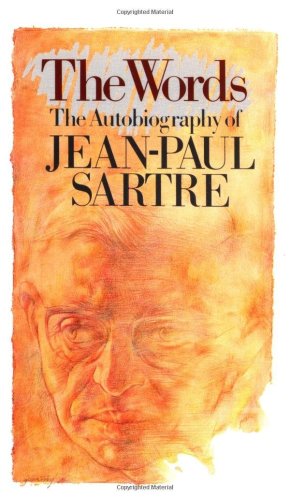
31. Les Mots
by Jean-Paul Sartre
Paperback: Pages (1990)
list price: US$19.95 -- used & new: US$15.56
(price subject to change: see help)
Asin: 082883749X
Average Customer Review: 5.0 out of 5 stars
Canada | United Kingdom | Germany | France | Japan

Customer Reviews (1)

5-0 out of 5 stars Insightful, Superbly Written, Sublime.
"les Mots", or "Words", is Jean-Paul Sartre's autobiography about his childood, with a strong emphasis on literature; an emphasis which is only natural, since little Sartre grew up with them before he began writing himself (pun intended).

Accordingly, the book is divided into two parts: "To Read" and "To Write".

If you can read French, then please do yourself a favour and read this wonderful text. It is so good, it actually made me enjoy writing French prose, which is something no other text before ever did, and about the only other French text that I can remember which had an effect of "wow, that's well written!" on me was "les Liaisons Dangereuses" by Laclos.

"Les Mots" is a thrilling read, with insights so profound and witty that I enjoyed every page of it. I generally love Sartre's writings, and this is no exception; it just may have a little something more, in the sense that, for all I know, it is the only explicitly autobiographic book he wrote.

I can't recommend this book enough. ... Read more


32. The Writings of Jean-Paul Sartre Volume 2: Selected Prose (SPEP)
by Jean-Paul Sartre
 Paperback: 252 Pages (1985-08-01)
list price: US$30.00 -- used & new: US$22.80
(price subject to change: see help)
Asin: 0810107090
Canada | United Kingdom | Germany | France | Japan

33. The Imaginary: A Phenomenological Psychology of the Imagination
by Jean-Paul Sartre, Arlette Elkaim-Sartre
Paperback: 264 Pages (2004-03)
list price: US$22.95 -- used & new: US$14.00
(price subject to change: see help)
Asin: 0415287553
Canada | United Kingdom | Germany | France | Japan
Editorial Review

Book Description
First published in 1940, Sartre's The Imaginary is a cornerstone of his philosophy.Sartre had become acquainted with the philosophy of Edmund Husserl in Berlin and was fascinated by his idea of the "intentionality of consciousness" as a key to the puzzle of existence.
Against this background, The Imaginary crystallized Sartre's worldview and artistic vision.Here he presented the first extended examination of the concepts of nothingness and freedom, both of which are derived from the ability of consciousness to imagine objects both as they are and as they are not.These ideas would drive Sartre's existentialism and his entire theory of human freedom, laying the foundation for his masterwork Being and Nothingness three years later. This new translation by Jonathan Webber rectifies flaws in the terminology of the first translation and recaptures the essence of Sartre's phenomenology.Webber's perceptive new introduction helps to decipher this challenging, seminal work, placing it in the context of the author's work and the history of philosophy. ... Read more


34. The Philosophy of Jean-Paul Sartre
by Jean-Paul) Cumming, Robert Denoon ed Sartre
 Hardcover: Pages (1965)

Asin: B000NPS43W
Canada | United Kingdom | Germany | France | Japan

35. Jean Paul Sartre
by Annie Cohen Solal
Paperback: Pages (2006-01)
list price: US$38.00 -- used & new: US$24.69
(price subject to change: see help)
Asin: 8433962310
Canada | United Kingdom | Germany | France | Japan

36. Being and nothingness;: An essay on phenomenological ontology
by Jean Paul Sartre
 Unknown Binding: 811 Pages (1968)

Asin: B0007FXX5W
Canada | United Kingdom | Germany | France | Japan

37. What Is Literature
by Jean Paul Sartre
 Paperback: Pages (0000)

Asin: B000XM9XW6
Canada | United Kingdom | Germany | France | Japan

38. Notebooks for an Ethics
by Jean-Paul Sartre
Hardcover: 608 Pages (1992-10-01)
list price: US$80.00 -- used & new: US$73.50
(price subject to change: see help)
Asin: 0226735117
Average Customer Review: 5.0 out of 5 stars
Canada | United Kingdom | Germany | France | Japan
Editorial Review

Book Description

A major event in the history of twentieth-century thought, Notebooks for a Ethics is Jean-Paul Sartre's attempt to develop an ethics consistent with the profound individualism of his existential philosophy.

In the famous conclusion to Being and Nothingness, Sartre announced that he would devote his next philosophical work to moral problems. Although he worked on this project in the late 1940s, Sartre never completed it to his satisfaction, and it remained unpublished until after his death in 1980. Presented here for the first time in English, the Notebooks reveal Sartre at his most productive, crafting a masterpiece of philosophical reflection that can easily stand alongside his other great works.

Sartre grapples anew here with such central issues as "authenticity" and the relation of alienation and freedom to moral values. Exploring fundamental modes of relating to the Other—among them violence, entreaty, demand, appeal, refusal, and revolt—he articulates the necessary transition from individualism to historical consciousness. This work thus forms an important bridge between the early existentialist Sartre and the later Marxist social thinker of the Critique of Dialectical Reason. The Notebooks themselves are complemented here by two additional essays, one on "the good and subjectivity," the other on the oppression of blacks in the United States.

With publication of David Pellauer's lucid translation, English-speaking readers will be able to appreciate this important contribution to moral philosophy and the history of ethics.

Jean-Paul Sartre (1906-1980) was offered, but declined, the Nobel Prize for literature in 1964. His many works of fiction, drama, and philosophy include the monumental study of Flaubert, The Family Idiot, and The Freud Scenario, both published in translation by the University of Chicago Press.
... Read more

Customer Reviews (1)

5-0 out of 5 stars An Existentialist Ethics?
This is an excellent translation of a long, extremely important - though fragmentary - text by Sartre, posthumously-published and still quite seriously neglected. It is well-known that, in Being and Nothingness, Sartre promised to publish a treatise on ethics, the implication being that it would be based on the ontology of that work. Notebooks for an Ethics shows him struggling to fulfil that promise, but ultimately failing as his basic perspective changes. It is indispensable reading for anyone having, or seeking, a view on whether it is possible to build an ethics upon the foundations of Sartre's early existentialism. ... Read more


39. Nothingness and Emptiness: A Buddhist Engagement With the Ontology of Jean-Paul Sartre
by Steven William Laycock
Paperback: 223 Pages (2001-03-31)
list price: US$21.95 -- used & new: US$26.46
(price subject to change: see help)
Asin: B000HWZ29K
Average Customer Review: 3.0 out of 5 stars
Canada | United Kingdom | Germany | France | Japan
Editorial Review

Book Description
Brings together the philosophy of Jean-Paul Sartre and Zen Buddhism. ... Read more

Customer Reviews (4)

5-0 out of 5 stars Read and re-read
This book is rich in insight and throughness.Yes, you need time to read it, but Laycock has taken an idea that I've thrown around in my own mind for some time and expanded on it with a philospher's throughness.
I am aware that similar arguments are available in Asian texts, but with a Westerner's skepticism, I needed a good Western argument to convince me!

3-0 out of 5 stars Little if Anything
First I feel obliged to say something nice about this work and have to say that any work that looks at one complex writer's ontology through the challenging frame of a concept like emptiness in Buddhist philosophy deserves some commendation. Laycock's work is, however, too dry, scholastic and obscurantist. Whatever his subjective experience, if he writes for the general public then he should try to imagine the needs of his reader. He should do a basic writing course as well. I also found more accessible accounts of Sartre's work and its similarity to early Buddhist epistomology and ontology by Asisan authors. I also found Sartre's "Being and Nothingness" much easier to read than Laycock's flight of associations.

4-0 out of 5 stars Contrary to the Prior Review. . .
I actually quite enjoyed this. No, it's certainly not for someone with a passing interest in Philosophy; likewise for someone with a minor vocabulary. It is, absolutely, a difficult work. But Laycock seems interested in preserving his ideas in the honeycombed Literary modes of Phenomenology, Existentialism and (a relatively esoteric form of) Buddhism, and succeeds by acheiving a work as complex as it is. This defines the barrier for the average reader though, regardless of how versed they are in "jargon."Laycock is painstaking in his analysis, both in its poesis and its content, and the book is certainly worth the time if you are deeply interested in any of the aforementioned doctrines. However, as the other reviewer exemplifies, if you're not able to really dig in and spend a few minutes with each page (literally so, it's a SLOW read), you may as well use it as a fan instead. Overall, though, _Nothingness and Emptiness_ turns out to be a wonderful experience of rich, meditative philosophy, challenging and rewarding in its complexity and linguisticdepth. Laycock's assertions and conclusions (especially those involving Nagarjuna and Madhyamaka Buddhism) are absolutely fascinating even if one is compelled to disagree at times. But the end result is an expanded and appreciative view of Mahayana Buddhism, and an absolutely exploded take on Sartrean Existentialism/Phenomenology.I feel the book is deserving of far better than one solitary, short-sighted bash--give it a try. If you've any interest in either half of Laycock's equation (i.e.- Buddhism OR Sartre) you'll be surprisingly welcomed if you attempt it with patience and an empty mind.

1-0 out of 5 stars I want my money back.
The book reads like an academic journal whose audience enjoys reading in the jargon of its highly specialized field. I don't recommend this book at all. Boring...I want my money back. ... Read more


40. Intimacy and Other Stories
by Jean Paul Sartre
Paperback: 272 Pages (2005-05)
list price: US$27.95
Isbn: 1417992697
Average Customer Review: 4.0 out of 5 stars
Canada | United Kingdom | Germany | France | Japan

Customer Reviews (1)

4-0 out of 5 stars Sartre and world problems from a philosophical viewpoint
As you might know Jean-Paul Sartre is one of the most famous Frenchphilosophers, novelists, and play writers during the early 1900's. "Intimacy" by Sartre is probably considered one of his less famous works, unlike his most influential book of 20th-century philosophy - "Being and Nothingness".

This might sound quite dissapointing but Intimacy is one those books which takes constant re-reading, analyzing, and reading within context. If you are into philosophy this piece of work is completely crucial to anyone interested in reading about post-modern philosophy and existentialism.

In "Intimacy", Sartre deals with the various mazes of human freedom, about the necessasry suffering. Lulu a "dirty" wife who is married to Henri only because of his relatively high tolerance and his own unique manner of expressing or feigning un-concern. Lulu is left free to "wander" but Henri the husband is the point of -"departure and return". There exists the conflict of psychologies: Henri, with his devotion for the Swiss, seems to be ridgid and sexually sedated. He is split between righteous piety and sexual desire, to speak with Sartre's philosophy in mind.

Lulu is the sensual and free woman. Her temperment is one that exceeds the rules and regulations of marriage. She is faithful tothe physical desire she has for a young skilled bed partner waiter, Pierre but nothing else. She also is both spiritually and physically devoted to a lesbian named Rirette. Lulu is strangely repulsed by men, and then yet she is attracted to them. She attempts to resolve the conflict by having her lebian mate- Rirette, a third choice.

The theme of the whole story might be: Bodily conciousness and then once realizing its existence, what to do with it? Pretend that the body does not exist? That a person is not capable of being sexually exicted? Sartre would support a strict adherence to the body as body, and desire as desire, and that a person not deny "his self", but accept it, and be faithful to it's capacity.

Rirette regrets ripping Lulu away from Henri at the end of the story, but since Lulu has expressed her love for her homosexual partner, what more can she do? Her sexual jealousy has been nullified, Lulu can't stop loving Rirette. Rirette ends the story with the acceptance of Lulu as an individual. So in the end society does have its large impact on the individual, Lulu is far from free of guilt, worry, and sexual repression.

Like I said, philosophy is not my strong point so I had to read some sections a couple of times. If you can conceptually grasp half of this stuff it will change your deep down views about human psychology and sexual desire. I reccomendreading books on "how to read Sartre" before attempting to read this one. I am a philosophy novice but I surely know when there is GOOD writing. ... Read more


  Back | 21-40 of 100 | Next 20
A  B  C  D  E  F  G  H  I  J  K  L  M  N  O  P  Q  R  S  T  U  V  W  X  Y  Z  

Prices listed on this site are subject to change without notice.
Questions on ordering or shipping? click here for help.

site stats