e99 Online Shopping Mall

Geometry.Net - the online learning center Help  
Home  - Philosophers - Singer Peter (Books)

  Back | 21-40 of 100 | Next 20
A  B  C  D  E  F  G  H  I  J  K  L  M  N  O  P  Q  R  S  T  U  V  W  X  Y  Z  

click price to see details     click image to enlarge     click link to go to the store

$28.00
21. A Companion to Ethics (Blackwell
 
22. ANIMAL LIBERATION A NEW ETHICS
$21.48
23. Ethical Vegetarianism: From Pythagoras
$31.30
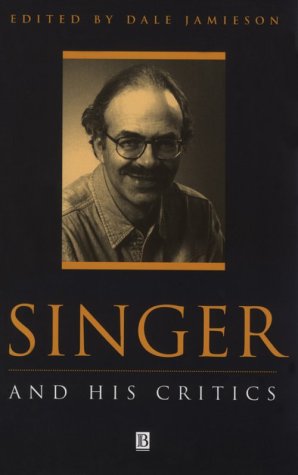
24. Singer and His Critics (Philosophers
$77.95
25. Refuting Peter Singer's Ethical
$22.11
26. The Moral of the Story: An Anthology
$26.36
27. Applied Ethics (Oxford Readings
 
$5.95
28. Peter Singer, A Darwinian Left:
$2.55
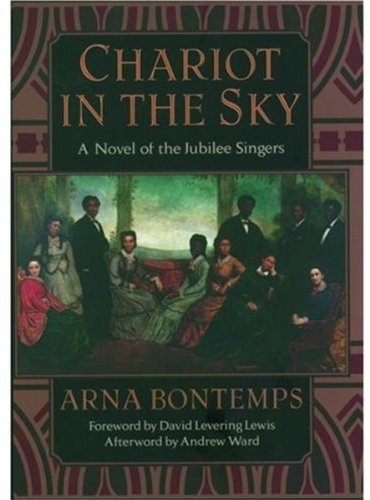
29. Chariot in the Sky: A Story of
 
$9.95
30. A response to Peter Singer.: An
$7.25
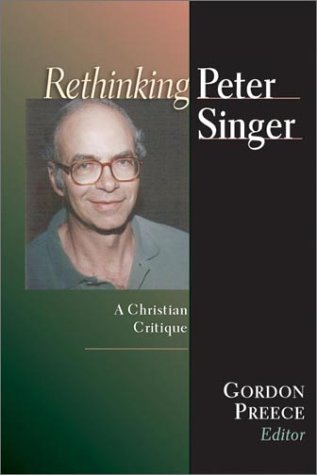
31. Rethinking Peter Singer: A Christian
 
32. Should the Baby Live?: The Problem
$1,054.99
33. Encyclopedia of Applied Ethics
 
$9.95
34. Lethal prescriptions: Peter Singer's
 
$5.95
35. Facts, theories, and hard choices:
 
$5.95
36. Peter Singer - the best we can
 
$155.78
37. Peter Singer in Deutschland: Zur
$70.83
38. Der moralische Status der Tiere.
 
$5.95
39. THE SINGER SCANDAL AT PRINCETON.(philosopher
 
$5.95
40. Silencing the singer: antibioethics

21. A Companion to Ethics (Blackwell Companions to Philosophy)
Paperback: 592 Pages (1993-05-05)
list price: US$39.95 -- used & new: US$28.00
(price subject to change: see help)
Asin: 0631187855
Average Customer Review: 4.5 out of 5 stars
Canada | United Kingdom | Germany | France | Japan

Customer Reviews (2)

4-0 out of 5 stars Great introduction, some defects
I found this book to be a great introduction to all aspects of ethics. It leaves no area untouched: everything from Buddhist ethics to deontology, consequentialism, virtue theory, the nature of morality, and much much more is covered here. Indeed, I would say that anyone who wants a survey of this area of philosophy need look no further.

But the book has several glaring flaws. Notably, it appears that some of the choices of essays were slightly biased. A case in point: the two essays on comtemporary deontology and consequentialism. The essay on deontology appears to not be written by an actual deontologist, and the author spent most of the essay bringing up silly objections that even I, as a first year undergraduate philosophy major, could answer. This is in stark contrast to the essay on consequentialism, written in a tone that barely escapes arrogance by its end.

There is nothing wrong with having a die-hard supporter of consequentialism write an essay introducing people to the topic. If this book were better, all of the essays would've been written with just that goal in mind. To pick essays not written by people who actually subscribe to the ethical theory in question is simply poor editing, because often the writer reveals her ignorance. This reduces the quality of the book, instead of giving each ethical theory the best possible promulgation. Indeed, it's not as if deontology is so unpopular that Singer couldn't have found one to write about it.

If anything, a better choice of essays would've made this book more useful than it actually is. Indeed, one of the interesting things about the essay on "universal perscriptivism" by R.M. Hare, was that the table of contents actually claims that the article is written by the theory's originator and best spokesman. If all the essays were written by their respective theory's "best spokesman," than this book would have 5 stars.

Apart from these glaring flaws, the book remains a well edited companion to ethics. There is coverage (even if sometimes poor) given to almost every possible ethical theory, the history of ethics, applied ethics (just war, business ethics, etc.), and various ethical views (i.e., realism, naturalism, relativism, etc.). Anyone interested in a breif overview of the entire field of morality should start here.

5-0 out of 5 stars My review is a single-sentence one.
The selection of the articles in this book is excellent: not too deep in any of the subjects and gives a wide range overlook on the field of ethics, I read it with eas and joy. ... Read more


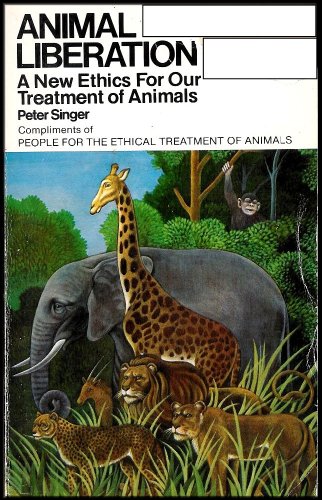
22. ANIMAL LIBERATION A NEW ETHICS FOR OUR TREATMENT OF ANIMALS
by Peter Singer
 Paperback: Pages (1975)

Asin: B000LAMVD8
Canada | United Kingdom | Germany | France | Japan

23. Ethical Vegetarianism: From Pythagoras to Peter Singer
Paperback: 287 Pages (1999-01)
list price: US$29.95 -- used & new: US$21.48
(price subject to change: see help)
Asin: 0791440443
Average Customer Review: 4.5 out of 5 stars
Canada | United Kingdom | Germany | France | Japan
Editorial Review

Book Description
For vegetarians seeking the historical roots of vegetarianism, for animal rights activists and the environmentally concerned, and for those questioning their consumption of meat, here's a book that provides a deep understanding of vegetarianism as more than just a dietary decision.

This is the first comprehensive collection of primary source material on vegetarianism as a moral choice and includes the writings of Carol Adams, Bernard de Mandeville, Mohandas Gandhi, Oliver Goldsmith, Anna Kingsford, Frances Moore Lappe, Porphyry, Pythagoras, Tom Regan, Albert Schweitzer, Seneca, Peter Singer, Leo Tolstoy, and Richard Wagner, among others. ... Read more

Customer Reviews (20)

5-0 out of 5 stars A much needed resource
Any body who has read more than two or three books on veganism and vegetarianism runs across references to Pythagoras, Henry Salt, Francis Moore Lappe, Leo Tolstoy, etc. etc. as people who wrote important works on vegetarianism.But their books are hard to find.This book steps in and presents the central writings of these and many other people who have defended the notion that diet is a moral moatter.Very helpful, very well organized.

5-0 out of 5 stars An organized variety of ethical reasons to stop eating meat
As the title implies, various philosophers through the ages have come to the conclusion that meat eating is neither necessary nor ethical. Here, in Ethical Vegetarianism, their most articulate arguments are organized sequentially for the common reader. A great book and a bargain nonetheless.

4-0 out of 5 stars A Good Place To Start--
--on the road to vegetarianism.This book supplies centuries of moral wisdom by persons who refused to kill animals to satisfy their palates.I've given copies to several of my relatives.I'm not sure why the authors included their nonvegetarian appendix at the back of the book.Maybe in the interest of fairness; but the pro-vegetarian choices are top notch, especially the ones from the ancient world.

4-0 out of 5 stars Interesting Overview
I'm not a vegetarian and I doubt I'll become one.But I found this collection interesting because I've always thought of vegetarians as nice but sorta flakey tree huggers.The essays here are written by people who offer strong arguments for their beliefs.(Usually, that is.The one by Harriet Schlieffer is over the top).But sorry folks.My appetite over-rules my head in this case.

5-0 out of 5 stars The best book on moral vegetarianism
If you're curious about why vegetarianism is the right way to go, get this book.Vegetarians throughout the centureis have made rational and compelling arguments for their diet choices.This book collects the most important of them, and the editors provide informative and helpful introductory essays.A great investment. ... Read more


24. Singer and His Critics (Philosophers and their Critics)
Paperback: 384 Pages (1999-05-11)
list price: US$40.95 -- used & new: US$31.30
(price subject to change: see help)
Asin: 155786909X
Canada | United Kingdom | Germany | France | Japan
Editorial Review

Book Description
This is the first book devoted to the work of Peter Singer, one of the leaders of the practical ethics movement, and one of the most influential philosophers of the twentieth century. ... Read more


25. Refuting Peter Singer's Ethical Theory: The Importance of Human Dignity
by Susan Lufkin Krantz
Hardcover: 152 Pages (2002-01-30)
list price: US$77.95 -- used & new: US$77.95
(price subject to change: see help)
Asin: 0275970833
Canada | United Kingdom | Germany | France | Japan
Editorial Review

Book Description
Krantz provides a defense of traditional, human-centered ethics against Peter Singer's ethical theory. Singer favors a "Copernican revolution" in ethics because he thinks our traditional ethics has collapsed under pressure from medical technology and from advances in the biological understanding of our fellow animals. For nearly thirty years he has argued that the boundaries of the human lifespan and of the human species are so unclear that we must abandon our views that human beings have a special dignity and that the taking of innocent human life is always wrong. Against this Krantz argues that in today's world, human life has been cheapened and the values of the marketplace have begun to govern medical care and organ donation, birth and death. In fact, this is just a foretaste of the world to come if Singer's ethical theory succeeds in replacing traditional human-centered ethics. What is required is, not the abandonment of human dignity and of the sanctity of human life, but rather a renewed understanding of how principles based on these ideas can be applied in the twenty-first century. Scholars, students, and general readers involved with ethical and contemporary philosophy issues will find this book interesting. ... Read more


26. The Moral of the Story: An Anthology of Ethics Through Literature
Paperback: 640 Pages (2005-01-04)
list price: US$36.95 -- used & new: US$22.11
(price subject to change: see help)
Asin: 1405105844
Average Customer Review: 5.0 out of 5 stars
Canada | United Kingdom | Germany | France | Japan
Editorial Review

Book Description
In The Moral of the Story, Peter and Renata Singer draw on some of the best works of fiction, playwriting, and poetry in order to shed light on the perennial questions of ethics.

  • A vivid montage of literature that touches on a broad range of ethical subjects and themes
  • Offers a unique contribution to the study of moral philosophy and literature
  • Demonstrates how literary sources can add richness to discussions of real-life moral questions and dilemmas
  • Brings together selections and excerpts from the world’s most celebrated short stories, novels, plays, and poetry
  • Features substantive section introductions by Peter and Renata Singer
  • Peter Singer is a leading moral philosopher, widely credited with triggering the modern animal-rights movement. His collection of essays, Unsanctifying Human Life, edited by Helga Kuhse, was published by Blackwell Publishing in 2001.
  • ... Read more

    Customer Reviews (1)

    5-0 out of 5 stars unusual, provocative collection
    This book is a refreshing departure from most Ethics textbooks. Singer and Singer have collected 79 readings--poems, short stories, and excerpts from novels--which they use as a way to get readers to think about interesting moral issues. The stories make the issues concrete, make them come to life, and are usually effective at drawing the reader into the situation. The book is divided into 15 sections. Each section has a three or four page introduction that gives a philosophical overview, then four or five readings for each section explore these issues in specific detail. The real strength of the book is the range of the readings. Highlights include: Invisible Man, Bonfire of the Vanities, The Soft-Hearted Sioux, The Model, Mrs Warren's Profession, Enduring Love, How to be Good, The Undesirable Table, The Limits of Trooghaft, Robinson Crusoe, Huckleberry Finn, The Third Man, This Way for the Gas, The Ones Who Walk Away from Omelas, The Remains of the Day, To Kill a Mockingbird, Brave New World, and The Princess Casamassima. Highly recommended. ... Read more


    27. Applied Ethics (Oxford Readings in Philosophy)
    Paperback: 270 Pages (1986-12-04)
    list price: US$43.95 -- used & new: US$26.36
    (price subject to change: see help)
    Asin: 0198750676
    Canada | United Kingdom | Germany | France | Japan
    Editorial Review

    Book Description
    This volume collects a wealth of articles covering a range of topics of practical concern in the field of ethics, including active and passive euthanasia, abortion, organ transplants, capital punishment, the consequences of human actions, slavery, overpopulation, the separate spheres of men
    and women, animal rights, and game theory and the nuclear arms race. The contributors are Thomas Nagel, David Hume, James Rachels, Judith Jarvis Thomson, Michael Tooley, John Harris, John Stuart Mill, Louis Pascal, Jonathan Glover, Derek Parfit, R.M. Hare, Janet Radcliffe Richards, Peter Singer, and
    Nicholas Measor. ... Read more


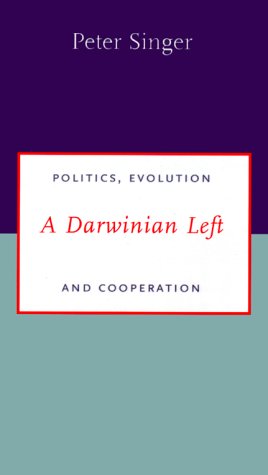
    28. Peter Singer, A Darwinian Left: Politics, Evolution, and Cooperation.(Book Review): An article from: Social Theory and Practice
    by Peter Amato
     Digital: Pages (2003-07-01)
    list price: US$5.95 -- used & new: US$5.95
    (price subject to change: see help)
    Asin: B0008E5MMO
    Canada | United Kingdom | Germany | France | Japan
    Editorial Review

    Book Description
    This digital document is an article from Social Theory and Practice, published by Social Theory and Practice-Florida State University on July 1, 2003. The length of the article is 3546 words. The page length shown above is based on a typical 300-word page. The article is delivered in HTML format and is available in your Amazon.com Digital Locker immediately after purchase. You can view it with any web browser.

    Citation Details
    Title: Peter Singer, A Darwinian Left: Politics, Evolution, and Cooperation.(Book Review)
    Author: Peter Amato
    Publication: Social Theory and Practice (Refereed)
    Date: July 1, 2003
    Publisher: Social Theory and Practice-Florida State University
    Volume: 29Issue: 3Page: 515(8)

    Article Type: Book Review

    Distributed by Thomson Gale ... Read more


    29. Chariot in the Sky: A Story of the Jubilee Singers (Iona and Peter Opie Library of Children's Literature.)
    by Arna Bontemps
    Hardcover: 240 Pages (2002-05-02)
    list price: US$22.95 -- used & new: US$2.55
    (price subject to change: see help)
    Asin: 0195156587
    Canada | United Kingdom | Germany | France | Japan
    Editorial Review

    Book Description
    Written in 1951 by Arna Bontemps, major literary figure of the Harlem Renaissance and close friend of Langston Hughes, Chariot in the Sky tells the story of the Jubilee Singers through the life of a young slave boy, Caleb, who becomes one of their earliest members. Caleb is a teenage slave sent to Charleston, South Carolina, to apprentice a tailor. Through careful listening and observation, Caleb diligently teaches himself to read and write. He also discovers his musical talents and develops into an accomplished singer. When the Civil War begins, Caleb is sold to a shopkeeper who takes him to Chattanooga, where he becomes smitten with a free black girl and follows her to Fisk University, a new institution for former slaves in Nashville. Here Caleb grows into his new identity as a free man and receives the esteem and respect that he is due. And he becomes a member of the Jubilee Singers, who become musical ambassadors to the world, promoting education for free blacks and raising money for the struggling new Fisk University. Singing mostly spirituals, the Jubilee Singers become so popular with white audiences that they are invited to tour Europe and Great Britain where they perform for Queen Victoria--an honor Caleb could never have imagined as a slave in South Carolina. Chariot in the Sky is the exhilarating story of one boy's transformation from slave to free man.In the foreword, Pulitzer Prize-winning author David Levering Lewis reflects on his experience as a student at Fisk University and the legacy of the original Jubilee Singers. Andrew Ward, author of Dark Midnight When I Rise, a history of the Jubilee Singers, provides a fascinating description of the Jubilee Singers' rise to stardom. His essay is illustrated with photographs, concert posters, and programs of the Jubilee Singers from the archives of Fisk University. spirituals, ... Read more


    30. A response to Peter Singer.: An article from: Journal of Disability Policy Studies
    by Tom Koch
     Digital: 5 Pages (2006-06-22)
    list price: US$9.95 -- used & new: US$9.95
    (price subject to change: see help)
    Asin: B000I0SAYK
    Canada | United Kingdom | Germany | France | Japan
    Editorial Review

    Book Description
    This digital document is an article from Journal of Disability Policy Studies, published by Thomson Gale on June 22, 2006. The length of the article is 1442 words. The page length shown above is based on a typical 300-word page. The article is delivered in HTML format and is available in your Amazon.com Digital Locker immediately after purchase. You can view it with any web browser.

    Citation Details
    Title: A response to Peter Singer.
    Author: Tom Koch
    Publication: Journal of Disability Policy Studies (Magazine/Journal)
    Date: June 22, 2006
    Publisher: Thomson Gale
    Volume: 17Issue: 1Page: 57(2)

    Distributed by Thomson Gale ... Read more


    31. Rethinking Peter Singer: A Christian Critique
    Paperback: 180 Pages (2002-09)
    list price: US$18.00 -- used & new: US$7.25
    (price subject to change: see help)
    Asin: 0830826823
    Average Customer Review: 3.5 out of 5 stars
    Canada | United Kingdom | Germany | France | Japan
    Editorial Review

    Book Description
    Who is Peter Singer?What does he say about issues like abortion, infanticide, euthanasia and animal rights? What does he say about Christianity? What exactly is his philosophy?"Peter Singer is probably the world's most famous or infamous contemporary philosopher," says Gordon Preece. Recently appointed as professor of bioethics at Princeton University's Center for Human Values, Singer is best known for his book on animal rights, Animal Liberation, and for his philosophical text Practical Ethics. But underneath his seemingly benign agenda lies perhaps the most radical challenge to Christian ethics proposed in recent times.In Rethinking Peter Singer four of Singer's contemporaries, fellow Australian scholars Gordon Preece, Graham Cole, Lindsay Wilson and Andrew Sloane, grapple with Singer's views respectfully but incisively. From a straightforwardly Christian perspective, they critique Singer's thought in four major areas: abortion and infanticide, euthanasia, animal rights, and Christianity.Rethinking Peter Singer is not only for those who want to understand Singer's views but also for all who want to challenge the thinking that more and more informs our society's stance on moral issues. ... Read more

    Customer Reviews (3)

    4-0 out of 5 stars Are Peter's Ideas Dangerous?
    Let me begin by stating I am not a born again Christian. I don't believe it is necessary to resort to religious arguments to challenge Peter Singer's ethical system.So what's so dangerous about Peter Singer?
    First we should note that in Singer's Bioethic only persons have a right to life. The law protects persons. We owe persons moral consideration.Peter Singer introduces a new category called human non-persons. The concept of human-non-person draws the circle of humanity smaller than usually understood.Now if you have any historical sense an alarm should be ringing in your head.The alarm reminds you of all those occasions in our tragic past when a dominant segment of humanity defined a minority as 'subhuman' (i.e., non-persons).Singer limits his discussion to medicine, where humans become non-persons through disease and accident. In other words, non-persons lose a complete set of rights.The right-to-exist being the premier right being lost by a non-person designation.
    So what is a person according to Singer? A person is autonomous, self-aware and has a capacity for having interests. What is a non-person? Any human who has lost or has not achieved the above: fetuses, infants, the mentally retarded, those suffering from dementia and Alzheimer's etc. It?s common knowledge that Peter Singer did not demand euthanasia for his mother when she slipped into the category of non-person.He loved her and had an interest in keeping her alive. But Singer must admit it could have been otherwise. Instead of being a dutiful son, he could have been a selfish one, eager to inherit his mother's estate etc. This issue of interests, I submit, is his most dangerous idea. Interests are really an issue of power. If interest holders do not wish to care for non-persons they are not obliged too. It's hard not to see this idea of 'interest' as a perversion of our innate nature to care for those in need. We are born dependent, we may become dependent at any time, and many of us will die dependent.I suppose with Singer's system one can hope one will never be dependent.And if one should becomes dependent or comatose? Well one can hope one's guardians have an interest in our continued existence.It's really odd but Singer couches his ideas on personhood and interests under the umbrella of compassion.That language masks something sinister.His ideas on personhood, in the end, undermine a basic human obligation to care for those who need caring, i.e., the weak (non-persons).To my mind, Singer's personhood theory is a form of the will-to power.It tells us that the powerful (persons) will decide when and if the less powerful (non-persons) may live. But what about the rights of the disabled and other various non-persons?Well Singer rejects the notion of rights.He imagines that moral saints, like himself, will always look at the big picture objectively and dispassionately.

    1-0 out of 5 stars Fatal Misunderstanding
    Many of the critiques of Peter Singer's books that somehow make it onto this website as "reviews" are riddled with logical flaws or a fatal misunderstanding (deliberate misrepresentation?) of Singer's arguments.

    The review below states that Singer somehow failed to live up to his own ethical system by not euthanasing his mother (who suffers from Alzheimer's Disease). Not only does this overlook Singer's oft-repeated, clearly outlined distinctions between voluntary and non-voluntary euthanasia, but it overlooks a fundamental part of his arguments about the treatment of non-persons.

    Persons who become non-persons (through disease, accident, etc.), i.e. lose their self-awareness, autonomy, self-consciousness, use of their cerebral coretex, etc., lose their capacity for having interests (as Singer argues that interests are a factor of self-awareness, autonomy, etc.). However, and this is what many deliberately overlook, persons may have in interest in the welfare and survival of non-persons. Singer obviously had a desire to keep his mother, whom he loved, alive. Parents who give birth to severely mentally or physically handicapped children can have an interest or desire for that child to continue to live. So the ad hominem attack on Singer that his failure to ethuanase his mother is somehow ethically inconsistent shows a significant misreading of his work.

    Check out Rethinking Life And Death, Practical Ethics or Unsanctifying Human Life.

    5-0 out of 5 stars Hero or Herod
    "Since neither a newborn human infant nor a fish is a person, the wrongness of killing such beings is not as great as the wrongness of killing a person."

    "...regarding a newborn infant as not having the same right to life as a person, the cultures that practiced infanticide were on solid ground."

    These are two of four quotes from philosopher Peter Singer that were featured in a quarter-page ad in the Australian newspaper during the 1996 federal election. The Australian Family Association took out the ad because Peter Singer was running as a Green Senate candidate. Fortunately for the unborn, the newborn, the elderly and many other "non-persons", Singer received only a tiny fraction of the vote.

    He now teaches at Princeton University, after a long career at Melbourne's Monash University. He has written over twenty books, and is regarded as a leading contemporary philosopher and bioethicist. He is famous for his advocacy of animal liberation, as well as for his callous view of human life.

    This new book, edited by an ethicist at Melbourne's Ridley College, contains five important articles offering a critical assessment of Singer's philosophy and writings.

    After an incisive introduction, Preece offers a close look at the man and his work in chapter one. While recognising the relative consistency throughout his writings, he points out the well-known inconsistency of his regard for his mother has she wrestled with Alzheimer's disease. He rightly notes that on the basis of Singer's utilitarian and consequentialist outlook, he should have bumped off his own mother. But fortunately for his mother, "Singer is a better son and person than ethicist".

    He shows how his univeralised utility calculations are really a secualrised version of the parable of the good Samaritan. But without the moral and theological framework which underlies the parable of Jesus, his system is not sustainable. Indeed, because Singer makes personhood a "special prize, not a humanly universal gift," he is unable to properly enact the parable, which recognises that every person is my neighbor.

    Andrew Sloane's article looks at one especially nasty aspect of Singer's philosophy - his support of infanticide. Sloane argues that his case for infanticide is only successful if his ethical theory (preference utilitarianism) is successful. But he argues that it is not, but is in fact incoherent and inconsistent. It is "an impoverished, reductionistic theory" which denies any "ultimate meaning to the universe and human life".

    In such a cold world, the argument for infanticide may make sense. After all, the newborn do not contribute anything to society, and are therefore expendable. The newborn may not have any utilitarian value, according to his own theory, but he has not successfully argued that his theory should be accepted and others rejected.

    Graham Cole argues that Singer's critiques of Christianity are misguided, as they are based on caricature and straw men. He picks and chooses those portions of the biblical account that he finds offensive, but does not appeal to other passages which may act as a corrective or balance.

    In a chapter on personhood and Singer's view on animals, Lindsay Wilson argues that Singer, while offering some helpful contributions to the debate, in fact can not compete with the biblical picture of animals and their worth. Singer's critique of "speciesism" - the idea that humans wrongly (in his view) consider themselves better than animals - is based on the idea that sentience (the ability to feel pleasure and pain) is what unites humans and animals. Because both humans and animals suffer, Singer says we should treat both respectfully, and not give special preference to humans, based on outdated concepts of personhood and human dignity.

    Wilson argues that Singer's views on animals have major philosophical shortcomings, and that the biblical picture, rightly understood, offers a better framework in which to respect (but not worship) the rest of the created order.

    Preece then offers a concluding chapter on Singer's view on life and death issues, especially that of euthanasia. Singer has long argued that sanctity of life ethics should be replaced with quality of life ethics. The former, Singer rightly recognises, is bound up with the Judeo-Christian worldview, while the other is not. As an atheist, Singer prefers the latter viewpoint, arguing that the former can no longer stand up in a scientific age.

    Two consequences flow from this. First, the biblical concept of responsibility is replaced with the secular concept of autonomy. That is, instead of seeing life as a gift, which we are entrusted with and expected to be good stewards of, life is seen as something people earn and can forfeit. Secondly, instead of seeing humans as ends in themselves, they are treated as means to an end. Instead of having inherent dignity and worth, we acquire this by our social utility and functionality.

    Thus instead of considering all lives as worthwhile and important, Singer considers many to be worthless and expendable, based upon his own criteria of what it means to be a person. In the end his views of personhood are reductionistic and demeaning. Which is why disabled groups usually protest when he speaks, or why German audiences are less than thrilled when he shows up. They have been there and done that.

    While all the chapters of this book are quite helpful, those by Preece and Sloane are especially strong. But every author (each one associated with Ridley College) helps to build an impressive case against Singer. This is an excellent collection of essays offering a biblical and philosophical assessment of one of our most noted and notorious thinkers. ... Read more


    32. Should the Baby Live?: The Problem of Handicapped Infants (Studies in Bioethics)
    by Helga Kuhse, Peter Singer
     Paperback: 238 Pages (1988-06-09)
    list price: US$8.95
    Isbn: 0192860623
    Average Customer Review: 3.0 out of 5 stars
    Canada | United Kingdom | Germany | France | Japan
    Editorial Review

    Book Description
    Few subjects have generated so many newspaper headlines and such heated controversy as the treatment, or non-treatment, of handicapped newborns.In 1982, the case of Baby Doe, a child born with Down's syndrome, stirred up a national debate in the United States, while in Britain a year
    earlier, Dr. Leonard Arthur stood trial for his decision to allow a baby with Down's syndrome to die.Government intervention and these recent legal battles accentuate the need for a reassessment of the complex issues involved.
    This volume--by two authorities on medical ethics--presents a philosophical analysis of the subject based on particular case studies.Addressing the doctrine of the absolute sanctity of life, Singer and Kuhse examine some actual cases where decisions have been reached; consider the criteria
    for making these decisions; investigate the differences between killing and letting die; compare Western attitudes and practices with those of other cultures; and conclude by proposing a decision-making framework that offers a rational alternative to the polemics and confusion generated by this
    highly controversial topic. ... Read more

    Customer Reviews (2)

    5-0 out of 5 stars A well constructed argument
    The authors draw upon the wisdom of pediatricians, modern ethical philosophers, and families who have had to make these kinds of decisions.They present compelling arguments that lift away the veil of self-deception people have regarding how they value quality of life.Considerations for the quality of life of the infant are especially well-considered, especially when making the argument that allowing doomed newborns to suffer and linger is inhumane at best, and moral waffling at worst.

    They make a very good case for the idea that to withdraw treatment and only give palliative care is not more ethical than direct euthanasia, and clearly prove that those who think otherwise are in denial of their actions (or lack of them).

    They are NOT saying that all disabled babies should be killed upon birth. They ARE making a very good case for considering whether the most profoundly disabled would have a quality of life worth the suffering their lives would entail.This is not the same as an adult becoming disabled, and then deciding to give up on life; the idea is that it is humane to make this decision before the newborn becomes self-aware enough to understand its situation.

    While this subject may be very difficult for some to swallow, denying its importance does not make it disappear.Pointing out that you know some disabled people that are totally awesome also does not make it disappear.This is about families and doctors being able to make a difficult decision without interference from life-at-all-costs zealots.This is a careful and well-constructed discussion of humane treatment of human infants.To dismiss and condemn it as "oh noez, they want to kill the babiez!1!!" is to be intellectually dishonest--or at least reveals that someone cast a judgment without even bothering to read the book.

    1-0 out of 5 stars This is pure evil
    The author recommends that parents may kill infants who are born with different abilities than is typical in the first 28 days after they are born. I wonder if he has ever had a friend who is handicapped, if he has ever been to the Special Olympics, or even had his groceries bagged by someone with different than typical abilities. People with different abilities are everywhere working, relating, and giving us all a glimpse into what is really important (love) and what is less important (achievement). His assumption that their lives are subject to more suffering than "normal" is of course totally false and misguided. He is so blinded by superficial appearances, he cannot grasp that their lives can be filled with joy and meaning.And paradoxically, they have much to teach all of us. It is unfortunate for Mr. Singer that he has been unable to grasp the lessons they might teach him. Perhaps he is the disabled one. But I certainly would not suggest that in hindsight his own mother should have released him from his utterly blind life, as much as I strongly oppose his views. Each life is valuable inmiraculous and often temporarily hidden ways. ... Read more


    33. Encyclopedia of Applied Ethics
    Hardcover: 3101 Pages (1998-01-15)
    list price: US$1,100.00 -- used & new: US$1,054.99
    (price subject to change: see help)
    Asin: 0122270657
    Canada | United Kingdom | Germany | France | Japan
    Editorial Review

    Book Description
    Applied ethics, a subdiscipline of philosophy, lends itself to an encyclopedia format because of the many industries and intellectual fields that it encompasses. The Encyclopedia of Applied Ethics is based on twelve major categories, such as Biomedical Ethics and Environmental Ethics. Religious traditions that embody normative beliefs, as well as classical theories of ethics, are explored in a non-judgmental manner. Each of the twelve categories is divided into discrete areas that are covered by 5,000-6,000 word articles. Each of the 281 articles begins with a definition of the subject and includes a table of contents, glossary of key terms, and bibliography. Second- and third- level headings, boxes, sidebars, and the like emphasize the reference-oriented nature of the material. The four volumes are arranged in an A-Z format, with a complete subject index at the end of the last volume. Articles are written by international experts, arranged alphabetically by title, not by subject, and cross-referenced so the reader can locate relevant information in other articles.

    * One of Library Journal's Best Reference Sources for 1997!
    * One of the CHOICE Outstanding Academic Books for 1998!
    * Cross-references appear in each article to refer readers to related information
    * A glossary and bibliography in each article provide readers with tools for learning and creative thinking ... Read more


    34. Lethal prescriptions: Peter Singer's flawed Ethics.: An article from: Commonweal
    by Andrew Lustig
     Digital: 3 Pages (2005-04-08)
    list price: US$9.95 -- used & new: US$9.95
    (price subject to change: see help)
    Asin: B000BQFM4C
    Canada | United Kingdom | Germany | France | Japan
    Editorial Review

    Book Description
    This digital document is an article from Commonweal, published by Thomson Gale on April 8, 2005. The length of the article is 829 words. The page length shown above is based on a typical 300-word page. The article is delivered in HTML format and is available in your Amazon.com Digital Locker immediately after purchase. You can view it with any web browser.

    Citation Details
    Title: Lethal prescriptions: Peter Singer's flawed Ethics.
    Author: Andrew Lustig
    Publication: Commonweal (Magazine/Journal)
    Date: April 8, 2005
    Publisher: Thomson Gale
    Volume: 132Issue: 7Page: 8(1)

    Distributed by Thomson Gale ... Read more


    35. Facts, theories, and hard choices: reply to Peter Singer.(Debate: global poverty relief): An article from: Ethics & International Affairs
    by Andrew Kuper
     Digital: 4 Pages (2002-04-01)
    list price: US$5.95 -- used & new: US$5.95
    (price subject to change: see help)
    Asin: B0008E5HZG
    Canada | United Kingdom | Germany | France | Japan
    Editorial Review

    Book Description
    This digital document is an article from Ethics & International Affairs, published by Carnegie Council on Ethics and International Affairs on April 1, 2002. The length of the article is 1113 words. The page length shown above is based on a typical 300-word page. The article is delivered in HTML format and is available in your Amazon.com Digital Locker immediately after purchase. You can view it with any web browser.

    Citation Details
    Title: Facts, theories, and hard choices: reply to Peter Singer.(Debate: global poverty relief)
    Author: Andrew Kuper
    Publication: Ethics & International Affairs (Refereed)
    Date: April 1, 2002
    Publisher: Carnegie Council on Ethics and International Affairs
    Volume: 16Issue: 1Page: 125(3)

    Distributed by Thomson Gale ... Read more


    36. Peter Singer - the best we can do?: Darwin has a dubious future. (Charles Darwin): An article from: Arena Magazine
    by Simon Cooper
     Digital: 5 Pages (1998-08-01)
    list price: US$5.95 -- used & new: US$5.95
    (price subject to change: see help)
    Asin: B00098C1D2
    Canada | United Kingdom | Germany | France | Japan
    Editorial Review

    Book Description
    This digital document is an article from Arena Magazine, published by Arena Printing and Publications Pty. Ltd. on August 1, 1998. The length of the article is 1207 words. The page length shown above is based on a typical 300-word page. The article is delivered in HTML format and is available in your Amazon.com Digital Locker immediately after purchase. You can view it with any web browser.

    From the supplier: Peter Singer believes the Left should abandon Marxism for Darwinism. Neo-liberals of the Right enact the 'survival of the fittest' while Singer claims the Left could equally benefit from examining Charles Darwin's philosophy. One reason Singer rejects Marxism involves the collapse of communism.

    Citation Details
    Title: Peter Singer - the best we can do?: Darwin has a dubious future. (Charles Darwin)
    Author: Simon Cooper
    Publication: Arena Magazine (Refereed)
    Date: August 1, 1998
    Publisher: Arena Printing and Publications Pty. Ltd.
    Issue: n36Page: p12(2)

    Distributed by Thomson Gale ... Read more


    37. Peter Singer in Deutschland: Zur Gefahrdung der Diskussionsfreiheit in der Wissenschaft : eine kommentierte Dokumentation
     Perfect Paperback: 425 Pages (1995)
    -- used & new: US$155.78
    (price subject to change: see help)
    Asin: 3631480148
    Canada | United Kingdom | Germany | France | Japan

    38. Der moralische Status der Tiere. Henry Salt, Peter Singer und Tom Regan.
    by Andreas Flury
    Hardcover: Pages (1999-01-01)
    -- used & new: US$70.83
    (price subject to change: see help)
    Asin: 3495478795
    Canada | United Kingdom | Germany | France | Japan

    39. THE SINGER SCANDAL AT PRINCETON.(philosopher Peter Singer)(Brief Article): An article from: National Right to Life News
    by Wanda Franz
     Digital: 4 Pages (1999-09-14)
    list price: US$5.95 -- used & new: US$5.95
    (price subject to change: see help)
    Asin: B00098YPU4
    Canada | United Kingdom | Germany | France | Japan
    Editorial Review

    Book Description
    This digital document is an article from National Right to Life News, published by National Right to Life Committee, Inc. on September 14, 1999. The length of the article is 1048 words. The page length shown above is based on a typical 300-word page. The article is delivered in HTML format and is available in your Amazon.com Digital Locker immediately after purchase. You can view it with any web browser.

    Citation Details
    Title: THE SINGER SCANDAL AT PRINCETON.(philosopher Peter Singer)(Brief Article)
    Author: Wanda Franz
    Publication: National Right to Life News (Magazine/Journal)
    Date: September 14, 1999
    Publisher: National Right to Life Committee, Inc.
    Volume: 26Issue: 10Page: 3

    Article Type: Brief Article

    Distributed by Thomson Gale ... Read more


    40. Silencing the singer: antibioethics in Germany. (opposition to the philosopher Peter Singer): An article from: The Hastings Center Report
    by Bettina Schone-Seifert, Klaus-Peter Rippe
     Digital: 26 Pages (1991-11-01)
    list price: US$5.95 -- used & new: US$5.95
    (price subject to change: see help)
    Asin: B00092IRX6
    Canada | United Kingdom | Germany | France | Japan
    Editorial Review

    Book Description
    This digital document is an article from The Hastings Center Report, published by Hastings Center on November 1, 1991. The length of the article is 7624 words. The page length shown above is based on a typical 300-word page. The article is delivered in HTML format and is available in your Amazon.com Digital Locker immediately after purchase. You can view it with any web browser.

    Citation Details
    Title: Silencing the singer: antibioethics in Germany. (opposition to the philosopher Peter Singer)
    Author: Bettina Schone-Seifert
    Publication: The Hastings Center Report (Refereed)
    Date: November 1, 1991
    Publisher: Hastings Center
    Volume: v21Issue: n6Page: p20(8)

    Distributed by Thomson Gale ... Read more


      Back | 21-40 of 100 | Next 20
    A  B  C  D  E  F  G  H  I  J  K  L  M  N  O  P  Q  R  S  T  U  V  W  X  Y  Z  

    Prices listed on this site are subject to change without notice.
    Questions on ordering or shipping? click here for help.

    site stats