e99 Online Shopping Mall

Geometry.Net - the online learning center Help  
Home  - Philosophers - Wittgenstein Ludwig (Books)

  Back | 21-40 of 100 | Next 20
A  B  C  D  E  F  G  H  I  J  K  L  M  N  O  P  Q  R  S  T  U  V  W  X  Y  Z  

click price to see details     click image to enlarge     click link to go to the store

$3.90
21. Wittgenstein's Poker: The Story
$9.94
22. Wittgenstein: Conversations 1949
$58.36
23. Wittgenstein's Philosophical Investigations:
$29.00
24. Wittgenstein: A Way of Seeing
$7.55
25. Introducing Wittgenstein, New
$18.16
26. Ludwig Wittgenstein: The Duty
$7.77
27. The Blue and Brown Books: Preliminary
$12.42
28. Wittgenstein: A Guide for the
 
$39.95
29. Goethe and Wittgenstein: Seeing
$24.03
30. Wittgenstein: A Critical Reader
 
$41.00
31. Wittgenstein's Place in Twentieth-Century
$32.74
32. Wittgenstein and William James
 
33. Ludwig Wittgenstein: A Memoir
$40.13
34. The New Wittgenstein
$10.28
35. Ludwig Wittgenstein (Critical
$5.55
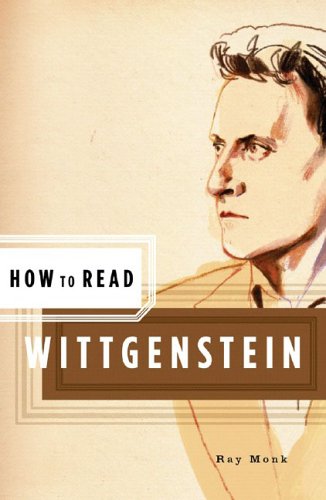
36. How to Read Wittgenstein
$43.61
37. The Undiscovered Wittgenstein:
$17.33
38. Ludwig Wittgenstein: There Where
$23.36
39. Perspectives on the Philosophy
$35.00
40. Feminist Interpretations of Ludwig

21. Wittgenstein's Poker: The Story of a Ten-Minute Argument Between Two Great Philosophers
by David Edmonds, John Eidinow
Paperback: 352 Pages (2002-09-01)
list price: US$13.95 -- used & new: US$3.90
(price subject to change: see help)
Asin: 0060936649
Average Customer Review: 4.0 out of 5 stars
Canada | United Kingdom | Germany | France | Japan
Editorial Review

Book Description

On October 25, 1946, in a crowded room in Cambridge, England, the great twentieth-century philosophers Ludwig Wittgenstein and Karl Popper came face to face for the first and only time. The meeting -- which lasted ten minutes -- did not go well. Their loud and aggressive confrontation became the stuff of instant legend, but precisely what happened during that brief confrontation remained for decades the subject of intense disagreement.

An engaging mix of philosophy, history, biography, and literary detection, Wittgenstein's Poker explores, through the Popper/Wittgenstein confrontation, the history of philosophy in the twentieth century. It evokes the tumult of fin-de-siécle Vienna, Wittgentein's and Popper's birthplace; the tragedy of the Nazi takeover of Austria; and postwar Cambridge University, with its eccentric set of philosophy dons, including Bertrand Russell. At the center of the story stand the two giants of philosophy themselves -- proud, irascible, larger than life -- and spoiling for a fight. ... Read more

Customer Reviews (97)

4-0 out of 5 stars Character studies, and the biography of an era
Ludgwig Wittgenstein and Karl Popper are two of the most interesting figures in 20th century philosophy.Edmonds and Eidinow use a 1946 encounter as a launching point for profiles of the two and their philosophies.It is, of necessity in a book of this length, philosophy lite.What really happened in the encounter is portrayed as a minor mystery, but in the end the differing versions tell us enough about the participants to make the truth merely incidental.Highly recommended as an introduction to both philosophers (and their era).

4-0 out of 5 stars Sturm und Drang
In the fall of 1946, the philosophers Ludwig Wittgenstein and Karl Popper had their only face-to-face encounter during an argument over the nature of the work of philosophers; the splenetic Wittgenstein used a poker from the fireplace to emphasize a point, left the room, and Popper made a sarcastic triumphal comment after he left about not waving pokers in the face of guests. This silly but revealing little contretemps is the basis for this little study of what led up to this encounter both in terms of the two famous men's remarkably similar backgrounds (they were both displaced Christianized Jews from Vienna working in England, and both were mentored by Bertrand Russell, who was also in the room) and in terms of currents in philosophy in the early twentieth century.

The book is ingeniously worked out, and you do come away from it knowing some basic ideas about what both Popper and Wittgenstein represented to European philosophy and how they both ran up against Hitler's Anschluss. The downside of the text is that it forefronts the more gossipy side of this encounter and then only towards the end getting to the content of their ideas, so that if you don't much about Anglo-Austrian philosophy you're left a bit puzzled as to why this meeting mattered until the book ends. But it's short enough a read that that doesn't present too much of a problem. This is a lightweight book, but still stimulating and worth reading.

5-0 out of 5 stars Excellent piece of research
Having read some of the reviewers before me, I ought to warn the reader the book is more about a research of the surrounding facts of the Popper/Wittgenstein confrontation than, as some of the naive reviewers seem to have expected, an in-depth account or opinion of the philosophy of both.
The book is true to its nature and in that sense it is outstanding indeed. Seldom will anyone obtain, in one piece, such a detailed portrait of two of the most outstanding intellectuals of the XX th Century. It may be curious to ascertain that these men, despite being born and educated in Austria, came to expose their differences before the english speaking world, where political tolerance has been rooted for centuries.
It is a gripping read and one that will make you re-live with passion the beautiful tradition of philosophical awe, love for logic and the un-ending quest in search for the truth.

5-0 out of 5 stars MORAL RULE: Thou shall not threaten visiting lecturers with fireplace pokers
XXXXX

"Take a dispute fundamental to philosophy, for whose future both [exceptional] men felt personal responsibility; take the cultural, social, and political differences between [these two men]; take the obsession of one with the other, who is in turn totally self-absorbed; take their no-holds-barred style of communication; take their complex relationship with their father figure, Russell--throw all these into the caldron that was H3 and a major explosion seems to have been inevitable.The poker becomes only a fuse."

The above is found near the end of this fascinating book authored by award-winning BBC journalists David Edmonds and John Eidinow.This book has been published in over a dozen languages.

This book hinges on one small ambiguous bite-sized brouhaha that occurred in October 1946 in room H3 located in King's College (a part of Cambridge University in England).Two prominent names of 20TH century philosophy, Ludwig Wittgenstein (1889 to 1951) and Karl Popper (1902 to 1994) debated one another for the first and only time.(The debate was mediated by yet another prominent name in philosophy, Bertrand Russell {1872 to 1970}.)Their encounter lasted only ten minutes and, as you can surmise from the above quotation, did not go so well.Almost immediately, rumors began to spread globally and one version of the story suggested that these two had come to blows, armed with red-hot fireplace pokers.

Be aware that this is not a philosophy book even though it does contain some philosophy.The poker incident is used as a starting point or "springboard" for investigating all of the important historical events particularly in Vienna and Cambridge that shaped this incident.In other words, this story is presented in a very roundabout way, circling back to the poker incident while examining all that needs to be taken into account in fully understanding what transpired.(Some readers may not like this roundabout approach.)

As well, there is good and significant biographical detail given of Wittgenstein and Popper.One chapter is devoted to discussing Russell, "the third man" in this story.

This is a well-written book that's engaging and accessible with some humorous spots---a delight to read even if you're a non-philosopher.I found that I learned a lot, painlessly, without even noticing.

This is a surprisingly well-researched book.Information was gathered not just from books but from interviews & correspondence including eyewitnesses and those who knew one or both of these two philosophers.These people "gave their time to search their memories, offer their recollections and furnish us [the authors] with background information" and "invaluable help."

Finally, there are more than twenty illustrations in the middle of this book in the form of black and white photographs or "plates."I found that these enhanced the book's readability and enjoyment.

In conclusion, the authors of this book "make the meeting of Popper and Wittgenstein seem as fateful as that between the iceberg and the Titanic."An interesting and enjoyable read!!

(first published 2001;23 chapters;main narrative 295 pages;Appendices: (1) chronology (of the lives of Wittgenstein and Popper) (2) "Times" literary supplement letters (where several witnesses address the poker incident);acknowledgments;sources;index)

XXXXX

3-0 out of 5 stars Decent biographical coverage but very inadequete handling of the underlying philosophy
Nearly no insight into the actual philosophical differences that the two protagonists had. Tries to be biographical and the authors try to make feeble attempts at trying to convince that all they had were historical differences. Shows clearly that the writers are journalists and their hold over the philosophical underpinnings is negligible. A waste of time if you are looking for philosophical insights. If you are looking for a semi-biographical account of the lives of these two great philosophers, there are other books out there which serve the purpose better. In the end, it is an attempt to sensationalize what in my opinion was a minor event and comes across as quite contrived. ... Read more


22. Wittgenstein: Conversations 1949 1951
by O. K. Bouwsma
Paperback: 78 Pages (1986-07)
list price: US$9.95 -- used & new: US$9.94
(price subject to change: see help)
Asin: 0872200086
Average Customer Review: 5.0 out of 5 stars
Canada | United Kingdom | Germany | France | Japan

Customer Reviews (1)

5-0 out of 5 stars Readable and entertaining memior
Oets Kolk Bouwsma was a Dutch-American philosopher who met Wittgenstein during his visit to the U.S. in 1949. Norman Malcolm introduced the two philosophers and during the following months the two men had numerous philosophical discussions while on casual walks and at Malcolm's home. At Cornell University, these discussions were either formal or informal, revealing, to a large extent, intensity of thought, and immediacy and pending danger that is so characteristic of Wittgenstein's personality. These discussions influenced Bouwsma to a great degree in terms of his work habits and approach to philosophy in general.

Although short in length, these discussions reveal a mature Wittgenstein, a man at the end of his life that had not lost any of his concentration nor passion for life. Wittgenstein discusses many topics from ethics, language, Dostoevsky, Frege, Russell, Descartes, Kierkegaard, religious truth, faith, and Plato. Bouwsma and Wittgenstein would commence on one of their walks and Wittgenstein would ask Bouwsma to choose a topic for discussion, and without anytime for reflection, Wittgenstein would charge directly to the heart of the subject, stopping in mid-step to make a relevant point, gesticulating in the air while observing his audience of one to ensure his student was comprehending his words. Reading these short "notes" one can imagine and almost feel the power and concentration of the discussions.

Despite being very sick, Wittgenstein continued to be almost fanatical about cleanliness, vigorously scrubbing himself for a good hour on a daily basis. Miss Anscombe, one of the philosopher's literary executors, told Bouwsma that Wittgenstein was known back in the Cambridge days to heat several buckets of water for his daily baths. She also said that during the war, he once returned the money Cambridge paid him for his lectures: Wittgenstein said, "The lectures were no good, not worth the money". But as Anscombe said, "They were, of course, better than any others given." It is this kind of little story that makes biography a worthwhile reading experience, illustrating a lot about the character of the man in just a few words.

Years later, Bouswma typed these "notes" and decided to send them to Wittgenstein's nephew in Vienna, Thomas Stonborough. After reading them he immediately wrote a letter to Bouswma stating that (it) was "The best thing written on him I know of."

One of the things that intrigued Thomas Stonborough was why Wittgenstein had such an interest in Bouswma, as this was unusual for the philosopher to let an acquaintance into his life. All the philosopher could come up with was his honesty and love of philosophy. This honesty and irrefutable love of philosophy certainly comes through in the writing. A memoir worth reading and owning.


... Read more


23. Wittgenstein's Philosophical Investigations: An Introduction (Cambridge Introductions to Key Philosophical Texts)
by David G. Stern
Hardcover: 224 Pages (2004-11-29)
list price: US$70.00 -- used & new: US$58.36
(price subject to change: see help)
Asin: 0521814421
Average Customer Review: 5.0 out of 5 stars
Canada | United Kingdom | Germany | France | Japan
Editorial Review

Book Description
David Stern examines Wittgenstein's Philosophical Investigations in this new introduction to a classic philosophical text, paying particular attention to the arguments of the Investigations as well as the way in which the work is written, especially the role of dialogue. While he concentrates on helping readers interpret the primary text, he also provides guidance to the unusually wide range of existing interpretations, and why they have inspired such a diversity of readings. ... Read more

Customer Reviews (1)

5-0 out of 5 stars An excellent but demanding introduction
There are plenty of books about Wittgenstein's Philosophical Investigations currently on the market, but this is among the best.David Stern has achieved a remarkable feat of combining a clear and cogent explanation of Wittgenstein's ideas with a discussion of a large part of the leading secondary literature, and all within the space of 200 pages.

Central to Stern's approach to Wittgenstein's text is the contrast between what he calls a "Pyrrhonian" and "non-Pyrrhonian" interpretation (a distinction he takes from Robert Fogelin's Pyrrhonian reflections on knowledge and justification (Oxford University Press, 1994)).The Pyrrhonian interpretation is sceptical about all philosophical claims; it aims to prevent philosophy from getting started in the first place by dissolving the questions that lead to philosophical speculation.By contrast, a non-Pyrrhonian interpretation of Wittgenstein attributes to him specific philosophical theses: his aim, on this account, is not to put an end to philosophy, but to do philosophy better.Most of the standard introductions and commentaries (including Baker and Hacker's multi-volume Analytic Commentary) adopt a non-Pyrrhonian interpretation, but this is hard to reconcile with Wittgenstein's own professed statements about putting an end to philosophy.Stern reads the Philosophical Investigations as a dialogue between several different voices in the course of which Wittgenstein exposes the temptations that lead to philosophical theorising. In so doing he makes a compelling case for the Pyrrhonian reading.

One word of warning for potential readers. Although described as an "Introduction", and intended for the undergraduate market, the book is philosophically quite advanced and requires some familiarity with both Wittgenstein's text and the relevant secondary literature to be fully appreciated. That said, Stern's book can be highly recommended as a guide to Wittgenstein's later philosophy.
... Read more


24. Wittgenstein: A Way of Seeing
by Judith Genova
Paperback: 224 Pages (1995-10-24)
list price: US$31.95 -- used & new: US$29.00
(price subject to change: see help)
Asin: 0415910633
Canada | United Kingdom | Germany | France | Japan
Editorial Review

Book Description
Wittgenstein: A Way of Seeing examines two related and neglected aspects of Wittgenstein's work: his conception of philosophy and his search for a style to embody his revolutionary practice. The landscapes of Wittgenstein's texts are surrealistically flat--no theories, arguments, or conclusions, nor chapter headings, notes, or narrative structures. Genova explores Wittgenstein's early style of logical poetics with its emphasis on elucidation and critique and his later rhetoric of grammatical reminders with its turn to therapy. She shows how Wittgenstein appropriated Kant and then Freud to present distinctive visions of the nature of philosophy, namely as clarification in the Tractatus and as performance in the Investigations, and how Wittgenstein shows how language, logic and the world take care of themselves. _ ... Read more


25. Introducing Wittgenstein, New Edition (Introducing (Icon))
by John M. Heaton
Paperback: 176 Pages (2005-10-25)
list price: US$12.95 -- used & new: US$7.55
(price subject to change: see help)
Asin: 1840466413
Average Customer Review: 3.5 out of 5 stars
Canada | United Kingdom | Germany | France | Japan
Editorial Review

Book Description
In Introducing Wittgenstein we meet a strange man, a rigorous logician who prized poetry above philosophy, who inherited a fortune and gave it away, who sought death in the trenches of the First World War, a great teacher who advised his students to give up philosophy, a solitary man who nonetheless inspired lifelong friendships. We are also given a clear and accessible guide to Wittgenstein's central works. ... Read more

Customer Reviews (5)

3-0 out of 5 stars Wittgenstein for dummies???
This book has minimal text and major graphic, and as a result looks like philosophy for dummies.Don't be deceived.The author has tried to summaries some very difficult concepts in as few words as possible and so this book has a very 'dense' style, that is 'packed with meaning'.Reading it can make the uninitiated feel dense, in the sense of 'stupid'.Reading just a few pages is mind-boggling.

The book covers some biographical material, and the ideas in the texts Tractatus Logico Philosophicus (Routledge Classics) and Philosophical Investigations (3rd Edition).A lot more of Wittgenstein's work has been published but these are the two main texts.

Basically Witgenstein is interested in the foundations of logic, which according to him is words, which make up propositions.But how much do these words mirror reality?And are words such good tools considering their ambiguity?Can philosophy 'heal' the mind, like some kind of therapy?Be ready for these topics and much, much more.

Definitely one to be reread a couple of times, but luckily it can be got through fairly quickly.Perhaps this book is idea for revision just before an exam.

4-0 out of 5 stars A good place to begin...
Wittgenstein the man, and Wittgenstein's philosophy has been the focus of modern thinker's for two generations. His enigmatic logic and original thoughts on the nature of language, for example, has influenced many disciplines across the spectrum, including anthropology, cultural studies and literary theory. Wittgenstein has also been called the quintessential icon of Modernism, the most original thinker since Plato, yet has been the most misunderstood philosopher in the history of ideas. If you want to understand his philosophy, where do you start? This study guide, written clearly by John Heaton, in my opinion, is a good place to begin.

Introducing Wittgenstein combines biographical information about the man and his thoughts. The only book to be published by Wittgenstein in his lifetime was his Tractatus Logico- Philosophicus, a mere seventy-page treatise that confounded and inspired the leading minds of his generation. The book begins with the line, "The world is all that is the case." ending with the line, "What we cannot speak about we must pass over in silence." As Heaton proposes, "...the last sentence assumes that only factual propositions are meaningful, so the world consists only in facts...there is a distinction between what can be -said- and what can only be -shown- is being developed organically" (P. 30)

The Tractatus was not intended to be an easy study. In fact in the Preface, Wittgenstein wrote, "Its purpose would be achieved if it gave pleasure to one person who read and understood it."

Introducing Wittgenstein moves on from the Tractatus touching on the changes of the man's thought about the nature of language, logic, mathematics, religion, art and culture, up to the end of his life.

Heaton makes a brave and successful attempt to illustrate the many at times complex ideas in Wittgenstein's later work, Philosophical Investigations, which most academics today believe is the more developed and refined expressions of his philosophy.

This book does a fine job of explaining Wittgenstein's thought in a clear and accessible manner and tone; although superficial, touching only the surfaces, as it is an introduction, it is an appropriate place to begin.


4-0 out of 5 stars Introducing Wittgenstein
This is the second book I've read in the "Introducing..." series and the first I've had a positive experience with.Employing graphics and text (with a little more emphasis on the graphics) INTRODUCING WITTGENSTEIN provided me with enough information to decide whether I wanted to proceed from introduction to a deeper acquaintance.
The first half of the book is a short biography of Wittgenstein, the second a truncated and abbreviated synopsis of his philosophy.The looser graphic format allows the authors to avoid some of the limitations of the more traditional, text-only biography.They aren't tied to a linear narrative.Most important, perhaps, is that the graphics make an intimidating subject seem more approachable.
The second half of the book deals with Wittgenstein's philosophy.Although it doesn't explain Wittgenstein's philosophy (I'm afraid you'd have to go to the source material for that) it does outline Wittgenstein's area of interest - thought and language, non-existential truths, doubt and certainty.
After reading this, do I know what Wittgenstein was talking about?Yes and no.I don't understand his philosophy, but that wasn't quite the point of this book.I have a rough idea of his work, and the authors include an annotated bibliography if I want to continue on.Introduction successful.

4-0 out of 5 stars Useful introduction that will help me find more if I need it
I have no interest in spending a month figuring out exactly what Wittgenstein *really* meant and wrote, but I do need to be able to read a text that mentions "dasein" or "Wittgenstein's view of technology", for instance, without stumbling. This introduction was amusingly written and gave me enough of an outline that next time I come across Wittgensteinian references I'll know where to look for more detail if I need it.

In general I quite like the comic style - so refreshing compared to many academic texts which seem to relish being as abtrusely and boringly presented as possible - sometimes I thought the illustrator was thinning out the paint a bit much. The same illustrations are mixed and remixed till I was thoroughly sick of that same old drawing of Wittgenstein's face.

2-0 out of 5 stars too brief and not concise
most of the texts from this series are reliable introductions to the thinkers they discuss.this series is more in depth than the "beginners" series of comic introductions.this text falls shortin that wittgenstein secondary texts are usually thicker than other textsin the series for a reason.wittgenstein is a complex thinker in which ittakes time to explain no less outline.this text to too brief and toogeneralized to be effective and winds up confusing more than, inwittgensteinian terms, elucidating ... Read more


26. Ludwig Wittgenstein: The Duty of Genius
by Ray Monk
Paperback: 654 Pages (1991)
-- used & new: US$18.16
(price subject to change: see help)
Asin: 0099883708
Canada | United Kingdom | Germany | France | Japan

27. The Blue and Brown Books: Preliminary Studies for the 'Philosophical Investigation'
by Ludwig Wittgenstein, Peter Docherty
Paperback: 208 Pages (1991-01-15)
list price: US$13.95 -- used & new: US$7.77
(price subject to change: see help)
Asin: 0631146601
Canada | United Kingdom | Germany | France | Japan

28. Wittgenstein: A Guide for the Perplexed (Guides for the Perplexed)
by Mark Addis
Paperback: 167 Pages (2006-05-31)
list price: US$19.95 -- used & new: US$12.42
(price subject to change: see help)
Asin: 0826484964
Canada | United Kingdom | Germany | France | Japan
Editorial Review

Book Description

Ludwig Wittgenstein's work and ideas occupy a central place in the history and study of modern Western philosophy. Students will inevitably encounter his major contributions to the philosophy of language, mind, mathematics and logic. Wittgenstein: A Guide for the Perplexed is an authoritative, comprehensive and lucid commentary on the philosophy of this pre-eminent modern thinker. The illuminating text covers the entirety of Wittgenstein's career, examining the relationship between the early, middle and later periods of his philosophy. Valuably, the guide also covers ground not commonly explored in studies of Wittgenstein, including his contributions to aesthetics and philosophy of religion. an invaluable resource for students and anyone interested in philosophy and modern intellectual history.

... Read more

29. Goethe and Wittgenstein: Seeing the World's Unity in Its Variety (Wittgenstein-Studien (Frankfurt Am Main, Germany), Bd. 5.)
 Paperback: 170 Pages (2003-04)
list price: US$39.95 -- used & new: US$39.95
(price subject to change: see help)
Asin: 0820460788
Canada | United Kingdom | Germany | France | Japan

30. Wittgenstein: A Critical Reader (Blackwell Critical Reader)
Paperback: 416 Pages (2001-08-29)
list price: US$31.95 -- used & new: US$24.03
(price subject to change: see help)
Asin: 0631194371
Average Customer Review: 3.5 out of 5 stars
Canada | United Kingdom | Germany | France | Japan
Editorial Review

Book Description
This volume provides a wide-ranging collection of newly-commissioned essays on Wittgenstein by internationally established philosophers. ... Read more

Customer Reviews (2)

4-0 out of 5 stars Excellent review of our greatest psychologist
The aim of the 17 original papers here is to summarize and analyze Wittgenstein's thought.

At the time these were being written, the Oxford/Intelex CDROM ($2040 on Amazon but available thru interlibrary loan and steeply discounted on the net) with 20,000 some pages of W's nachlass was not yet available, and only those fluent in German and willing to find and slog thru the incomplete Cornell microfilm were able to examine it.To this day it much of it remains untranslated from the German typescripts and handwritten manuscripts.I note this at the outset as W's untranslated or unpublished writings often shed crucial light on his thought and few to this day (2008) have made substantial use of them.In addition there are huge problems with translation of his early 20th century Viennese German into modern English.One must be a master of English, German, and Wittgenstein in order to do this and very few are up to it. Several of the current authors note unfortunate translation errors in the only available English editions and I have seen similar comments countless times.

As is well known, W's thought changed dramatically between the publication of the Tractatus (TLP) in 1922 and the Philosophical Investigations(1953).The continuity or lack thereof between his early and late work is the subject of a vast literature and is taken up here by several authors.Ishiguro on the picture theory and Mounce on the logical system in TLP are good, but for me the endless discussions of exactly how he was mistaken in his early work is of as little interest as the mistakes in most previous philosophy.

Ammereller on Intentionality is a good, if prosaic, summary of (mostly) the early and middle W on belief and interpretation which, like virtually everyone, totally fails to give an adequate overview of W's pioneering work.In giving the general outline of our innate evolutionary psychology (ie, roughly our personality) and showing how this describes behavior, W represents a major milestone in human thought.There are unmistakeable indications of this even in his early writings (eg, see p 40, 49-58 here) and it has been documented by Hacker (eg, see his paper in The New Wittgenstein) and others but without any comprehensive account to date.

Rundle's contribution on meaning and understanding, which W classed as dispositions or inclinations and are now commonly called propositional attitudes, is mostly pedestrian and completely misses W's major point that, like most of our psychology, these are public phenomena and not private mental states.Of course he can be forgiven since hardly anyone interested in behavior (which can be taken to include everyone) has realized this, nor noted that W was the first to discuss it some 75 years ago.

Arrington gives an adequate, if standard, account ofW on rule following and Hanfling an exceptional summary of W on thinking.He makes it very clear that W showed dispositions are activities (or potential activities in some uses of the words) which are necessarily public, shared acts--a crucial basic fact rarely understood even by the brightest and the best (see eg, Chomsky's insistence--- in his more recent writings-- on the internal nature of language).Candlish follows with the best concise account I have seen of W's thoughts on willing.

Schroeder provides a good article on another of W's major advances in understanding how the mind works--the impossibility of private language and private experience--ie, just what Chomsky and millions of others have missed.However, he falters in midarticle by failing to get the difference between dispositions (thoughts, beliefs, meanings etc) which cannot be true or false and carry no information, and judgements of empirical facts which do, and thus fails to fully grasp the private language argument.There is no test for beliefs, thoughts, desires, intentions etc, even for oneself, until they are acted out in the public arena.Anything which is truly private is of no consequence in our social life or our language(thought).

Ter Hark, who has written a book on W's philosophy of psychology (though all of philosophy is psychology) contributes an adequate survey on "The Inner and The Outer" but is not really clear about how our psychology rests on innate, unquestionable axioms and how this is related to the axioms of mathematics.

Bakhurst's review of W on personal identity is barely adequate and shows little grasp of W's overall contributions to psychology.Likewise with Mulhall's "Seeing Aspects."

Frascolla, who has written a rather good book on W's Philosophy of Mathematics provides a good but hurried article that will be of little use to those not versed in this topic already.

I found Schwyzer's article on Autonomy to be entirely useless--an amazing but common achievement when writing about the greatest contributor to our most fascinating subject--how the mind works.

Grayling does a careful dissection of W's last great work On Certainty but misses the fact (as W noted many, many times) that all the skeptical views of knowing and certainty are incoherent, depending, as they must, on our innate axiomatic psychology to even state them.

The world's leading W scholar, PMS Hacker gives a good summary of W's views on the nature of philosophy, but even he seems to have no clear grasp of the fact that W's "grammar" refers to our inherited intentional psychology.

The late DZ Phillips contributes one his many articles on faith and ethics in W and I found this one as dull as the rest.Like most who write on W, he passes up a gold mine by failing to consider the relevance of W's many penetrating comments on machines, animals and alien tribes.

Overall an exceptional book for introducing W to a general philosophical audience. Those wishing further comments on W please consult my other reviews, including that of "I am a Strange Loop".

3-0 out of 5 stars A Lukewarm Collection
This text is a companion volume to the Wittgenstein Reader anthology (Blackwell).It is a lukewarm, hit and miss collection of articles that topically corresponds to areas covered in the reader.I would recommend Crary's The New W. (Routledge) or David Pears or David Stern prior to this.The Cambridge Companion (Sluga/Stern) is also an excellent collection of articles.

The articles that stand out here are: Ishiguro, "The So-Called Picture Theory...," Rundle, "Meaning and Understanding," Arrington, "Following a Rule," Schroeder, "PL and Private Experience," Mulhall, "Seeing Aspects," Schwyzer, "Autonomy," Grayling, "W. on Skepticism and Certainty," and Hacker, "Philosophy."

On rule-following I would recommend McDowell's articles (in Mind Value...Harvard UP) Gibbs, Rule-Following; and on math necessity I would recommend the articles by Dummett (Truth...Harvard UP), Stroud (Mind Meaning.../Oxford UP), and Putnam. ... Read more


31. Wittgenstein's Place in Twentieth-Century Analytic Philosophy
by P. M. S. Hacker
 Paperback: 368 Pages (1996-11-13)
list price: US$41.95 -- used & new: US$41.00
(price subject to change: see help)
Asin: 0631200991
Average Customer Review: 5.0 out of 5 stars
Canada | United Kingdom | Germany | France | Japan
Editorial Review

Book Description
This text provides a unique and compelling account of Wittgenstein's impact upon twentieth century analytic philosophy, from its inception to its subsequent decline. ... Read more

Customer Reviews (1)

5-0 out of 5 stars The best place to start your Wittgenstein Journey
I've been reading by and about Wittgenstein for the last 4 or 5 years and recently came across this book. I believe I would have been spared a great amount of misunderstandings had I known Hacker's book earlier.

Although -as the title suggests - it is a general overview of Wittgenstein's thought,it gives a very clear if brief idea of all important issues and makes youunderstand his position as compared to many other great philosophers insideand outside Analytic Philosophy.

It also gives a brief overview of thedevelopment of Analytic Philosophy, its main contributors and their pointof view on many decisive issues.

My thanks to Prof. Hacker for writingthis great work. ... Read more


32. Wittgenstein and William James
by Russell B. Goodman
Paperback: 224 Pages (2007-07-30)
list price: US$37.99 -- used & new: US$32.74
(price subject to change: see help)
Asin: 0521038871
Canada | United Kingdom | Germany | France | Japan
Editorial Review

Book Description
This book explores Wittgenstein's long engagement with the work of the pragmatist William James.In contrast to previous discussions, Russell Goodman argues that James exerted a distinctive and pervasive positive influence on Wittgenstein's thought. He shows that both share commitments to anti-foundationalism, to the description of the concrete details of human experience, and to the priority of practice over intellect. Considering in detail what Wittgenstein learnt from his reading of William James, Goodman provides considerable evidence for Wittgenstein's claim that he is saying "something that sounds like pragmatism."Download Description
This book explores Wittgenstein's long engagement with the work of the pragmatist William James. In contrast to previous discussions Russell Goodman argues that James exerted a distinctive and pervasive positive influence on Wittgenstein's thought. For example, the book shows that the two philosophers share commitments to anti-foundationalism, to the description of the concrete details of human experience, to the priority of practice over intellect, and to the importance of religion in understanding human life. Considering in detail what Wittgenstein learnt from his reading of Principles of Psychology and Varieties of Religious Experience the author provides considerable evidence for Wittgenstein's claim that he is saying 'something that sounds like pragmatism'. This provocative account of the convergence in the thinking of two major philosophers usually considered as members of discrete traditions will be eagerly sought by students of Wittgenstein, William James, pragmatism and the history of twentieth-century philosophy. ... Read more


33. Ludwig Wittgenstein: A Memoir
by Norman Malcolm
 Unknown Binding: 100 Pages (1958)

Asin: B0000CK3MH
Canada | United Kingdom | Germany | France | Japan

34. The New Wittgenstein
Paperback: 416 Pages (2000-06-27)
list price: US$45.95 -- used & new: US$40.13
(price subject to change: see help)
Asin: 0415173191
Average Customer Review: 4.5 out of 5 stars
Canada | United Kingdom | Germany | France | Japan
Editorial Review

Book Description
The New Wittgenstein offers a major reevaluation of Wittgenstein's thinking. This stellar collection of original essays by the "third wave" of Wittgenstein critics presents a significantly different portrait of the philosopher, not as a proponent of metaphysical theories but as an advocate of philosophy as therapy--a means of helping us grasp the essence of thought and language by attending to our everyday forms of expression. Boldly criticizing standard interpretations and offering unorthodox perspectives, these controversial essays will change the way we look at Wittgenstein's entire body of work.

Contributors: Stanley Cavell, David Cerbone, James Conant, Alice Crary, Cora Diamond, David Finkelstein, Juliette Floyd, P.M.S. Hacker, John McDowell, Hilary Putnam, Rupert Read, Martin Stone, Edward Witherspoon. ... Read more

Customer Reviews (3)

3-0 out of 5 stars Mostly mediocre articles on our greatest psychologist
Ludwig Wittgenstein is the most famous philosopher of modern times but very few understand his pioneering work and there has been a collective amnesia regarding him in recent decades. Most of the essays are new but some date as far back as 1979 and whether they give a new view of his ideas depends on one's understanding of what he said.For me, the interpretations are not new and mostly just as confused as nearly all the other commentary on W and on human behavior throughout the behavioral sciences and by the general public. As usual, nobody seems to grasp that philosophy is armchair psychology, and that W was (in my view) the greatest natural psychologist of all time.He laid out the general structure of how the mind works, which is often referred to as intentionality and is roughly equivalent to cognition or personality or thinking and willing or higher order thought (HOT). He can thus be regarded as a pioneer in evolutionary psychology, although hardly anyone but me seems to realize it. W was thus nearly 50 years ahead of his time as the first to reject (though not entirely consistently) the blank slate or cultural view of human nature, though this has gone unrecognized and he has generally been interpreted as supporting a communal consensus view of psychology--exactly the opposite of his overall thrust (eg., see Short's comment on p 115).

As always in philosophical writing, it is quite striking that nobody (in my view) fully grasps what W was doing and noone to this day has succeeded (and few even try) to follow his Socratic method with constant recourse to perspicuous examples of our psychological functioning.

His wholly novel ideas and unique style and telegraphic writing, coupled with his often solitary, almost solipsistic lifestyle, and premature death in 1951, resulted in a failure to publish anything of his later thought during his lifetime and only slowly has his huge nachlass of some 20,000 pages been published- a project which continues to this day. The only complete edition of the largely German nachlass was first issued by Oxford in 2000 with Intelex now publishing it, as well as all the 14 Blackwell English language books on a searchable CD. The Blackwell CD costs ca. $100 but the Oxford CD is over $1000 or over $2000 for the set including the images of the original manuscripts. They can however be obtained via interlibrary loan and also, like countless other volumes in behavioral science, at even lower cost on p2p. One reason I mention this is that, though most of his best work has now been translated and published in English, it is useful and often indispensable to consider his German remarks in the nachlass and few scholars are up to it. Editing and translating of his work by his executors has also been less than perfect and capturing the precise meaning of the original German is a huge problem as several authors here note (eg, the need in many passages to translate "darstellung" as an action and not as a disposition (propositional attitude)--one of many distinctions W was the first to elucidate.One can get a graphic view of this by looking at Victor Rodych's two revelatory articles (the first without and the latter with the benefit of the nachlass) on W and Godel in the journal Minds and Machines. Interested readers may wish to consult my other reviews of W books and that of Hofstadter's "I Am A Strange Loop".

It is well known that W dramatically altered his views beginning in 1929 and by the mid 30's essentially totally rejected his prior work, including the famous Tractatus.However, the Tractatus continues to fascinate and several of the current authors (Diamond, Conant) follow a long tradition in trying to explain just what he meant and how this changed or did not in his later work.For me, the only value in this is to see how early in his life (ca 1914) he began to express the germs of his later understanding of human psychology.On this issue I think Hacker's final essay here is definitive. His affirmative answer to "Was he trying to whistle it?" indicates that W of the Tractatus was trying to describe what he so famously insisted could not be said but only shown.Hacker (along witheveryone else on the planet) does not seem to realize that this meant that W was trying to describe the functioning of the axioms of our innate evolutionary psychology by giving examples from our everyday use of language (ie, from our thought), but he does a beautiful job of refuting Diamond and Conant's views in their essays here, and many others elsewhere, and provides chapter and verse for this view.See eg, various comments on pg 360,363, 372, 373, 376-81 for W's clear references to our innate and unquestionable (ie denying our axioms lacks sense) intentionality. Hacker puts an end (one hopes) to the view that W was actually writing Kierkegaardian nonsense.

Crary's introductory essay is tolerable, but makes a grotesque understatement on p3 when she states that there is "something essentially unsatisfactory" about the view that W supported the idea that there is "no such thing as fully objective agreement."In fact such a view is utterly mistaken, as is amply demonstrable throughout his latter writings in which he shows that our normal behavior is the very definition of objective agreement and it's denial is incoherent (see eg. his last work "On Certainty").

Cavell was one of the first to begin to penetrate deeply into W and his typically brilliant essay (reprinted from 1979) almost gets to the core of the matter, but he tends to get rather more florid and poetic than I think useful, and just does not quite get that W was laying out the structure of our evolved EP.Of course he can be forgiven as nobody else does either.

McDowell's essay from 1981 is quite dated and severely hampered by his rather opaque style, but has some good points, in spite of the expected oblivion to W's defining the modern study of innate intentional psychology.

I find Finkelstein's article on W and Platonism to be excellent and agree that Kripke and Wright are wrong and McDowell and Tait are right about this. Though neither he nor anyone I have read sees it this way, it seems to me very useful to view Plato's Ideals as our cognitive modules programmed by our genes.No term will be perfect, but if we have to label W's views, then I agree with Finkelstein and McDowell that "naturalistic Platonist" get pretty close. Certainly he dealt the death blow to the idea that an interpretation is required to follow a rule.

Read's comments on word meanings seems unexceptionable but the writing is horrific (ie, more or less standard philosophy).

Stone on W on Deconstruction has its moments but for me Decon and Derrida are an utter waste of time and it is comical how he tends to lapse into the typical Decon word salad (I first typed "world salad", which seems apt as well) when he discusses Derrida.Again we find Kripke's bizarre skeptical interpretation of W discussed and rejected. In spite of occasional lapses, it is clear as crystal that W rejected the blank slate community consensus view in favor of his novel innate axiomatic description of our psychology. Meaning is normative because it's innate, automatic and invisible and not subject to interpretation--a word W reserves for "the substitution of one expression of the rule for another."(p100). Neither Kripke nor Derrida gets the point since (like nearly everyone) they are hopelessly ensnared in the blank slate defaults when trying to explain behavior.

Crary's essay on W and political thought is clever but standard blank slate again and so hopeless. Politics, like all of culture, is a slight extension of our evolutionary psychology which demonstrates the ineluctable dominance of nature over nurture and W's contribution was to point this out, though usually indirectly.

Putnam's "Rethinking Mathematical Necessity" shows that by 1994 he had begun to understand W, but even so it's a big advance over his earlier work.

Floyd on W and mathematical philosophy is pretty good stuff, but does not grasp the overall picture of W as an evolutionary psychologist and math as a slight extension of our intuitive psychology. There is no boundary between math and the rest of our intentionality and W interleaved math examples throughout his work.Many of his most incisive revelations on our psychological functions and the relation of language to the world he demonstrated with mathematics or geometry.Floyd gives a good discussion of W's example of trisecting the angle which requires that we carefully examine the operation of disposition words like think, doubt, imagine, believe, know, decide and realize they depict actions or potential for actions and not mental states, as W first pointed out in the 1930's. But in this case, as in all cases (ie, all of language and philosophy) this is only the beginning of what W shows us and we need to realize that "question", "answer", "mathematics", "proof", "equation", etc., the various uses of which comprise complex language games (concepts or cognitive modules or groups of them) which often have little or NOTHING in common except that they are all included in our psychology (our form of life as he liked to say,) but this all operates invisibly and automatically in our subterranean psychology and thus is overlooked by virtually everyone including, incredibly, nearly all philosophers (even specialists on W), as this book also sadly illustrates.To Floyd's great credit, she gets it mostly right and the book is worth buying just for her article! Those intrigued by mathematical avenues into intentional psychology, as well as a general view of W might find a few things of interest in my comments on W and Godel in the Hofstadter review.

Diamond wastes her article on W by spending most of it discussing such items of philosophical esoterica as what the Tractatus implied regarding Russell's work, which is probably one of the least interesting ways to investigate human behavior.

Cerbone likewise expends his energies mostly on the historical aspects of W's relation to Frege, though he does make some good points about the limits of sense along the way (eg, that the language games W proposed often would require a substantial remodeling of our psyche to work).Sadly and almost inevitably (ie, oblivion to how our mind works is another of the hundreds of universals of our EP) he seems to evince no real grasp that it was his insights into our evolutionary psychology that gave such power to W's work, that these innate axioms (or concepts or cognitive modules) provide our "conceptual skin"(p308), is not clear that T and F do not apply to logic and math in the same sense as to empirical facts and that they are extensions of limited parts of our psychology, and that if we have a reasonable test for "illogical" then this term definitely characterizes much of our behavior.But a reasonably stimulating read nonetheless.

Witherspoon's article on W and Carnap ( member of the Vienna circle and the only person W ever accused of plagiarism) leaves me cold, as he has no insight at all into the workings of the mind, although he uses (abuses) lots of the right words--"logical syntax", "linguistic framework," "grammar."Yes, he is certainly right that we often misunderstand W, but the really important point is that we ought to understand behavior. He justly gives attention to W's last work "On Certainty" which some regard as his best (though he was dying of prostate cancer at the time and was often barely able to work) and seems on the way to becoming (with TLP and PI) his most famous (eg, see the two recent books by Daniele Moyal-Sharrock).But, he wastes his time on vague theorizing about "quasiunderstanding" rather than explicating the depths of our intentional psychology, so beautifully laid out by W.

Those who wish to have a more conventional (but in my view typically confused-- in spite of some good points) review of this volume may consult Philosophical Investigations 24:2 p185-92(2001).

5-0 out of 5 stars Exciting Philosophy
This is one of the more important recent books on Wittgenstein.I daresay that it is one of the most exciting and interesting texts since McDowell's Mind and World.

The most interesting and pertinent articles are by Cavell (who is often unclear but is otherwise here), McDowell (Non-Cognitivism and Rule-Following, which is also in his Mind, Value...anthology), Conant, Putnam (on mathematical necessity--so good--he's soon to have a new book released [UW lectures] by Columbia UP), J. Floyd (on math), and C. Diamond (esp. the article on the PL Arg. in the Tractatus).

This is a very exciting anthology.I highly recommend it.

I also recommend: Wittgenstein in America (Oxford UP) and Smith, Reading McDowell.

5-0 out of 5 stars Proof that Wittgenstein's work has not yet been exhausted
Ms. Crary and Mr. Read have compiled texts from unorthodox philosophers young and old, who take Wittgenstein's statement '...Our investigation gains its importance from what it destroys' seriously, without giving way to uncompromising (& incomprehensible) forms of skepticism and relativism. However, that is not to say they do not take skepticism seriously or even believe that it must inevitably appear as an inherent part of philosophical discourse. Skepticism appears, rather, in almost all of these texts as both an impetus and impediment, in need of philosophical treatment. They see the need of destruction in light of the need of discourse, of creation, & if not in light of 'theory' (per se) in light of (textual) investigation. To this end, many of the essays re-examine the Tractatus in terms of W.'s later work, e.g. in the Investigations; they attempt to draw out certain similarities that have been covered up by the forthright assumption that the later work is only a critique of the earlier stuff.

Crary herself was a student of John McDowell at Pittsburgh, who is represented here with his beautiful treatment of non-cognitivism ('Non-cognitivism and rule-following'); followed by Cavell with a text on language learning; followed by Crary with a text on Political Philosophy, by Conant & Diamond with texts on the Tractatus and the Private-Language Argument respectively, etc. Finally, in the role of defendant is a text by P.M.S Hacker representing a more orthodox Wittgenstein - a Wittgenstein in an outright battle against the threat of Skepticism. -dg ... Read more


35. Ludwig Wittgenstein (Critical Lives)
by Edward Kanterian
Paperback: 222 Pages (2007-05-30)
list price: US$16.95 -- used & new: US$10.28
(price subject to change: see help)
Asin: 1861893205
Average Customer Review: 5.0 out of 5 stars
Canada | United Kingdom | Germany | France | Japan
Editorial Review

Book Description

Ludwig Wittgenstein is generally considered as the greatest philosopher since Immanuel Kant, and his personal life, work, and his historical moment intertwined in a fascinating, complex web. Noted scholar Edward Kanterian explores these intersections in Ludwig Wittgenstein, the newest title in the acclaimed Critical Lives series.
Wittgenstein’s works—from Tractatus Logico-Philosophicus to the posthumously published Philosophical Investigations­—are notoriously dense, and Kanterian carefully distills them here, proposing thought-provoking new interpretations. Yet the philosopher’s passions were not solely confined to theoretical musings, and the book explores Wittgenstein’s immersion in art and music and his social position as a member of the sophisticated Viennese upper class at the turn of the century. His personal and professional relationships also offer insights into his thoughts, as he was friends with the greatest thinkers of the twentieth century, including John Maynard Keynes, George Edward Moore, Bertrand Russell, and Gilbert Royle. The philosopher was also deeply tormented by ethical and religious questions, and his internal turmoil, Kanterian argues, gives us a deeper understanding of the important conflicts and tensions of his age. Ultimately, the author contends, Wittgenstein’s life reveals insights into the ethical quandaries of our own time.
A readable and concise account, Ludwig Wittgenstein is an informative, accessible introduction to the one of the greatest thinkers of our age.
... Read more

Customer Reviews (1)

5-0 out of 5 stars A Valuable & Worthy Contribution
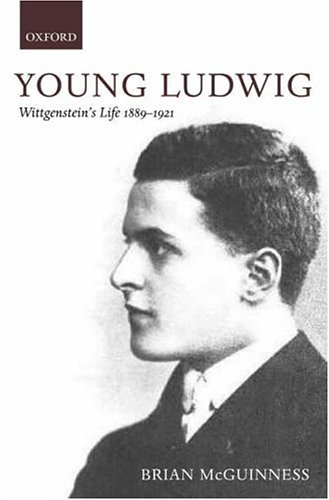
Considering there has been two essential biographies written on Wittgenstein, that is Ludwig Wittgenstein: The Duty of Genius (1990) by Ray Monk, and Young Ludwig: Wittgenstein's Life, 1889-1921 (1988) by Brian McGuinness, both award winning texts, another biography of the famous philosopher seemed to me to be a redundant exercise. What new information has come to light regarding the great philosopher and what possibly could be added to what has already been expertly covered in the above said texts?

Edward Kanterian has done something essential and quite extraordinary with this new biography, and that is he focuses on Wittgenstein's religious sensibilities, revealing the philosopher's strong convictions to keep his spiritual concerns separate from his philosophy. The author also spotlights Wittgenstein's four love relationships, their intenseness, their joy and the deep suffering the man experienced when they ended, two of which, tragically.

The reader should also consider that Wittgenstein has become an industry for academics and journalists comprising to date over 10,000 secondary sources (including a feature film) on the man's work and his life. Kanterian also examines this phenomenon and proposes possible reasons for this plethora of interpretation and interest for Wittgenstein and his work.

Wittgenstein's first true relationship and closest personal friend in the early years before WW1 was the young David Pinsent. Pinsent was a brilliant undergraduate in mathematics, (and a descendant of the famous 18th century philosopher, David Hume) who assisted Wittgenstein in certain experiments. He was also the philosopher's travel companion: very sensitive and a good listener, tragically the boy died in an aeroplane accident in 1918.

Frances Skinner was more than likely the most important person in Wittgenstein's life. He was a mathematician of great potential, a student at Cambridge to become a Wittgenstein "disciple". Wittgenstein told the boy to drop mathematics' and academic life and work with his hands. He followed this advice against the wishes of his parents and other friends. Unfortunately after some years of working and living together, Wittgenstein required distance from the relationship however received word that his beloved Frances died of poliomyelitis in October 1941. Wittgenstein never truly recovered from this loss.

The third important relationship was with an Austrian high society woman by the name of Marguerite Respinger. There is a diary entry included in this book that really expresses Wittgenstein's feeling for her. Of course they never married but remained good friends.

Ben Richards was the fourth intense relationship and Wittgenstein's last. Richards was a strikingly handsome lad, studying medicine at Cambridge. He is described as kind, sensitive and considerate. Wittgenstein felt a selfless love for Richards and when the boy (40 years Wittgenstein's junior) moved on from the relationship, Wittgenstein's letters and diary entries reveal a man with a broken heart - all very moving.

What these diary entries about his relationships reveal is a man capable of a deep kind of love, a joy and suffering simultaneously felt, as only a deep love can create. What I found extraordinary was that Wittgenstein was so cerebral, a master of logic, an accomplished engineer and architect, however was capable of such intense feeling in his relationships and music. I found Kanterian's book to reveal this aspect of the philosopher more so than the other biographies.

To Kanterian's great credit, his expositions on Wittgenstein's Tractatus Logico Philosophicus and Philosophical Investigations are more than likely the most clearly explained interpretations I've ever encountered, making these notoriously difficult works, clear and comprehensible - a pure joy to read.

Ludwig Wittgenstein by Edward Kanterian as part of the Critical Lives Series is a notable contribution to the life and works of the famous philosopher and a text useful for someone thinking about embarking on the Wittgenstein Quest.

Highly recommended.


... Read more


36. How to Read Wittgenstein
by Ray Monk
Paperback: 128 Pages (2005-09-26)
list price: US$11.95 -- used & new: US$5.55
(price subject to change: see help)
Asin: 0393328201
Average Customer Review: 4.5 out of 5 stars
Canada | United Kingdom | Germany | France | Japan
Editorial Review

Book Description
Approaching the writing of major intellectuals, artists, and philosophers need no longer be daunting. How to Read is a new sort of introduction—a personal master class in reading—that brings you face to face with the work of some of the most influential and challenging writers in history. In lucid, accessible language, these books explain essential topics such as Wittgenstein's determination to insist on the integrity and the autonomy of nonscientific forms of understanding.

Intent upon letting the reader experience the pleasure and intellectual stimulation in reading these classic authors, the How to Read series provides a context and an explanation that will facilitate and enrich your understanding of texts vital to the canon. ... Read more

Customer Reviews (6)

5-0 out of 5 stars Very Useful
The books in this series are aimed at being a explication of the work of their subjects but the format is a little unusual.Each chapter begins with a quotation from important writings of the subject, followed by an gloss of that section.This is the point of departure for general discussions of the subject.This method works well in this book because Wittgenstein wrote little and his published work consists often of rather delphic conclusions.Ray Monk is the author of the best biography of Wittgenstein and presents a very clear and apparently objective interpretation of Wittgenstein's philosophic work.For what it is attempting to do, provide a good introduction to Wittgenstein's difficult thought, this book is excellent. I recommend reading this book in conjunction with Monk's very good biography of Wittgenstein.

5-0 out of 5 stars Great Guide to a Difficult Thinker
I am interested in philosophy but not a graduate student or academic, so my time and background are limited.This book was very useful in helping me understand a writer who is considered Important but who I have not been able to get any sort of handle on.I remember taking an undergraduate course and having the part on Wittgenstein go right over my head.This book allowed me to go back and read the texts and actually understand them ... a bit; he's still a difficult read.

3-0 out of 5 stars Not what I'd hoped for
A reviewer of my book, `Concepts: A ProtoTheist Quest for Science-Minded Skeptics,' was critical of my not having cited authors "... such as Hegel, Wittgenstein and Rorty ..." and for not making "... aspect[s] central to postmodern narrative construction ... part of [my] approach." In order to understand what he's taking about, I've since read several books about Wittgenstein and postmodernism. Admittedly, based on my previous readings of scientists who dismiss postmodernism as unscientific, I had not open-mindedly explored purported postmodern authors.

Assuming the texts Monk selected are representative, I can see why Wittgenstein is so difficult to understand -- this English translation of the original German comes across as exceedingly terse and impenetrable. One of my primary interests was in understanding what is meant by `language games' so I was especially attentive to Chapter 8. Again assuming Monk's is an accurate explanation of what Wittgenstein meant by `language games', it seems trivial. It seems like something only a philosopher would appreciate (and reportedly, not all philosophers do). I read the book over a few times and gave it time to gestate but so far I'm not impressed with Wittgenstein's profundity. So I'm sorry to say that I didn't get from the book what I'd hoped for; whether that's Monk's fault, Wittgenstein's or mine, I can't say (unlike the February 23rd reviewer, I've not read Monk's `Duty of Genius').

Monk's final Chapter 11 is on Wittgenstein's later work on `imponderable evidence' and the importance of non-scientific forms of understanding characteristic of the arts. Yet in the half-century since Wittgenstein's death, science has made, and continues to make, inroads into understanding our brain/mind thus illuminating some of the `imponderables' and the powers of our unconscious mind (see my chapters 9 & 10).

5-0 out of 5 stars Good choices clearly explained
These are great selections and each is given a brief historical explanation with the philosophical implications. I wonder if this would seem like such a clear treatment of Wittgenstein if I had not already read Ray Monk "Duty of Genius" first? I would love to hear from someone in that regard. I am considering this as a possible text for class, perhaps to replace the Wittgenstein Reader I am now using.

3-0 out of 5 stars SOMEWHAT DISAPPOINTING
Ray Monk is the author of the exceptional biography of Wittgenstein, DUTY OF GENIUS. So, who better to write a book about how to read W? And I admit the minute I saw Monk's name on the book I picked it up. But I am a little disappointed. The idea of this series of books is to select excerpts from the works of an author and then look at each selection in detail as a guide to reading the author's works. I fear that it doesn't work here, though. I suspect that someone who was not already familiar with W would find this less than helpful. Monk's selections from W are interesting, and not the obvious ones you might expect. But I did not come away with any new epiphanies concerning W, which is what I hoped for. (Other than the fact that I should look at his Last Writings On Psychology.)
You might be better off just reading something W wrote instead; I would recommend ON CERTAINTY. ... Read more


37. The Undiscovered Wittgenstein: The Twentieth Century's Most Misunderstood Philosopher
by John W. Cook
Hardcover: 437 Pages (2005-02)
list price: US$59.00 -- used & new: US$43.61
(price subject to change: see help)
Asin: 1591022576
Canada | United Kingdom | Germany | France | Japan

38. Ludwig Wittgenstein: There Where You Are Not
by Michael Nedo, Guy Moreton, Alec Finlay, Ludwig Wittgenstein
Paperback: 160 Pages (2006-02-16)
list price: US$29.95 -- used & new: US$17.33
(price subject to change: see help)
Asin: 1904772161
Average Customer Review: 4.0 out of 5 stars
Canada | United Kingdom | Germany | France | Japan

Customer Reviews (2)

4-0 out of 5 stars Life and photographs
I bought this book based upon the one review on this page.It IS "a joy" for Wittgenstein fans, but it is a 4 star joy at best.Don't get me wrong, I'm glad I have the book, and it's a good one for those who can never get enough of Wittgenstein. I'll give you a picture of what you get for your money.The first, large section (90 pages)consists of a biographical outline of Wittgenstein's life by Michael Nedo with black and white photographs of W., his relatives and friends, the places he lived, his bed, his manuscript cabinet, his postcards, pages of his writing, even his military i.d. card - all interesting hagiographical stuff.(Here I place the 4 star rather than 5 because I wish all of the pictures had been larger.)The next section consists of romantic, sometimes impressionistic landscape photographs (5.5x6.5) of the great glen of Skjolden, Norway by Guy Moreton, a place where Wittgenstein walked and "did philosophy."The last section is a good poem by Alec Finlay called "The Wittgenstein house (Skjolden)."
It's a well constructed book about 8.5x11 with a thick cover and very heavy pages glued to the spine, but it seems sturdy enough for years of enjoyment.

4-0 out of 5 stars Interesting Wittgenstein scrapbook
If you've read Monk's biography, this is a useful addition to understanding Wittgenstien and his motivations/working style.

It is hard to imagine getting much from the book if you don't know of Wittgenstein, it is not introduction

But if you're familiar with him (use reading (or wanting to read) the Monk book as a useful indicator) -- it's a joy. ... Read more


39. Perspectives on the Philosophy of Wittgenstein (Studies in Contemporary German Social Thought)
Paperback: 256 Pages (1983-09-14)
list price: US$32.00 -- used & new: US$23.36
(price subject to change: see help)
Asin: 0262520877
Canada | United Kingdom | Germany | France | Japan
Editorial Review

Book Description
A milestone in Wittgenstein scholarship, this collection of thirteen essays ranges over a wide area of the philosopher's thought, presenting divergent interpretations of his fundamental ideas. Taken together, the essays present a broader and more comprehensive view of Wittgenstein's intellectual interests and his impact on philosophy than may be found elsewhere.

Contents: Preface; Introduction, Irving Block; The Early Wittgenstein and the Middle Russell, Kenneth Blackwell; Frege and Wittgenstein, Michael Dummett; Wittgenstein and the Theory of Types, Hide Ishiguro; The So-Called Realism of Wittgenstein's Tractatus, Brian McGuiness; The Logical Independence of Elementary Propositions, David Pears; The Rise and Fall of the Picture Theory, P. M. S. Hacker; The Picture Theory and Wittgenstein's Later Attitude to It, Erik Stenius; Wittgenstein's Early Philosophy of Mind, Anthony Kenny; A Theory of Language, G. E. M. Anscombe; Im Anfang war die Tat, Peter Winch; Wittgenstein's Full Stop, D. Z. Phillips; Quote: Judgments of our Brain, Paul Ziff; Wittgenstein and the Firefestivals, Frank Cioffi; Index. ... Read more


40. Feminist Interpretations of Ludwig Wittgenstein (Re-Reading the Canon Series)
Paperback: 448 Pages (2002-08)
list price: US$35.00 -- used & new: US$35.00
(price subject to change: see help)
Asin: 0271021985
Canada | United Kingdom | Germany | France | Japan

  Back | 21-40 of 100 | Next 20
A  B  C  D  E  F  G  H  I  J  K  L  M  N  O  P  Q  R  S  T  U  V  W  X  Y  Z  

Prices listed on this site are subject to change without notice.
Questions on ordering or shipping? click here for help.

site stats