e99 Online Shopping Mall

Geometry.Net - the online learning center Help  
Home  - Philosophers - Zizek Slavoj (Books)

  Back | 41-60 of 100 | Next 20
A  B  C  D  E  F  G  H  I  J  K  L  M  N  O  P  Q  R  S  T  U  V  W  X  Y  Z  

click price to see details     click image to enlarge     click link to go to the store

$116.69
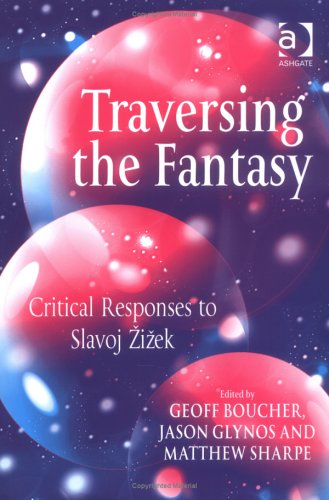
41. Traversing the Fantasy: Critical
$15.00
42. Lacanian Ink 22
 
$5.95
43. Slavoj Zizek. The Puppet and the
 
$5.95
44. The inverse side of the structure:
$41.25
45. Amor Sin Piedad
 
$9.95
46. On the contrary: Terry Eagleton
 
$5.95
47. Slavoj Zizek. Did Somebody Say
$9.95
48. Biography - Zizek, Slavoj (1949-):
$20.00
49. Lacanian Ink 27 - The Names-of-the-Father
$24.75
50. Urban Politics Now
$17.80
51. Everything You Always Wanted to
$44.68
52. Irak. La Tetera Prestada
$43.14
53. Die Tücke des Subjekts.
$29.95
54. Time Driven: Metapsychology and
$15.00
55. Lacanian Ink 12
$20.00
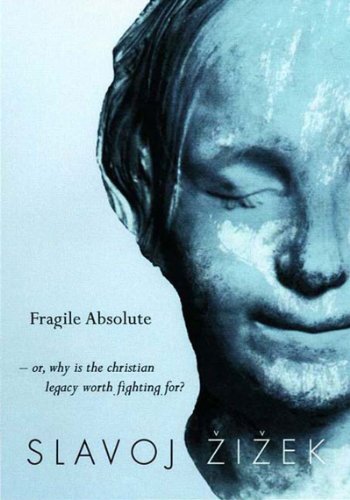
56. The Fragile Absolute: Or, Why
$21.49
57. Tarrying with the Negative: Kant,
$21.20
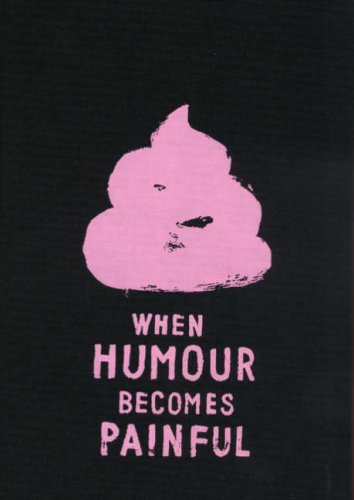
58. When Humour Becomes Painful
 
$133.96
59. Conversations With Zizek
$42.25
60. El Titere y El Enano

41. Traversing the Fantasy: Critical Responses to Slavoj Zizek
by Geoff Boucher
Hardcover: 268 Pages (2006-01)
list price: US$120.00 -- used & new: US$116.69
(price subject to change: see help)
Asin: 0754651924
Canada | United Kingdom | Germany | France | Japan

42. Lacanian Ink 22
by Slavoj Zizek
Paperback: 160 Pages (2003-09-30)
list price: US$15.00 -- used & new: US$15.00
(price subject to change: see help)
Asin: 1888301201
Canada | United Kingdom | Germany | France | Japan
Editorial Review

Book Description
Slavoj Zizek addresses the Platonic reaction of the reader "...that between the limited view of us, mortals, and the view of the big Other which sees everything!" Only to argue against its own projection. "Vertigo is the ultimate anti-Platonic film, a systematic materialist undermining of the Platonic project, akin to what Deleuze does in the Appendix to The Logic of Sense." With Alain Badiou an obscure disaster ended the truth of the state. "It is thus that i understood Sartre's gross maxim: 'Every anticommunist is a dog,' because every anticommunist manifested thus his hatred of 'us,' his deetermination to exist only within the limits of propriety of himself - which is always the propriety of some property." ... Read more


43. Slavoj Zizek. The Puppet and the Dwarf: the Perverse Core of Christianity.(Book Review): An article from: Utopian Studies
by P.A. Koop
 Digital: 3 Pages (2004-01-01)
list price: US$5.95 -- used & new: US$5.95
(price subject to change: see help)
Asin: B0009GPQLI
Canada | United Kingdom | Germany | France | Japan
Editorial Review

Book Description
This digital document is an article from Utopian Studies, published by Society for Utopian Studies on January 1, 2004. The length of the article is 876 words. The page length shown above is based on a typical 300-word page. The article is delivered in HTML format and is available in your Amazon.com Digital Locker immediately after purchase. You can view it with any web browser.

Citation Details
Title: Slavoj Zizek. The Puppet and the Dwarf: the Perverse Core of Christianity.(Book Review)
Author: P.A. Koop
Publication: Utopian Studies (Refereed)
Date: January 1, 2004
Publisher: Society for Utopian Studies
Volume: 15Issue: 1Page: 169(2)

Article Type: Book Review

Distributed by Thomson Gale ... Read more


44. The inverse side of the structure: Zizek on Deleuze on Lacan.(Slavoj Zizek)(Gilles Deleuze)(Jacques Lacan) : An article from: Criticism
by Daniel W. Smith
 Digital: Pages (2004-09-22)
list price: US$5.95 -- used & new: US$5.95
(price subject to change: see help)
Asin: B000F2CCUY
Canada | United Kingdom | Germany | France | Japan
Editorial Review

Book Description
This digital document is an article from Criticism, published by Thomson Gale on September 22, 2004. The length of the article is 7811 words. The page length shown above is based on a typical 300-word page. The article is delivered in HTML format and is available in your Amazon.com Digital Locker immediately after purchase. You can view it with any web browser.

Citation Details
Title: The inverse side of the structure: Zizek on Deleuze on Lacan.(Slavoj Zizek)(Gilles Deleuze)(Jacques Lacan)
Author: Daniel W. Smith
Publication: Criticism (Magazine/Journal)
Date: September 22, 2004
Publisher: Thomson Gale
Volume: 46Issue: 4Page: 635(16)

Distributed by Thomson Gale ... Read more


45. Amor Sin Piedad
by SLAVOJ ZIZEK
Paperback: 190 Pages (2007)
-- used & new: US$41.25
(price subject to change: see help)
Asin: 8497561791
Canada | United Kingdom | Germany | France | Japan
Editorial Review

Product Description
Lo que es incomprensible dentro del horizonte pre­cristiano es la dimensión devastadora de la impenetrabilidad de Dios ante él mismo. discernible en la exclamación de Cristo: Padre. ¿por qué me has abandonado? . la versión cristiana del freudiano Padre. ¿acaso no ves que me estoy quemando? .Este abandono total de Dios por Dios es el punto en el que Cristo se convierte en plenamente humano. el punto en el que la brecha radical que separa a Dios del hombre se transpone en el propio Dios. Es sólo dentro de este contexto que el auténtico Amor Cristiano puede surgir. un Amor más allá de la Piedad. ... Read more


46. On the contrary: Terry Eagleton on Slavoj Zizek's The Parallax View.(The Parallax View)(Book review): An article from: Artforum International
by Terry Eagleton
 Digital: 6 Pages (2006-06-22)
list price: US$9.95 -- used & new: US$9.95
(price subject to change: see help)
Asin: B000SHMZY4
Canada | United Kingdom | Germany | France | Japan
Editorial Review

Book Description
This digital document is an article from Artforum International, published by Thomson Gale on June 22, 2006. The length of the article is 1772 words. The page length shown above is based on a typical 300-word page. The article is delivered in HTML format and is available in your Amazon.com Digital Locker immediately after purchase. You can view it with any web browser.

Citation Details
Title: On the contrary: Terry Eagleton on Slavoj Zizek's The Parallax View.(The Parallax View)(Book review)
Author: Terry Eagleton
Publication: Artforum International (Magazine/Journal)
Date: June 22, 2006
Publisher: Thomson Gale
Volume: 44Issue: 10Page: 61(2)

Article Type: Book review

Distributed by Thomson Gale ... Read more


47. Slavoj Zizek. Did Somebody Say Totalitarianism? Five Interventions in the (Mis)use of a Notion.: An article from: World Literature Today
by Sabah A. Salih
 Digital: 3 Pages (2002-03-22)
list price: US$5.95 -- used & new: US$5.95
(price subject to change: see help)
Asin: B0009FREOG
Canada | United Kingdom | Germany | France | Japan
Editorial Review

Book Description
This digital document is an article from World Literature Today, published by University of Oklahoma on March 22, 2002. The length of the article is 786 words. The page length shown above is based on a typical 300-word page. The article is delivered in HTML format and is available in your Amazon.com Digital Locker immediately after purchase. You can view it with any web browser.

Citation Details
Title: Slavoj Zizek. Did Somebody Say Totalitarianism? Five Interventions in the (Mis)use of a Notion.
Author: Sabah A. Salih
Publication: World Literature Today (Refereed)
Date: March 22, 2002
Publisher: University of Oklahoma
Volume: 76Issue: 2Page: 252(1)

Article Type: Book Review

Distributed by Thomson Gale ... Read more


48. Biography - Zizek, Slavoj (1949-): An article from: Contemporary Authors
by Gale Reference Team
Digital: 8 Pages (2004-01-01)
list price: US$9.95 -- used & new: US$9.95
(price subject to change: see help)
Asin: B0007SJ7H2
Canada | United Kingdom | Germany | France | Japan
Editorial Review

Book Description
This digital document, covering the life and work of Slavoj Zizek, is an entry from Contemporary Authors, a reference volume published by Thompson Gale. The length of the entry is 2156 words. The page length listed above is based on a typical 300-word page. Although the exact content of each entry from this volume can vary, typical entries include the following information:

  • Place and date of birth and death (if deceased)
  • Family members
  • Education
  • Professional associations and honors
  • Employment
  • Writings, including books and periodicals
  • A description of the author's work
  • References to further readings about the author
... Read more

49. Lacanian Ink 27 - The Names-of-the-Father
by Slavoj Zizek - Alain Badiou
Paperback: 160 Pages (2006-05-18)
list price: US$20.00 -- used & new: US$20.00
(price subject to change: see help)
Asin: 1888301244
Canada | United Kingdom | Germany | France | Japan
Editorial Review

Product Description
When, in his "Rapport de Rome", Lacan refers to Hegel’s “Absolute Knowing,” one should read closely his indications of how he conceives this identification of the analyst with the Hegelian master, and not succumb to the temptation of quickly retranslating the “Absolute Knowing” into the accomplished symbolization.For Lacan, the analyst stands for the Hegelian master, embodiment of “Absolute Knowing,” insofar as he renounces all enforcing (forçage) of reality and, fully aware that the actual is in already itself rational, adopt the stance of a passive observer who does not intervene directly into the content, but merely manipulates the scene so that the content destroys itself, confronted with its own inconsistencies—this is how one should read Lacan’s precise indication that Hegel’s work is “precisely what we need to confer a meaning on so-called analytic neutrality other than that the analyst is simply in a stupor” — it is this neutrality which keeps the analyst “on the path of non action.”The Hegelian wager is that the best way to destroy the enemy is to give him the free field to deploy his potentials, and that his success will be his failure, since the lack of external obstacles will confront him with the absolutely inherent obstacle of the inconsistency of his own position.Slavoj Zizek, "Lacan as Reader of Hegel."What, in Lacan’s eyes, is the true nature of how philosophy operates?What does Lacan identify as “philosophical,” in order for his anti-philosophy to assume its full meaning?Philosophy operates, in Lacan’s eyes, by affirming that there is such a thing as a meaning or sense of truth (sens de la vérité).But why would philosophy maintain this?Because its objective, the consolation it offers us, and which goes by the name “wisdom,” is to be able to assert that there is a truth of the Real.Alain Badiou, "The Formulas od L'Étourdit." ... Read more


50. Urban Politics Now
by Edward Soja, Juliet MacCannell, Neil Smith, Dieter Lesage
Paperback: 240 Pages (2008-03-01)
list price: US$37.50 -- used & new: US$24.75
(price subject to change: see help)
Asin: 9056626167
Canada | United Kingdom | Germany | France | Japan
Editorial Review

Book Description
In Urban Politics Now, the Rotterdam-based "architect philosophers" Gideon Boie and Matthias Pauwels--otherwise known as The BAVO Bureau for Architectural Theory--issue a challenge to sociologists, social geographers, philosophers, urban planners and architects, asking, "What ails contemporary urban politics?" Boie and Pauwels involve a few global heavy-hitters whose lengthy, hyphenated titles signal their engagement between multiple disciplines, like Slovenian-born philosopher, sociologist and cultural theorist Slavoj Zizek--who, a few years ago, wrote some Lacanian-style copy for an Abercrombie & Fitch catalogue to accompany Bruce Weber's mildly salacious photographs--and New York's Neil Smith, who trained as a geographer and now teaches urban, cultural and environmental anthropology at the CUNY Graduate Center. Having stated as part of their mission that, "It is only by conceiving architecture as a symptom that its potential to make a difference in society can be assessed and/or enhanced," BAVO asks here if democratic urban politics are possible in the contemporary climate--with neoliberals and neoconservatives on the rise, environmental concerns on everyone's mind and an eruption of increasingly heated cultural differences plaguing every city in the world. If the symptoms of such ills are violence, socioeconomic disparities and hedonistic consumerism, what are the cures? An ability to reconfigure familiar disciplines seems a good start. ... Read more


51. Everything You Always Wanted to Know about Lacan: But Were Afraid to Ask Hitchcock
Paperback: 288 Pages (1992-10-01)
list price: US$23.95 -- used & new: US$17.80
(price subject to change: see help)
Asin: 0860915921
Average Customer Review: 3.0 out of 5 stars
Canada | United Kingdom | Germany | France | Japan

Customer Reviews (1)

3-0 out of 5 stars Chicken Soup for the Brain
When I was a born-feminist bookworm of 16, I was delighted by the Marquise de Merteuil. I knew she was evil, and all, but she was the only literary heroine I'd ever encountered who was also intelligent, complex, and strong-willed. She also scared me a bit. I didn't exactly identify with her, yet she seemed as close to me as any heroine had ever gotten. When later on the same year I read Pride and Prejudice for the first time I realized that Elizabeth Bennet was the real heroine I'd been searching for. Unfortunately the Elizabeth Bennets of literature are much rarer than the Marquise de Merteuils, so I could not abandon the latter as figures of identification.

Where on earth am I going with this? I feel about the hot new scholarly phenomenon that is Slavoj Zizek, the editor of this volume, much the way I did about the Marquise de Merteuil. It's nice to see someone out there championing such academic fashion sins as Christian ethics (in The Fragile Absolute), the Cartesian subject (in The Ticklish Subject), and erudition, and make them trendy by doing it within a Lacanian framework. But unless you really needed to be liberated from the poststructuralist program you probably never lost entire faith in any of these things and concluded all by yourself the same things Zizek seem to have: that the version of Western metaphysics savaged by poststructuralism was a straw man anyway, whereas a more truthful version would acknowledge the fragility or ticklishness of these ideals and intuitions.

If you do not need Zizek to liberate you then there is not much to recommend in this book of Lacanian Hitchcock criticism. Zizek is mostly incomprehensible; unlike the equally erudite Camille Paglia, he doesn't possess the writerly virtue of being able to explain other people's big ideas. He just namechecks and hurries on. His odd prose style contains something compelling about it, but also something unsettling. His attention-grabbing imperatives like "Enjoy your symptom!" (from the title of another of his books) or (from his contribution to this book) "Eat your being-there!" are an odd mixture of much good and bad in contemporary culture: they have the sensationalism of Paglia's scholarship-as-sound-bites ("If women ran the world we would all still be living in grass huts," or however it goes), the shiny emptiness and absurdity of bad Japanese translations on imported gift products (my favourites to date are "Hearts live in the coming day" and "Let us make the most and best of each day's and noble enjoyment" (sic)), a faint ring of sing-song Communist or flaky self-help mantras in a Bizarro universe, and a fainter ring of Nietzsche's piquant, pissy, repellent maxims. Not that what I've read of Zizek reminds me much of Nietzsche. His personality reminds me more of someone like Alfred Jarry or Marcel Duchamp, a mixture of intellectualism and mischief. And that, along with his gimmick uh, I mean project of reforming the house of Lacan from within, is surely what accounts for Zizek's sudden trendiness. Yet to me this seems like a disguised continuation of the deep problems of academe rather than a compromise solution to them: Zizek is the very essence of of-the-momentness.

The book gets three stars from me not for its contents but for its usefulness (maybe) in making certain choices available to students without the cost of sacrificing their cool radicalism. Was it Nietzsche, or Stanley Cavell, or someone else who predicted that morality would only be revived if someone made it cool again? Well, the time has come, and in that Zizek has gone beyond Paglia, who was fighting Judeo-Christianity as much as she was fighting the trendy pack of poststructuralist ideas. The essays in this book not written by Zizek will, I presume, appeal to Lacanians and particularly to Lacanian Hichcockians (I know a couple); they will not appeal to non-Lacanians, Hitchcockian or not. As for Zizek's introduction and essay, what I understood of them I sometimes agreed with, sometimes not. He has good observations to make about the gaze in Hitchcock (if Lacanian theory is ever going to apply to any filmmaker, it's Hitchcock), even if he sometimes comes by them in a tortuously roundabout fashion, but it is certainly not worth it for a non-Lacanian Hitchcock fan to buy the book. Take it out of the library, like I did. But only if you're bored and have nothing else to do but check out the latest trends. Better yet, watch Buffy the Vampire Slayer.

I'm still waiting for criticism of Hitchcock that will be worthy of him. In the meantime Zizek's scattered, mercurial insights will have to do as a poor approximation, just like the Marquise de Merteuil had to do until I discovered Elizabeth Bennet. ... Read more


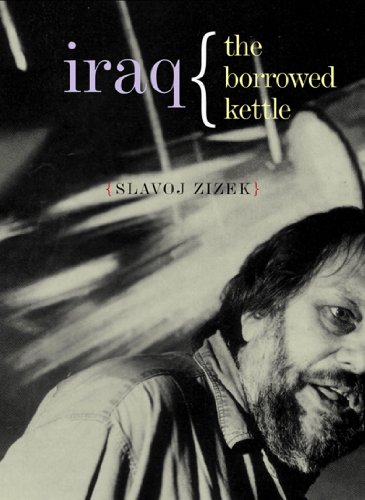
52. Irak. La Tetera Prestada
by SLAVOJ ZIZEK
Paperback: 245 Pages (2007)
-- used & new: US$44.68
(price subject to change: see help)
Asin: 8496375412
Canada | United Kingdom | Germany | France | Japan
Editorial Review

Product Description
1. Jamás me prestaste una tetera 2. Te la devolví intacta 3.La tetera ya estaba rota cuando me la prestaste Con este viejo chiste Identifica Zizek el discurso del Gobierno norteamericano justificando la invasión de Irak: Irak tiene armas de destrucción masiva. Aunque no las tenga. colabora con los terroristas de Al Qaeda. Y aunque no colabore con ellos. su dictador es una amenaza para la seguridad mundial .Incisivo. penetrante. pluridisciplinar. Zizek propone lecturas socio-políticas inesperadas (quizá esta guerra entre Estados Unidos e Irak ha sido la primera guerra entre Estados Unidos y Europa). denuncia la aparición de los nuevos muros del siglo XXI. traza paralelismos radicalmente originales entre la narrativa política del momento y la tragedia griega y llama a sus lectores a una revolución capaz de redefinir las reglas y los contornos del orden existente . capaz en suma de practicar la utopía . ... Read more


53. Die Tücke des Subjekts.
by Slavoj Zizek, Eva Gilmer, Anne von der Heiden, Hans Hildebrandt
Hardcover: 552 Pages (2001-05-01)
-- used & new: US$43.14
(price subject to change: see help)
Asin: 3518583042
Canada | United Kingdom | Germany | France | Japan

54. Time Driven: Metapsychology and the Splitting of the Drive (SPEP)
by Adrian Johnston
Paperback: 421 Pages (2005-07-27)
list price: US$29.95 -- used & new: US$29.95
(price subject to change: see help)
Asin: 0810122057
Average Customer Review: 4.0 out of 5 stars
Canada | United Kingdom | Germany | France | Japan
Editorial Review

Book Description

Elaborating the fundamental concept of Trieb, or drive, Freud outlines two basic types of conflict that at once disturb and organize mental life: the conflict between drives and reality; and the conflict between the drives themselves (as in amorous Eros against the aggressive death drive). In Time Driven, Adrian Johnston identifies a third distinct type of conflict overlooked by Freud: the conflict embedded within each and every drive. By bringing this critical type of conflict to light and explaining its sobering consequences for an understanding of the psyche, Johnston's book makes an essential theoretical contribution to Continental philosophy. His work offers a philosophical interpretation and reassessment of psychoanalysis that places it in relationship to the larger stream of ideas forming our world and, at the same time, clarifies its original contribution to our understanding of the human situation.
Johnston draws on Jacques Lacan's oeuvre in conjunction with certain philosophical resources-elements from transcendental philosophy, structuralism, and phenomenology-to rectify the inconsistencies within the Freudian metapsychological model of drive. In doing so, he helps to answer a question haunting Freud at the end of his career: Why is humanity plagued by a perpetual margin of discontent, despite technological and cultural progress?
In Time Driven, Johnston is able to make sense of Freud's metapsychology both as a whole and in its historical development of Lacan's reinterpretation of Freud, and of the place of both Freud and Lacan in modern philosophy.
... Read more

Customer Reviews (1)

4-0 out of 5 stars It is about time
Johnston's book delves rather deeply into topics that are rarely discussed in current psychoanalysis, namely, temporality and drive theory.Johnston reminds us that, unlike some current authors assume, Freud's drives are not monolithic entities, but rather composites of several different motivational and cognitive components.Johnston contends that Freud's distinctions between different pieces of a drive allow us to take these pieces and situate them in two mental time zones- one of timeless repetition of urges, the other of temporal alteration of what these urges aim for and toward whom they are directed.

To be sure, Johnston's book is somewhat uneven.Readers may find some of the earlier chapters digressive or simply awkward.However, those willing to push through these chapters will find that their understanding of Freud, drive theory, and the psychoanalysis of time will be considerably enriched, whether or not they find themselves agreeing with Johnston's conclusions. ... Read more


55. Lacanian Ink 12
by Jacques-Alain Miller, Slavoj Zizek, Peggy Phelan, Joan Copjec, Josefina Ayerza, Marco Mauas, D Hayman
Paperback: 128 Pages (2000-10-20)
list price: US$15.00 -- used & new: US$15.00
(price subject to change: see help)
Asin: 1888301015
Average Customer Review: 5.0 out of 5 stars
Canada | United Kingdom | Germany | France | Japan
Editorial Review

Book Description
Lacanian Ink is a biannual journal of critical theory, art and fiction. Centered around the teachings of French intelectual Jacques Lacan, it brings together two of the seminal topics of the 20th century: psychoanalysis and art. By rejecting the assertion of identities associated with cultural studies Lacanian Ink outlines a new philosophical universalism. ... Read more

Customer Reviews (1)

5-0 out of 5 stars Extremely insightful
Lacanian Ink provides a comprehensive and accessible introduction to the work of French psychoanalyst-philosopher Jacques Lacan. The essays by authors as diverse as Slavoj Zizek, Alain Badiou, Jacques -Alain Miller, David Hayman and Juliet Flower-McCannell as well as art critics such as Raphael Rubinstein, David Ebony and Josefina Ayerza, and feminist-theorists Peggy Phelan, Jan Avgikos and Joan Copjec, not to mention Richard Foreman, John Yau and Lynne Tillman, map the shiftings of Lacanian theory in the USA. Linking key psychoanalytical and philosophical concepts to social and cultural phenomena, Lacanian Ink represents a powerful contribution to a psychoanalytical theory of ideology as well as offering persuasive interpretations of the contemporary art scene. ... Read more


56. The Fragile Absolute: Or, Why the Christian Legacy is Worth Fighting For
by Slavoj Zizek
Hardcover: 192 Pages (2000-04)
list price: US$23.00 -- used & new: US$20.00
(price subject to change: see help)
Asin: 1859847706
Average Customer Review: 5.0 out of 5 stars
Canada | United Kingdom | Germany | France | Japan
Editorial Review

Book Description
'From now on, even though we once knew Christ from a human point of view, we know him no longer in that way; everything old has passed away; see, everything has become new!' Saint Paul's militant declaration from Corinthians asserts for the first time in human history the revolutionary logic of a radical break with the past--with it, the age of Cosmic Balance and similar pagan babble is over. What does it mean to return to this stance today? One of the most deplorable aspects of our postmodern era is the re-emergence of the "sacred" in all its different guises, from New Age paganism to the emerging religious sensitivity within deconstructionism itself. How is a Marxist to counter this massive onslaught of obscurantism? The wager of Zizek's The Fragile Absolute is that Christianity and Marxism should fight together against the onslaught of new spiritualism. The subversive core of the Christian legacy is much too precious to be left to the fundamentalists. Here is a fitting contribution from a Marxist to the 2000th anniversary of one who was well aware that to practice love in our world is to bring in the sword and fire. ... Read more

Customer Reviews (1)

5-0 out of 5 stars Zizek's clearest exposition yet.
Slovenia's most prolific theorist's newest offering may be the clearest statement of his radical blend of Lacanian psychoanalysis and Marxist social critique. Don't let the title scare you...Zizek has not become amilitant fundamentalist. The book argues a shared impetus for change withinChristianity (especially vis-a-vis St. Paul) and Marxism and proposes this"kernel" be used to bring these camps together for social good.Peppered with his trademark pop culture illustrations, this book isimmensely readable and cogently argued. A great introduction to Zizek'sthought. ... Read more


57. Tarrying with the Negative: Kant, Hegel, and the Critique of Ideology (Post-Contemporary Interventions)
by Slavoj Zizek
Paperback: 304 Pages (1993-12)
list price: US$22.95 -- used & new: US$21.49
(price subject to change: see help)
Asin: 0822313952
Canada | United Kingdom | Germany | France | Japan
Editorial Review

Book Description
In the space of barely more than five years, with the publication of four pathbreaking books, Slavoj Zizek has earned the reputation of being one of the most arresting, insightful, and scandalous thinkers in recent memory.Perhaps more than any other single author, his writings have constituted the most compelling evidence available for recognizing Jacques Lacan as the preemient philosopher of our time.
In Tarrying with the Negative, Zizek challenges the contemporary critique of ideology, and in doing so opens the way for a new understanding of social conflict, particularly the recent outbursts of nationalism and ethnic struggle.Are we, Zizek asks, confined to a postmodern universe in which truth is reduced to the contingent effect of various discursive practices and where our subjectivity is dispersed through a multitude of ideological positions? No is his answer, and the way out is a return to philosophy. This revisit to German Idealism allows Zizek to recast the critique of ideology as a tool for disclosing the dynamic of our society, a crucial aspect of which is the debate over nationalism, particularly as it has developed in the Balkans--Zizek's home.He brings the debate over nationalism into the sphere of contemporary cultural politics, breaking the impasse centered on nationalisms simultaneously fascistic and anticolonial aspirations.Provocatively, Zizek argues that what drives nationalistic and ethnic antagonism is a collectively driven refusal of our own enjoyment.
Using examples from popular culture and high theory to illuminate each other--opera, film noir, capitalist universalism, religious and ethnic fundamentalism--this work testifies to the fact that, far more radically than the postmodern sophists, Kant and Hegel are our contemporaries.
... Read more


58. When Humour Becomes Painful
by Slavoj Zizek, Vito Acconci, John Bock, Olaf Breuning, Martin Kippenberger
Hardcover: 224 Pages (2006-03-01)
list price: US$35.00 -- used & new: US$21.20
(price subject to change: see help)
Asin: 3905701049
Canada | United Kingdom | Germany | France | Japan
Editorial Review

Book Description
From Dada to Fluxus through Sensation to today, humor is at the heart of much of the most-beloved--and least comfortable--art out there. Humor's ambivalence, its ability to shift between the utopian and the destructive, and its refusal of absolute values, distinguish many of those twentieth century movements that continue to exert an influence. This catalogue of work from more than 30 artists, including Bruce Nauman and Jake & Dinos Chapman, parses humor's mechanisms in works that seduce us with a laugh and then stop us in our tracks with more painful or uncomfortable themes. Deconstructions of the male artist persona by Vito Acconci and Jurgen Klauke use wit to confront taboos head-on, which connects them with the more recent work of John Bock and Klara Liden. Among classic pieces included are Joseph Beuys's Capri Batterie and George Maciunas's Flux Smile Machine. ... Read more


59. Conversations With Zizek
by Slavoj Zizek
 Paperback: Pages (1995)
-- used & new: US$133.96
(price subject to change: see help)
Asin: B000SNSNDK
Canada | United Kingdom | Germany | France | Japan

60. El Titere y El Enano
by Slavoj Zizek
Paperback: Pages (2005-03)
list price: US$25.80 -- used & new: US$42.25
(price subject to change: see help)
Asin: 9501265463
Canada | United Kingdom | Germany | France | Japan

  Back | 41-60 of 100 | Next 20
A  B  C  D  E  F  G  H  I  J  K  L  M  N  O  P  Q  R  S  T  U  V  W  X  Y  Z  

Prices listed on this site are subject to change without notice.
Questions on ordering or shipping? click here for help.

site stats